
A hyperelastic material is a type of material that can undergo very large elastic deformations and then fully recover its original shape.
This unique property sets them apart from standard materials like metals or plastics, which often yield or break when pushed beyond their limits. That’s why rubbers, elastomers, and biological tissues are grouped under this category. They are used in everything from automotive components and seals to medical devices and soft robotics.
But here’s the challenge: their nonlinear stress–strain response makes them difficult to capture with simple elastic or plastic models. To design with confidence, engineers need a hyperelastic material model that accurately represents this behavior. That’s where hyperelastic material Abaqus simulations come in.
In this blog, we’ll explain why hyperelastic materials matter, how Abaqus handles their modeling, and what makes hyperelastic material models different from conventional approaches. You’ll also learn the first steps of setting up these simulations in Abaqus, giving you a strong starting point for analyzing rubber-like and biological materials. And if you want to go further, we’ve prepared a complete tutorial package that guides you through the full process in depth.
What is a Hyperelastic Material?
Hyperelastic materials are a specialized class of materials that exhibit large, fully recoverable elastic deformations. Unlike traditional materials that may yield or plastically deform under high strain, hyperelastic materials can undergo extreme stretching or compression—often well beyond 100% strain—and still return to their original configuration once the load is removed.
Key Characteristics of Hyperelasticity
The defining feature of hyperelastic materials is their nonlinear, reversible stress-strain behavior. Instead of following Hooke’s Law, these materials respond to deformation according to a strain energy density function (SEF). The SEF represents the internal elastic energy stored per unit volume of material and governs the material’s response to deformation in all directions.
Key traits of hyperelastic materials include:
- Large elastic strain capacity (commonly exceeding 100%)
- Nonlinear stress-strain response, even at low strain levels
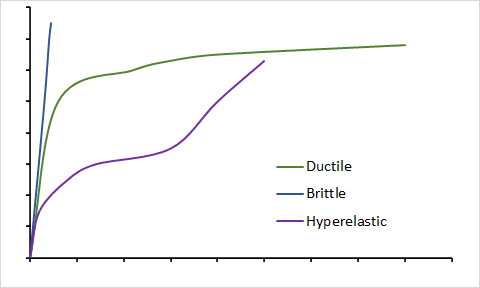
Figure 1: Nonlinear stress-strain of hyperelastic materials
- Fully recoverable deformation, with minimal hysteresis under ideal conditions
- Near-incompressibility, especially in rubber-like substances
- Strain-rate and temperature sensitivity, in some formulations
The SEF enables the modeling of complex behaviors such as strain stiffening (increased resistance at high stretch) and softening (reduced stiffness under certain loads), allowing for accurate simulation across a wide range of deformation states.
Real-World Examples and Applications
Hyperelastic materials are commonly found in both engineered systems and biological environments. Examples include:
- Rubbers and Elastomers: Used in seals, gaskets, tires, vibration isolators, and flexible joints.

Figure 2: Hyperelastic rubbers [Ref]
- Soft Polymers and Foams: Employed in cushioning, insulation, and packaging applications

Figure 3: Foams for Cushioning
- Biological Tissues: Such as skin, arterial walls, tendons, and cartilage, which undergo large, reversible deformations.
- Medical Devices: Including stents (learn more Stent Simulation), prosthetics, and soft robotic components.
- Aerospace and Defense: For components like fuel bladders, solid propellants, and energy absorbers.
Designing with hyperelastic materials requires careful material characterization and appropriate selection of constitutive models. Understanding their mechanical behavior is critical in applications where reliability under large deformations and repeated load cycles is essential—for example, in biomedical implants or automotive components subject to cyclic motion.
Standard Materials Vs Hyperelastic Materials
Rubber-like materials, including natural rubber, silicone, and various elastomers, present a unique set of mechanical behaviors that standard material models fail to capture accurately. Unlike metals or rigid plastics, rubbers can undergo extremely large strains—often several hundred percent—while still returning to their original shape. This highly nonlinear, elastic response challenges the assumptions built into traditional material models.
Limitations of Linear Elastic and Plastic Models
Standard linear elastic models assume a direct proportionality between stress and strain and are only accurate for small deformations. Rubbers and similar materials, which deform nonlinearly at large strains, violate these assumptions, making linear models inadequate.
Plasticity models, which account for permanent deformation, are also not appropriate since hyperelastic materials typically do not experience plastic (irreversible) deformation under normal operating conditions. Using these classical models often results in incorrect stress predictions and poor representation of material behavior.
you can learn more about linear and isotropic materials here: Isotropic Materials vs Anisotropic | Basics and Examples
The Need for Specialized Hyperelastic Material Models
Hyperelastic models, grounded in strain energy density functions, are specifically designed to capture the nonlinear, fully recoverable elastic response of rubbers and similar materials. Employing these models enables engineers to predict realistic behavior, optimize designs, and reduce the reliance on costly physical testing.
The comparison of standard and hyperelastic materials is presented in the following table.
| Aspect | Standard Materials | Hyperelastic Materials |
|---|---|---|
| Definition | Materials that exhibit linear or simple nonlinear elastic behavior within small strains | Materials that can undergo very large elastic strains and still return to their original shape |
| Deformation | Typically, small strains, the elastic limit is reached quickly | Large strains (up to several hundred percent) without permanent deformation |
| Stress-Strain Behavior | Often linear or piecewise linear at low strain | Nonlinear, modeled using special hyperelastic constitutive models (e.g., Neo-Hookean, Mooney-Rivlin) |
| Examples | Metals (steel, aluminum), ceramics, rigid plastics | Rubber, silicone, elastomers, and biological tissues |
| Applications | Structural components, machinery, load-bearing parts | Seals, gaskets, medical devices, soft robotics |
| Modeling Complexity | Relatively simple constitutive models | Requires advanced nonlinear constitutive models and numerical methods |
| Energy Storage | Energy stored is often proportional to strain squared (Hooke’s Law) | Energy storage is nonlinear and more complex due to large deformations |
| Failure Mode | Yielding, plastic deformation, or fracture after the elastic limit | Usually fail by rupture, but can sustain large elastic strains before that |
Hyperelastic Material Models in Abaqus
In finite element analysis, accurately modeling hyperelastic behavior is essential for capturing the large, nonlinear deformations typical of rubber-like materials. Abaqus provides a robust framework for simulating such behavior through a library of built-in hyperelastic models, each based on a specific strain energy density function (SEF).
Introduction to Strain Energy Density Functions (SEFs)
In Abaqus, hyperelasticity is modeled through strain energy potentials, scalar functions representing the energy stored due to deformation. These functions depend on strain measures such as principal stretches (ratios of current length to original length in principal directions) or strain invariants.
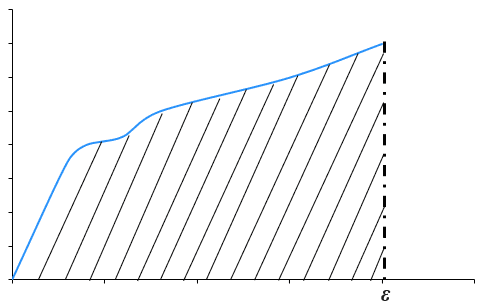
Figure 4: The strain energy potential for hyperelastic materials
The energy potential (Ψ) is defined as a function of the strain tensor (ε) in the material as follows:
 The strain energy potential can be separated into:

- Deviatoric (shape-changing) components, which depend on the mode of deformation (tension, compression, shear), and
- Volumetric (volume-changing) components, which address material compressibility.
Common Built-In Models: Neo-Hookean, Mooney-Rivlin, Ogden, Yeoh
Abaqus offers several well-established hyperelastic models:
- Neo-Hookean: Simple, suitable for small to moderate strains and limited data availability.
- Mooney-Rivlin: Adds a second parameter, improving fit across a broader strain range.
- Ogden: Highly flexible, using multiple parameters to model complex rubber behaviors, ideal when comprehensive data is available.
- Yeoh: Emphasizes the first strain invariant, often used when mainly uniaxial test data exists.

Figure 5: Abaqus Hyperelastic
While Abaqus provides built-in models like Neo-Hookean, Ogden, or Yeoh, these may not fully capture the compressible, nonlinear response of special materials such as elastomeric foams. For those cases, you may need to implement custom hyperelastic models using user subroutines. A step-by-step resource for this is our Hyperelastic Modeling of Elastomeric Foams using Abaqus Subroutines tutorial package.
The table presented below illustrates the strain energy potentials associated with various hyperelastic models along with their corresponding material parameters.

In the aforementioned strain energy potentials, the component characterized by the material constant ‘D’ represents the volumetric term, while Jel denotes the elastic volume ratio. The deviatoric components are determined using either the principal stretches (λ1, λ2, λ3) or the strain invariants (ɪ1, ɪ2, ɪ3).
Principal stretches are defined as the ratios of the current length to the original length of the material in the principal directions. In models such as Ogden and polynomial models, N signifies the order of the function. The model’s non-linearity and the number of material constants increase as the order of the function rises.
Choosing the Right Model Based on Test Data
Accurate hyperelastic modeling relies heavily on high-quality experimental data to calculate the material constants within the strain energy potential. Unlike metals, which follow Hooke’s Law and exhibit linear, predictable behavior across different deformation modes, rubbers and elastomers are highly nonlinear and display distinct mechanical responses under tension, compression, and shear. This means:
- Metals: Deviatoric responses in compression and shear can be reliably predicted from tensile test data alone.
- Hyperelastic materials: Each mode of deformation produces a unique response, and stiffness differs significantly between modes. Therefore, one mode (e.g., uniaxial tension) is insufficient to fully characterize the material.
To capture the full deviatoric behavior of soft, rubber-like materials, you must obtain homogeneous experimental data from:
- Uniaxial tension tests
- Uniaxial compression tests
- Simple shear tests
These tests provide the basis for determining the material’s response to distortional (shape-changing) deformation. Additionally, to define the volumetric response (i.e., the material’s bulk compressibility), dedicated volumetric test data is required. However, in many cases, hyperelastic materials are assumed nearly incompressible, allowing the volumetric component to be neglected or approximated using default bulk modulus settings in Abaqus.
Role of Principal Stretches and Strain Invariants
In Abaqus, the strain energy potential is often defined in terms of strain invariants or principal stretches ( ), which represent the ratios of deformed to original lengths along the principal material directions. These stretches are used to compute the strain invariants that drive the stress-strain behavior in hyperelastic models. The deformation gradient in terms of principal stretches () is expressed as:

The derivatives of the strain energy function with respect to these invariants form the basis of the constitutive equations used to calculate stresses. Abaqus provides tools to compute these relationships and offers visual guides that map different test modes (tension, compression, shear) to corresponding principal stretches, nominal strains, and deviatoric invariants.
The principal stretches ( ) are related to principal nominal strains (
 ) as follows:

Curve Fitting and Model Selection in Abaqus
The process of fitting hyperelastic models in Abaqus is highly data-driven. The type and quality of experimental data determine which strain energy function is appropriate:
- Simple models (e.g., Neo-Hookean, Yeoh): Sufficient when only uniaxial data is available or when simulations involve moderate deformation.
- Advanced models (e.g., Mooney-Rivlin, Ogden): Require multi-axial data—such as biaxial tension and planar shear—for accurate parameter calibration.
Abaqus provides built-in curve-fitting tools within Abaqus CAE to assist users in calibrating hyperelastic material model parameters. After selecting a strain energy potential function, these tools solve an optimization problem by minimizing the relative cumulative error between experimental stress-strain data and model predictions.
This approach focuses on reducing relative error rather than absolute error, ensuring a better fit at lower strains. The curve-fitting process allows users to visualize the quality of the fit and assess model suitability before applying it in complex simulations, which is crucial for ensuring predictive accuracy and avoiding costly trial-and-error in full-scale finite element analyses.

Figure 6: The relative cumulative error
The relative least-square error function is given as:

 is experimental data and
  is model-predicted data.
Depending on the characteristics of the strain energy potential function and the quantity of material constants, either a linear or nonlinear regression approach is employed for minimization. For instance, in the case of polynomial models where the strain energy potential is linear with respect to the material constants, linear regression is applied. Conversely, for nonlinear models such as Ogden and Van der Waals, nonlinear regression is necessary to adjust the material constants.
The minimized value of the error function is referred to as the residual, which is utilized to assess the quality of the fit among various material models.
The illustration below presents the permissible experimental test data in Abaqus for the calibration of hyperelastic material models, along with the values of principal stretches for each test. From these principal stretches, one can compute the deviatoric strain invariants and nominal strains.

Figure 7: Schematic illustrations of deformation modes
How to Model Hyperelastic Materials in Abaqus
Accurate modeling of hyperelastic materials in Abaqus requires more than selecting a strain energy potential—it demands careful material data preparation, validation strategies, and attention to numerical behavior. The steps below outline a reliable workflow for implementing hyperelasticity in practical finite element simulations.
Material Data Input and Curve Fitting
Accurate hyperelastic modeling begins with careful input of experimental stress-strain data covering the expected deformation range. Abaqus provides built-in curve-fitting capabilities that help determine model parameters, either through linear or nonlinear regression, depending on the strain energy function used.
Evaluating Model Fit with Single-Element Tests
Before applying a material model to complex geometries, it’s prudent to perform single-element tests. These simple simulations verify that the chosen material parameters replicate expected stress-strain responses under controlled loading conditions, ensuring confidence in the model.
Handling Incompressibility in Simulations
Many hyperelastic materials are nearly incompressible, meaning their volume remains nearly constant during deformation. To accurately simulate this, Abaqus uses mixed formulation (hybrid) elements that help avoid numerical problems like volumetric locking and improve convergence stability.
Properly accounting for incompressibility is crucial for reliable and robust finite element simulations.
Advanced Tips for Hyperelastic Simulations
Simulating hyperelastic materials in Abaqus offers powerful capabilities, but also presents challenges related to convergence, stability, and accurate material representation—especially under large deformations and complex loading paths. The following advanced strategies can help improve the robustness and realism of hyperelastic analyses.
Dealing with Convergence and Stability
Nonlinear material behavior and large deformations can lead to convergence difficulties. To improve solver performance:
- Use smaller load or displacement increments.
- Choose appropriate elements, such as hybrid or reduced integration types.
- Refine the mesh in regions of high strain.
- Adjust solver tolerances and stabilization parameters.
When to Use User Subroutines (UHYPER)
If built-in models cannot capture complex or custom material behaviors, Abaqus allows users to define their own strain energy functions via the UHYPER subroutine, offering flexibility for advanced research and material development.
If you are interested we have a full tutorial about UHYPER subroutine which you can check it out here: UHYPER Subroutine in ABAQUS
Modeling Anisotropic Hyperelastic Behavior
Some materials exhibit direction-dependent (anisotropic) hyperelastic properties, often due to embedded fibers or aligned microstructures. Abaqus supports this by allowing users to specify fiber orientations and apply specialized strain energy functions accounting for anisotropy.
If you want to go beyond built-in options and code your own material model, Abaqus allows user-defined hyperelastic laws through UHYPER or UMAT subroutines. For instance, in the case of elastomeric foams under large compressible deformations, you can use a logarithmic strain-based hyperelastic formulation. We provide a full implementation and training in our Hyperelastic Modeling of Elastomeric Foams using Abaqus Subroutines package.

Conclusion
In this blog, we explored the fundamentals of hyperelastic materials and their unique ability to undergo large, reversible deformations. We discussed why traditional linear elastic and plastic models fail to capture the complex behavior of rubbers and similar materials, highlighting the need for specialized hyperelastic material models based on strain energy density functions.
Abaqus provides a robust framework with various built-in hyperelastic models and powerful curve-fitting tools to accurately calibrate these models using experimental data. We also covered practical tips for handling incompressibility, improving convergence, and extending simulations with custom user subroutines and anisotropic material behavior.
By understanding and applying these concepts, engineers can confidently simulate hyperelastic materials, leading to better product designs and more reliable performance in real-world applications.
Explore our comprehensive Abaqus tutorial page, featuring free PDF guides and detailed videos for all skill levels. Discover both free and premium packages, along with essential information to master Abaqus efficiently. Start your journey with our Abaqus tutorial now!
The CAE Assistant is committed to addressing all your CAE needs, and your feedback greatly assists us in achieving this goal. If you have any questions or encounter complications, please feel free to share it with us through our social media accounts including WhatsApp.






 English
  Korean
  Chinese