
Abaqus Python Course Overview (Economic Version)
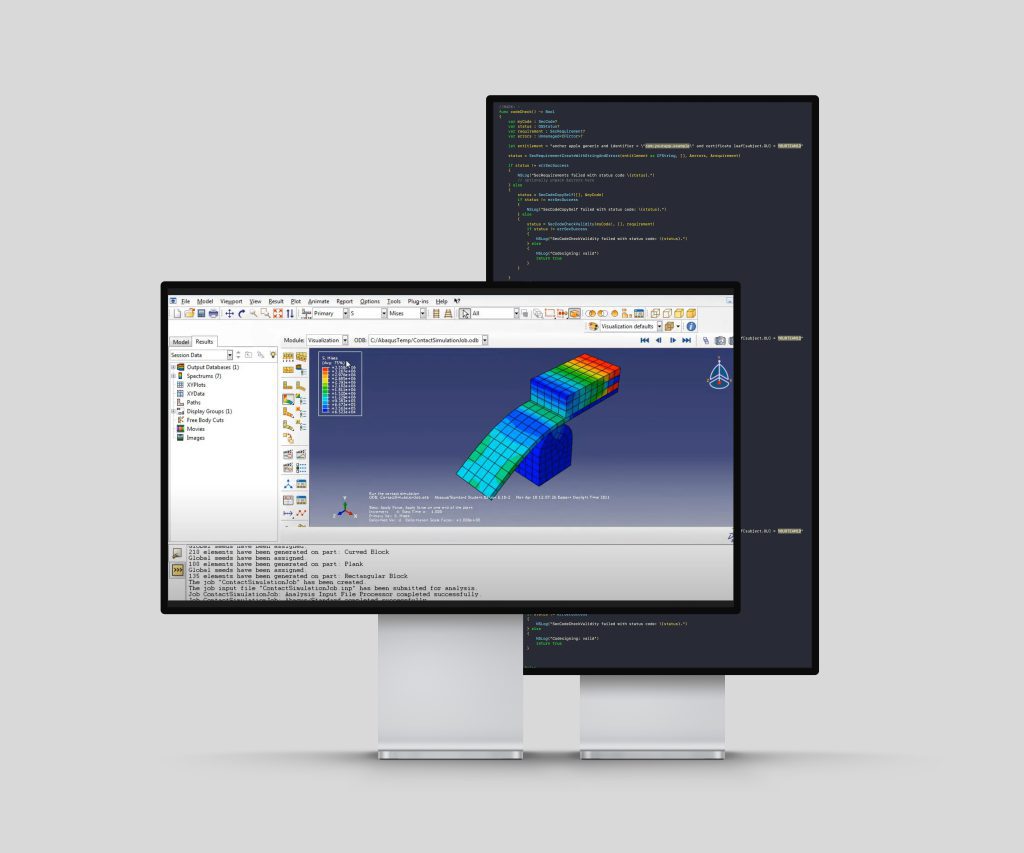
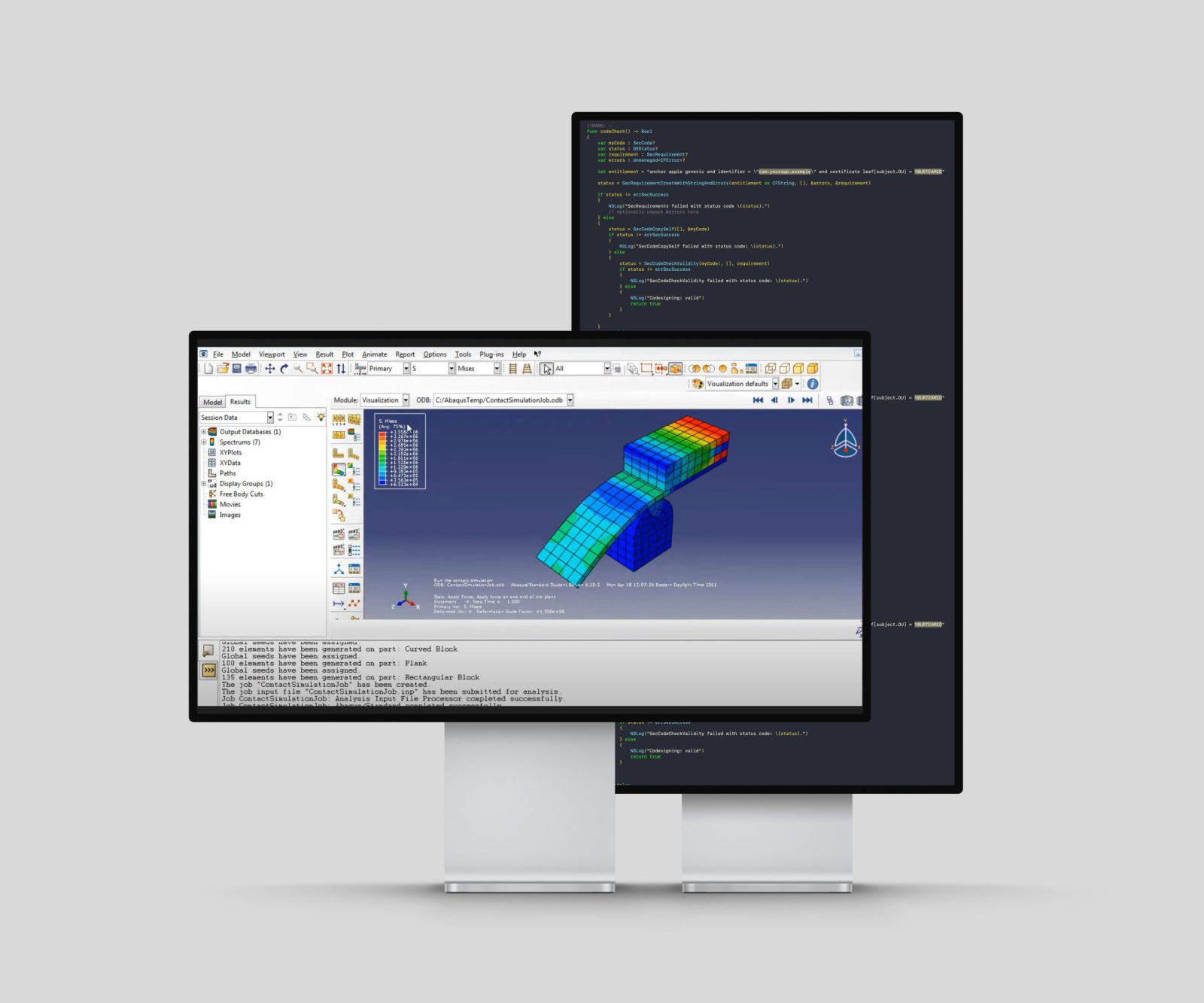
The Abaqus Python Course is designed to empower engineers and researchers with the art of Python scripting for Abaqus. If you’re looking to streamline workflows, automate tasks, and unlock the full potential of Abaqus simulations, this course might be the perfect fit for you.
The course is well-structured, with modules dedicated to specific areas like MDB scripting and output handling. Each module includes video lectures, workshops, and potentially downloadable materials to solidify your learning. The workshops, focusing on practical applications like simulating a cantilever beam or a 3D truss, seem particularly valuable for solidifying the theoretical concepts.
*Notice that we also offer a full version of the course at a higher price, which includes advanced topics you will need for writing python scripts with Abaqus. This course covers all the topics listed in the curriculum below with a lock icon, including advanced topics for python scripting, including Running a number of jobs sequentially, Combining frames of output databases, Sending an email when job completes, Using Kernel and RSG plug-ins, Automatic simulation of Semi-Geodesic composite pressure vessel, Failure analysis of composite pressure vessel with UMAT Puck subroutine, and transferring load from CFD to structural model in Abaqus. You can view the full course through this link.
Composite Simulation Course Composite fem Course
Python FEM Course
By enrolling in this Python FEM course, you’ll learn:
Master Python Scripting Fundamentals: Abaqus Python Course
Gain a solid foundation in Python, including variables, data types, control flow, functions, and object-oriented programming.
Automate Complex Abaqus Workflows:
Effortlessly create and manipulate intricate Abaqus models using Python scripts.
Boost Efficiency and Innovation:
Automate repetitive tasks, design optimization studies, and parametric analyses to accelerate your workflow and explore design possibilities.
Perform In-Depth Analysis:
Extract and analyze critical simulation data with precision using Python libraries and scripting techniques.
Python for Mechanical Engineers
MDB with Abaqus Python Course
 Lesson 1-1- Introduction to Abaqus Python scripting
Lesson 1-2- Python language programming
Lesson 1-3- Starting of scripting
Workshop 1-1- simulation of a cantilever beam (Abaqus python)
 Workshop 1-2- Running a number of jobs sequentiall
* (Only available in full package)
You can check the first workshop on YouTube Channel.[/woodmart_accordion_item][woodmart_accordion_item title=”MODULE 2: OUTPUT WITH SCRIPTING”]
Outputs with Python Scripting in Abaqus
Lesson 2-1: Abaqus object model and XY plot options
Lesson 2-2: Explore an output database
Lesson 2-2: Combine frames of two output databases
Lesson 2-3: Monitor an analysis job and send an email when complete (Abaqus Python Course)
* (Only available in full package)[/woodmart_accordion_item][woodmart_accordion_item title=”MODULE 3: PLUGIN”]
PLUGIN
Lesson 3-1: Kernel and RSG plug-ins
* (Only available in full package)[/woodmart_accordion_item][woodmart_accordion_item title=”MODULE 4: COMPOSITE PRESSURE VESSEL CASESTUDY”]
COMPOSITE PRESSURE VESSEL SIMULATION IN ABAQUS (GEODESIC WINDING) VIA PYTHON SCRIPTING
Lesson 4-1: Semi-Geodesic filament winding
Workshop 4-1: Simulation automatically Semi-Geodesic composite pressure vessel with Python script
Lesson 4-2: Puck failure criterion
Workshop 4-2: Failure analysis of composite pressure vessel with UMAT Puck subroutine
* (Only available in full package)[/woodmart_accordion_item][woodmart_accordion_item title=”MODULE 5: TRANSFERING LOAD FROM CFD TO STRUCTURAL”]
Script to transfer load from CFD to structural model in Abaqus
Lesson 5-1: Python script description (Python FEM)
Workshop 5-1: Script to transfer load from CFD to structural model in Abaqus
* (Only available in full package)[/woodmart_accordion_item][/woodmart_accordion]
Our team of CAE Assistant instructors, renowned experts in their respective domains, will deliver each section of the course, providing you with unparalleled knowledge and insights.
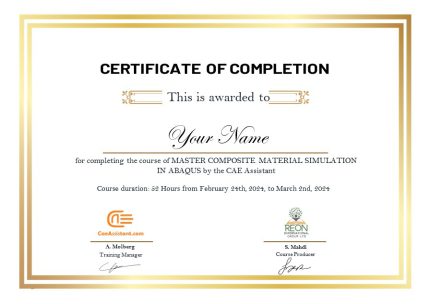
Upon successful completion of this course, you will receive a course completion certificate. This certificate guarantees your skills with the amount of time spent, skills trained, and can be verified online.
➤ Engineers and researchers seeking to enhance their Abaqus proficiency through scripting.
➤ Individuals with a basic understanding of Python FEM programming who want to apply their skills to finite element analysis.
➤ Professionals looking to automate workflows for AI or similar case studies and improve efficiency in their Abaqus simulations.
You can taste some FREE stuff about this matter in our blog “Abaqus Python Scripting Full Guide“[/woodmart_text_block][woodmart_button style=”link” color=”primary” align=”left” woodmart_css_id=”61d469f54788d” title=”Read More” full_width=”no” button_inline=”no” button_smooth_scroll=”no” wd_button_collapsible_content=”yes”]
[/testimonial][testimonial image=”22423″ name=”Ronald Richards” img_size=”80×80″]I was impressed by the depth and breadth of the course content. Learning how to use subroutines like UMAT opened up new possibilities for my composite fatigue analysis. This course is a valuable asset for anyone working with different types of composite materials.
[/testimonial][testimonial image=”22424″ name=”Wade Warren” img_size=”80×80″]This course provided a clear and structured learning path. The instructors were knowledgeable and supportive, making the learning process engaging and effective. I feel confident tackling composite simulation projects after completing this program.
[/testimonial][testimonial image=”22425″ name=”Aviana Plummer” img_size=”80×80″]The practical application focus of this course was essential. The workshops allowed me to apply the learned techniques to problems relevant to my industry. This course has equipped me with the skills to solve real-world composite simulation challenges.
[/testimonial][/testimonials]
 English
  Korean
  Chinese