





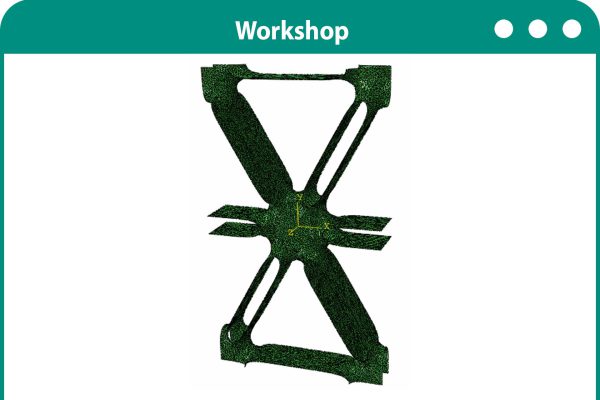
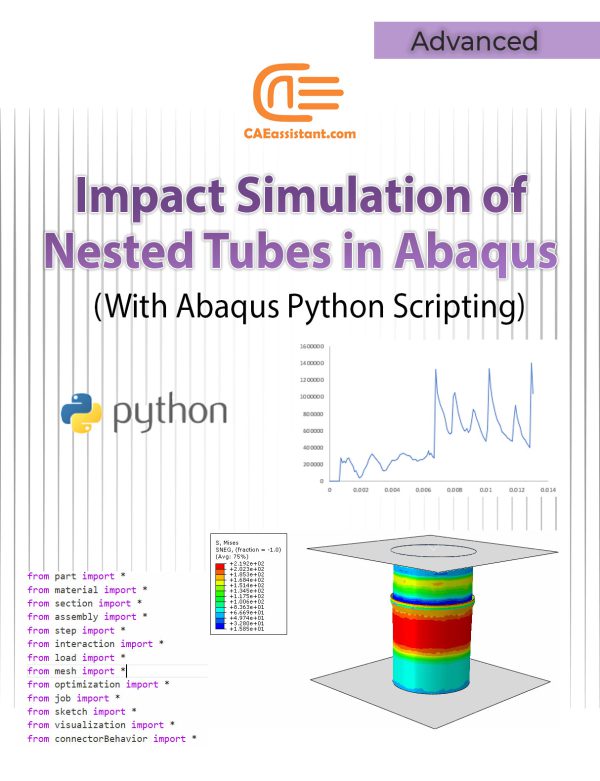


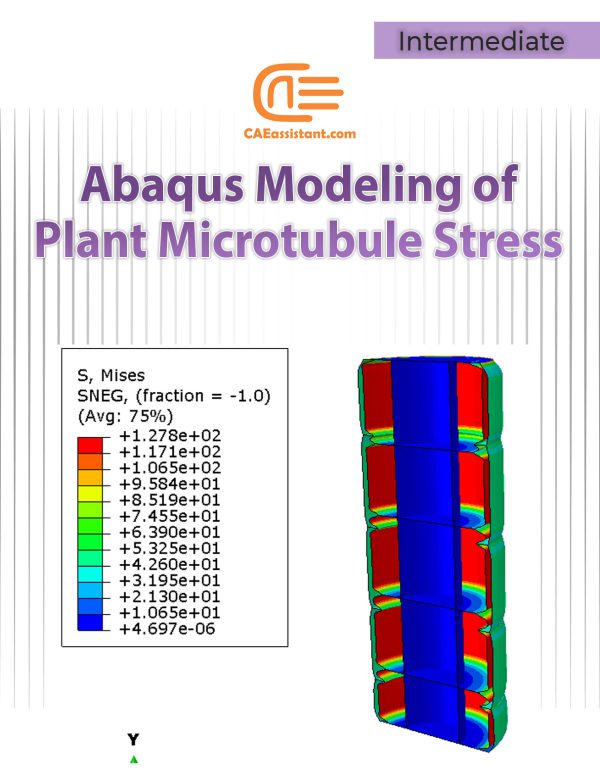






Compressible Elastometric Foams Large Deformation by a Strain-Based Logarithmic Hyperelastic Model
Elastomeric foams are unique materials with Hyperelastic properties, making them ideal for applications that demand flexibility, energy absorption, and durability. To accurately simulate their behavior under large deformations, this package introduces a constitutive model based on logarithmic strain invariants for precise calculation of stiffness and stress. The model is implemented in Abaqus using a custom UMAT subroutine, giving you full control over material definition and enabling realistic finite element simulations.
The tutorial includes two step-by-step workshops: one dedicated to simulating tension in elastomeric foams, and the other focused on compression. Each workshop guides you through the entire process; from problem setup and subroutine coding to running the analysis and interpreting results.
With comprehensive tutorial videos, supporting files, and detailed explanations, this package equips you with both the theoretical knowledge and practical skills needed to model elastomeric foams confidently and extend the approach to advanced applications.
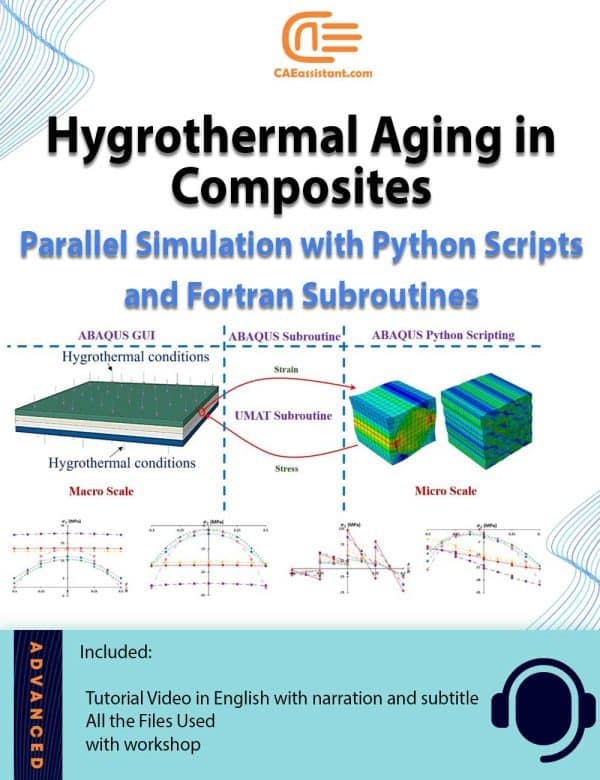

Multiscale Analysis of Hygrothermal Aging in Laminated Composites
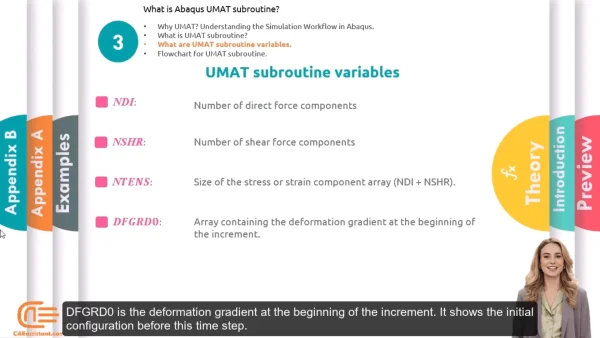
This package includes parallel and multi-scale aging analysis of fiber-reinforced composite laminates exposed to thermal and humidity loads. In this project, parallel analysis methods are used to simulate and analyze the composite at both micro and macro scales. The laminate simulations are carried out in the graphical interface of Abaqus at the macro scale, while the micro scale analysis is conducted through Python scripting in the non-graphical Abaqus environment. The parallel analysis between the two environments is facilitated using Abaqus UMAT subroutines. The stress tensor and elasticity properties obtained at the micro-scale are passed to the UMAT subroutine, which then defines and updates the Jacobian matrix and stress tensor for all macro-scale integration points.


 English
  Korean
  Chinese