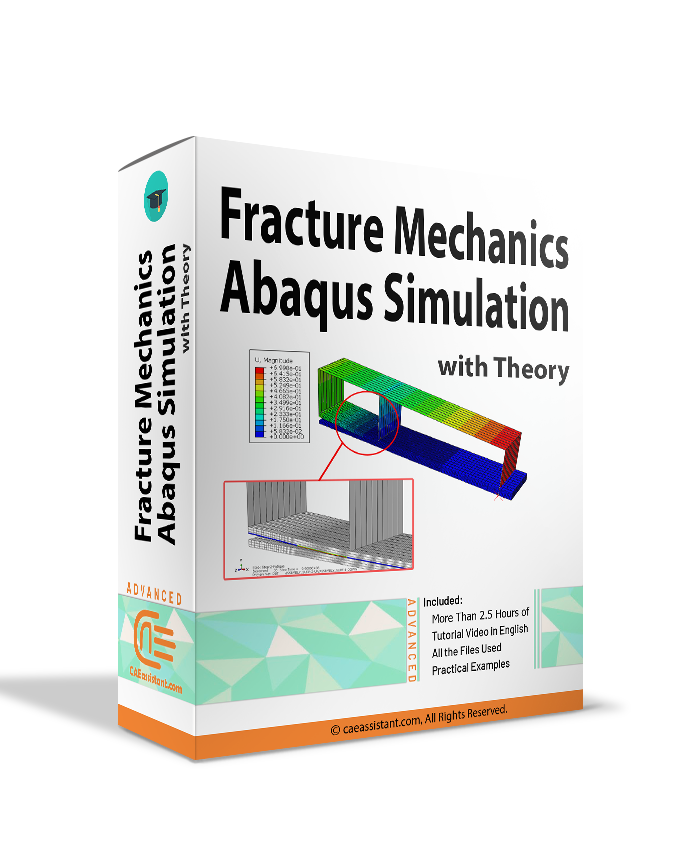
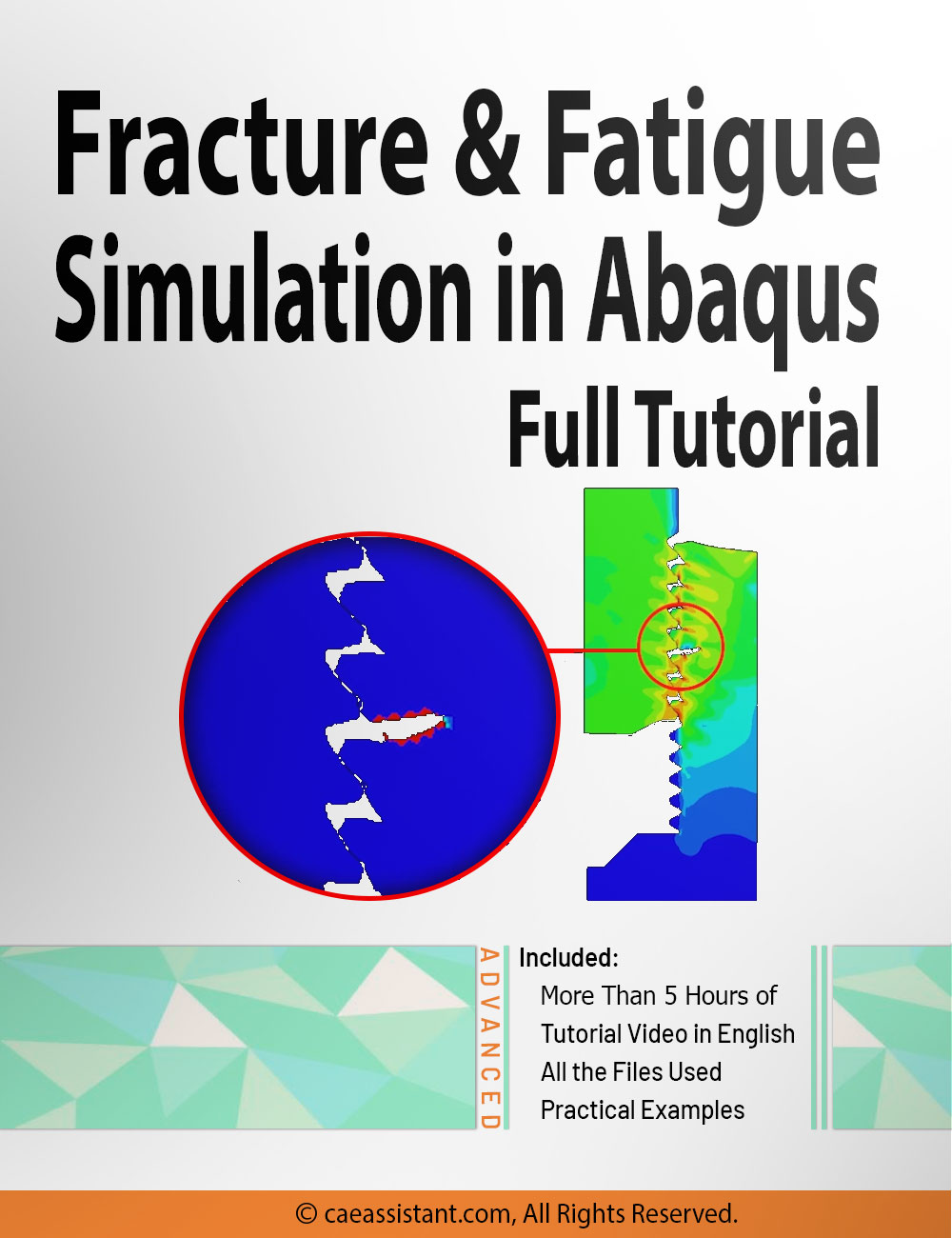
In this video, we provide a brief overview of the content included in fracture mechanics tutorial package, which include theory and practical modeling. It covers key concepts like brittle vs. ductile fracture, FPZ, LFM, energy methods, SIF, J-integral, and G, with supporting PDFs.
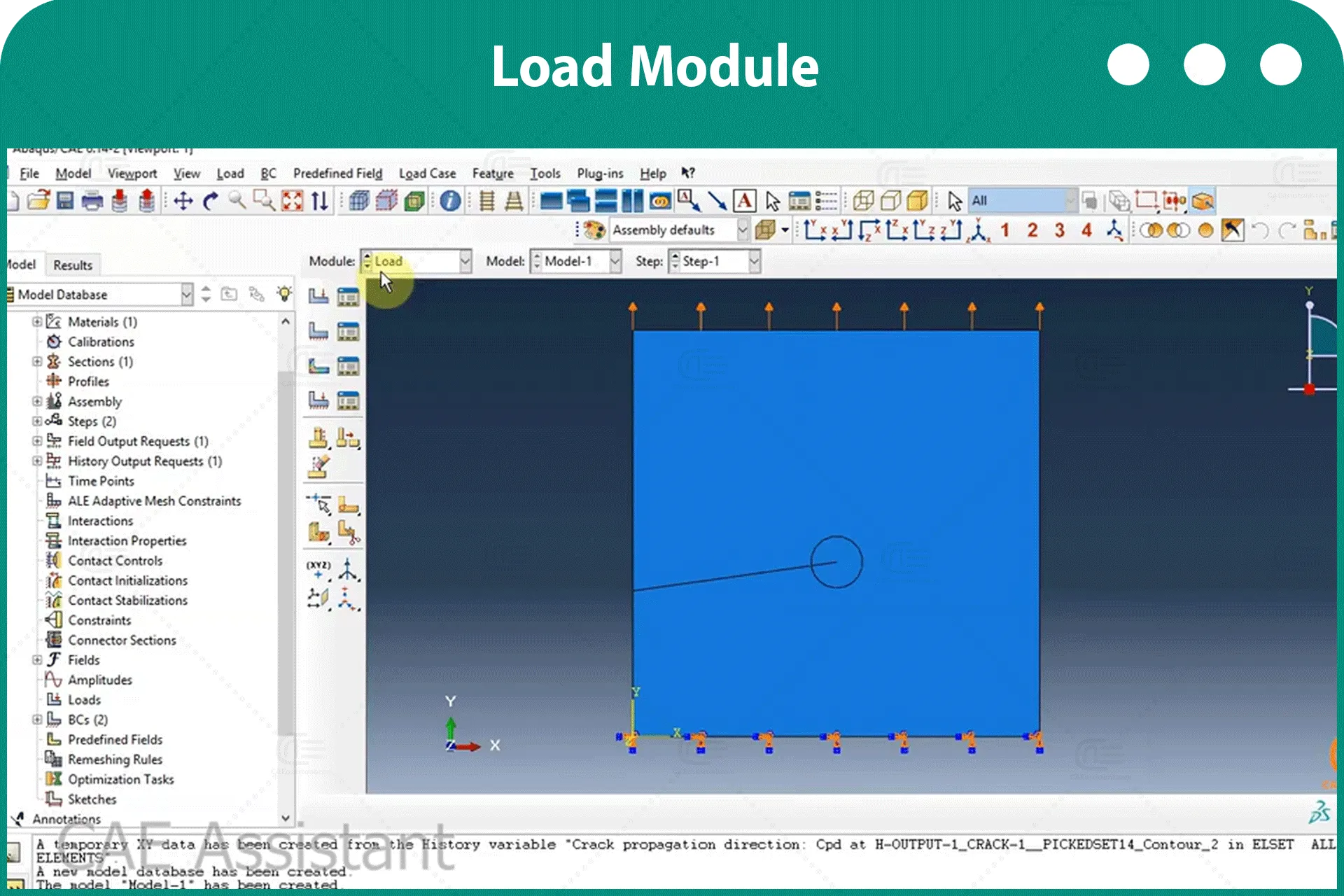
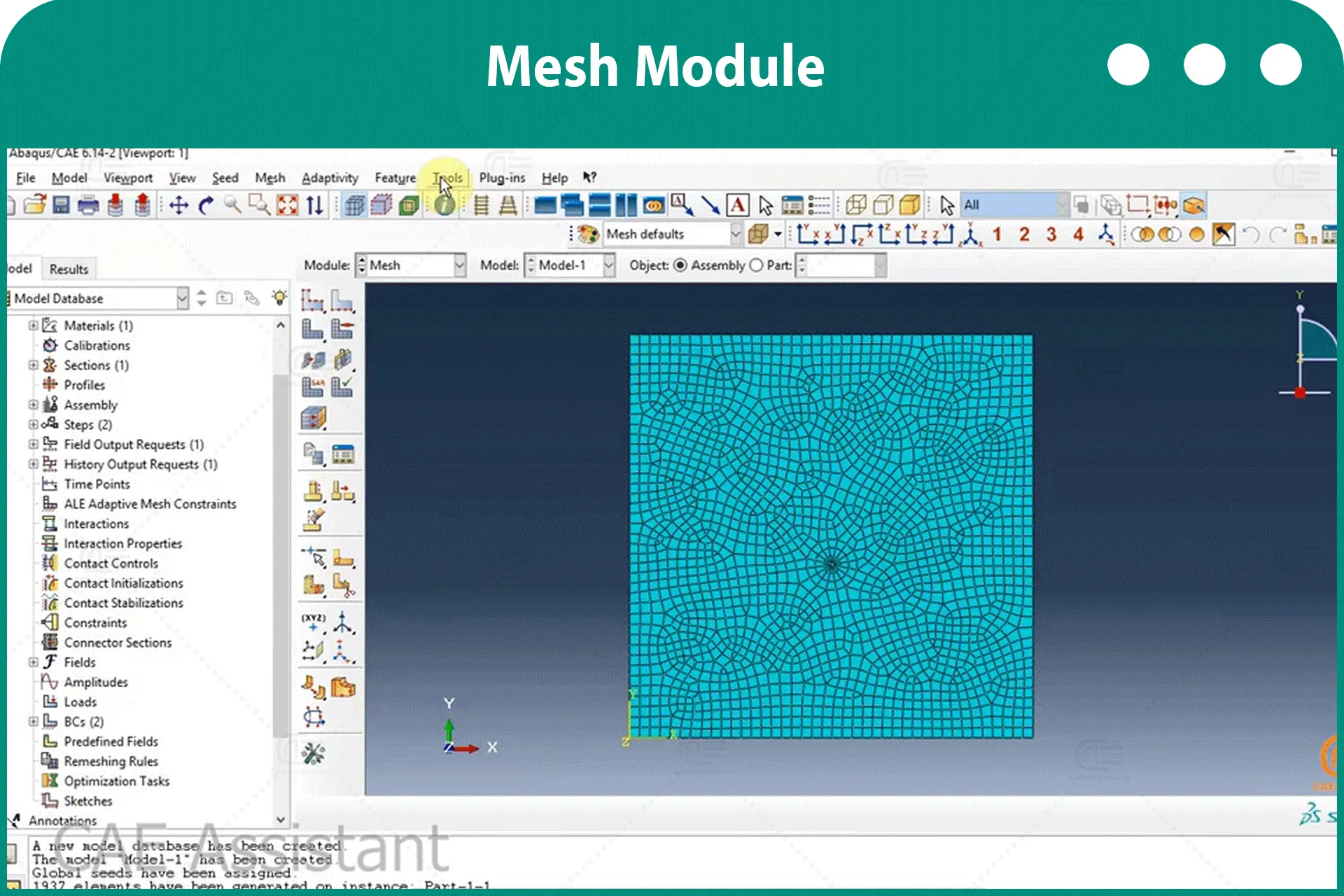
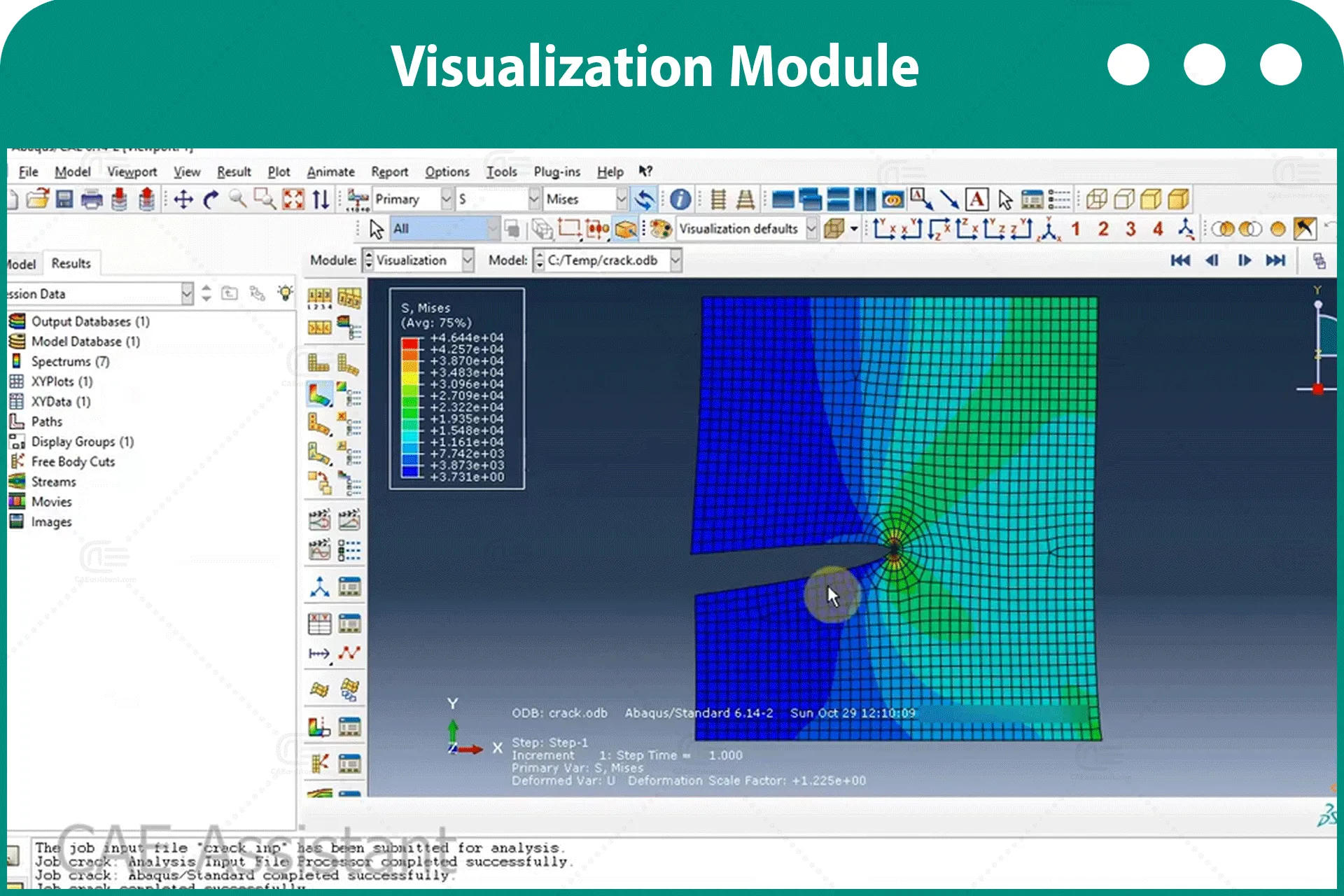
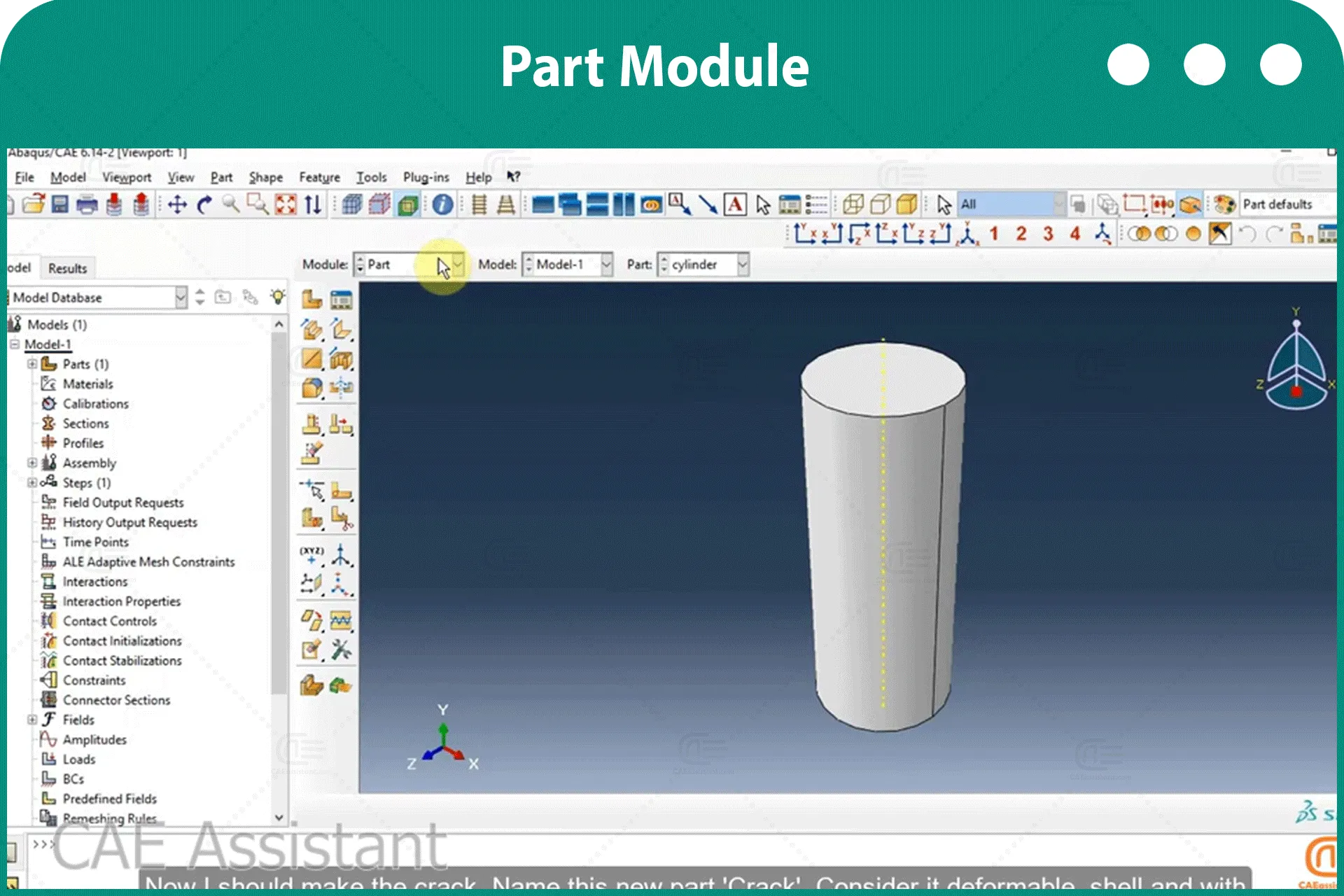
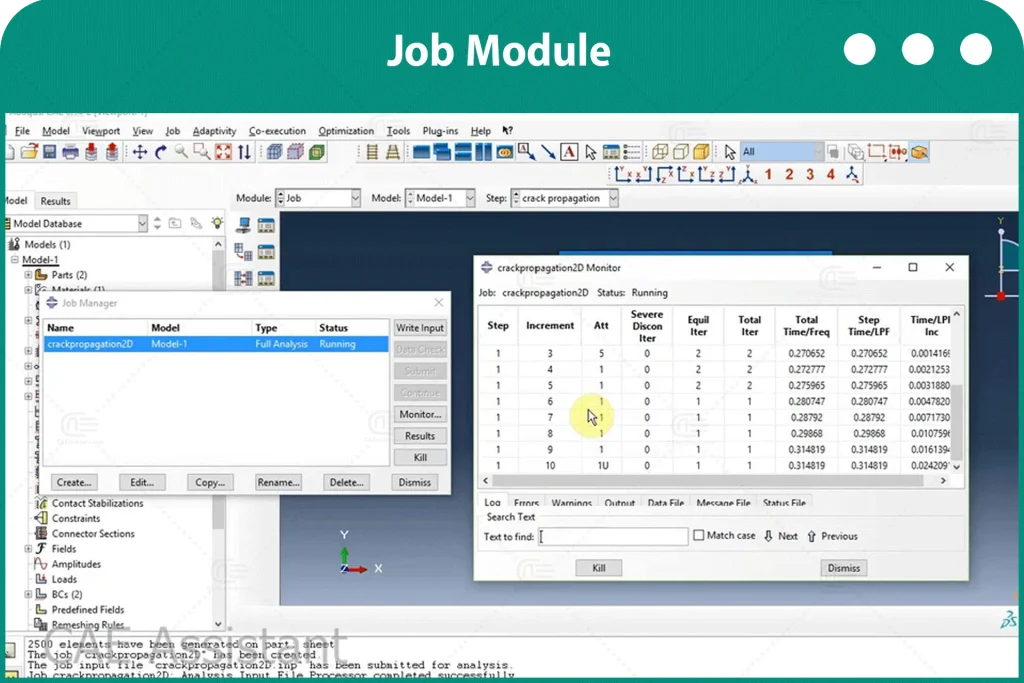
We then go through 8 hands-on Abaqus tutorials (2D/3D) using both XFM and classical methods, plus a custom Python script for crack tracking one by one. For each workshop, we offer a brief explanation of the model and show a snippet of the simulation, result extraction, and plotting of COD, energy, and crack data through a video. This allows you to clearly understand the package contents and presentation style, helping you make a confident purchase decision.
[woodmart_title align=”left” size=”medium” font_weight=”200″ title_decoration_style=”bordered” woodmart_css_id=”683b08ae7eede” title=”What is included in this package?” title_font_size=”eyJwYXJhbV90eXBlIjoid29vZG1hcnRfcmVzcG9uc2l2ZV9zaXplIiwiY3NzX2FyZ3MiOnsiZm9udC1zaXplIjpbIiAud29vZG1hcnQtdGl0bGUtY29udGFpbmVyIl19LCJzZWxlY3Rvcl9pZCI6IjY4M2IwOGFlN2VlZGUiLCJkYXRhIjp7ImRlc2t0b3AiOiIyNnB4IiwidGFibGV0IjoiMzJweCIsIm1vYmlsZSI6IjI2cHgifX0=” responsive_spacing=”eyJwYXJhbV90eXBlIjoid29vZG1hcnRfcmVzcG9uc2l2ZV9zcGFjaW5nIiwic2VsZWN0b3JfaWQiOiI2ODNiMDhhZTdlZWRlIiwic2hvcnRjb2RlIjoid29vZG1hcnRfdGl0bGUiLCJkYXRhIjp7InRhYmxldCI6e30sIm1vYmlsZSI6e319fQ==” css=”.vc_custom_1748699318598{margin-bottom: 35px !important;}” wd_hide_on_desktop=”no” wd_hide_on_tablet=”no” wd_hide_on_mobile=”no”]
This tutorial package on fracture is a powerful learning resource designed to take you from theoretical understanding to advanced simulation skills. Through it, you’ll gain a solid grasp of crack growth mechanisms and delamination propagation, with a focus on practical implementation using Abaqus. You’ll learn how to apply the Virtual Crack Closure Technique (VCCT) and Paris Law, customize Abaqus input files, and model the behavior of a Mixed-Mode Bending (MMB) specimen. The package equips you with a deep understanding of fracture mechanics, including concepts like stress intensity factors, J-integrals, and the energy release rate, bridging the gap between theoretical fracture principles and numerical modeling. It also guides you through detailed simulation workflows—setting up steps, defining boundary conditions, meshing, submitting jobs, and extracting results like stress fields, strain energy release rates, and fatigue life indicators.
What makes this tutorial package stand out is its unique blend of advanced engineering theory and hands-on FEA application. It doesn’t just explain concepts—it teaches you how to simulate them, especially in ways that go beyond standard Abaqus capabilities. You’ll learn how to work with custom keyword edits and apply them to real-world fatigue problems. Whether you’re a mechanical engineer, an FEA specialist, or a student entering this field, this package offers a comprehensive, simulation-driven pathway to mastering delamination and fracture mechanics modeling.
The tutorial thoroughly explains the theoretical foundations needed to understand fracture mechanics, as well as how to implement related problems using the available models in Abaqus. As a result, not only will you be able to solve fracture mechanics problems in Abaqus, but you’ll also gain a solid understanding of the underlying theory and relevant equations.
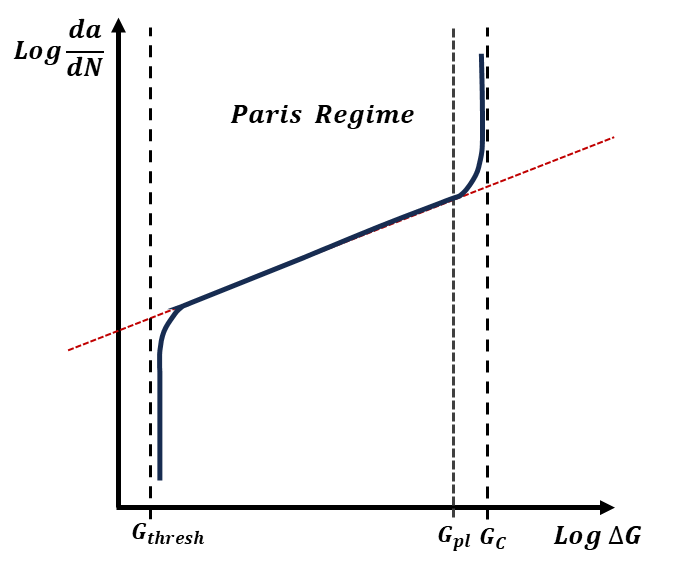
Moreover, in this tutorial, delamination propagation simulation in low-cycle fatigue analyses using VCCT method and Paris law is taught in full detail. The geometric model used in this study is based on finite element models of the Mixed-Mode Bending (MMB) specimen. Moreover, The project is designed to enhance participants’ understanding how to accurately simulate the fatigue crack growth model using the virtual crack closure technique (VCCT) and Paris law. This method was implemented by editing the keywords.
Theoretical and Base Relations
According to the main topic of this tutorial, it’s important to review the fundamental concepts related to fracture and the principles of linear elastic fracture mechanics. After that, as we have a workshop on fatigue crack growth, how to simulate fatigue crack growth using the VCCT Method and Paris Law is taught in full detail.
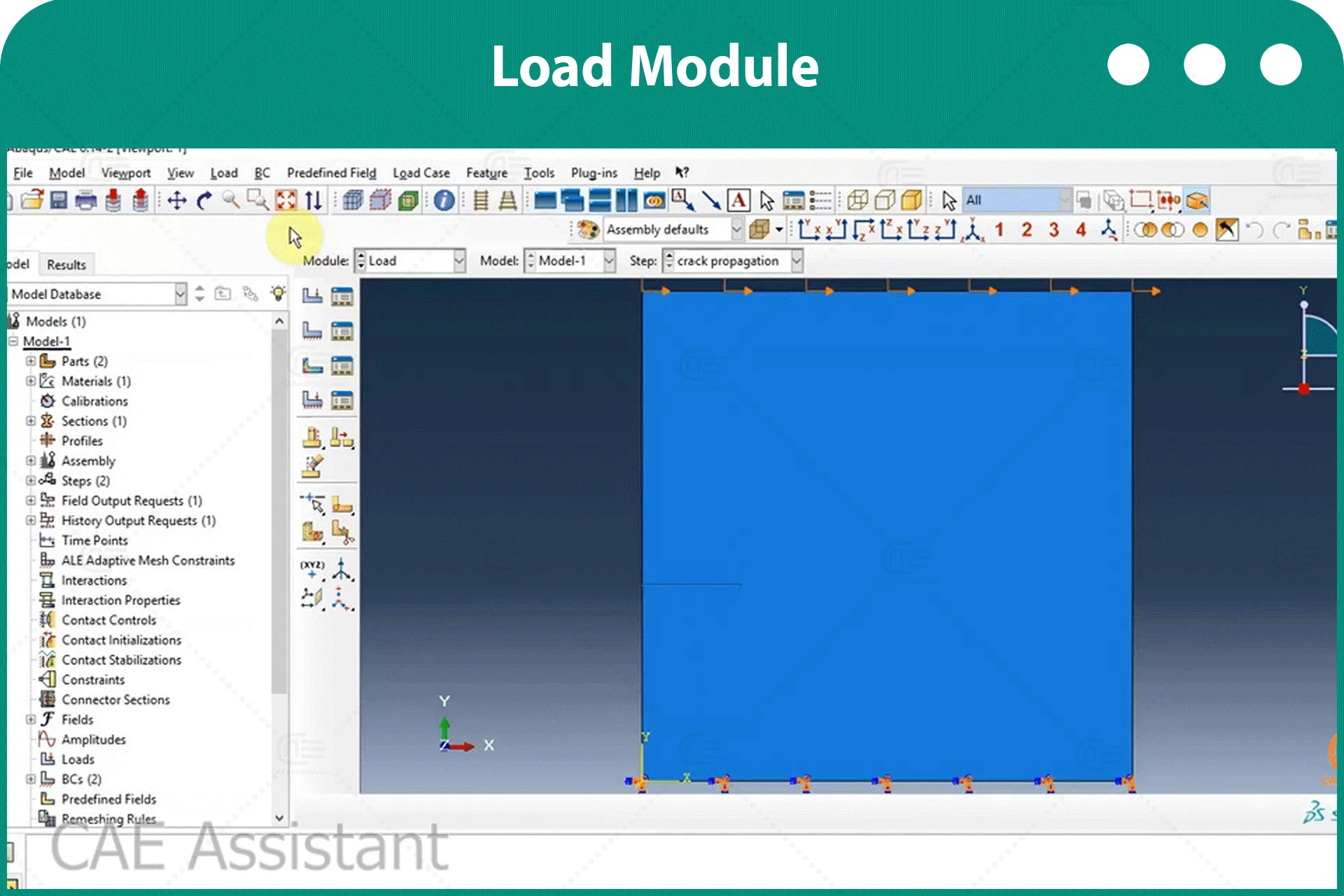
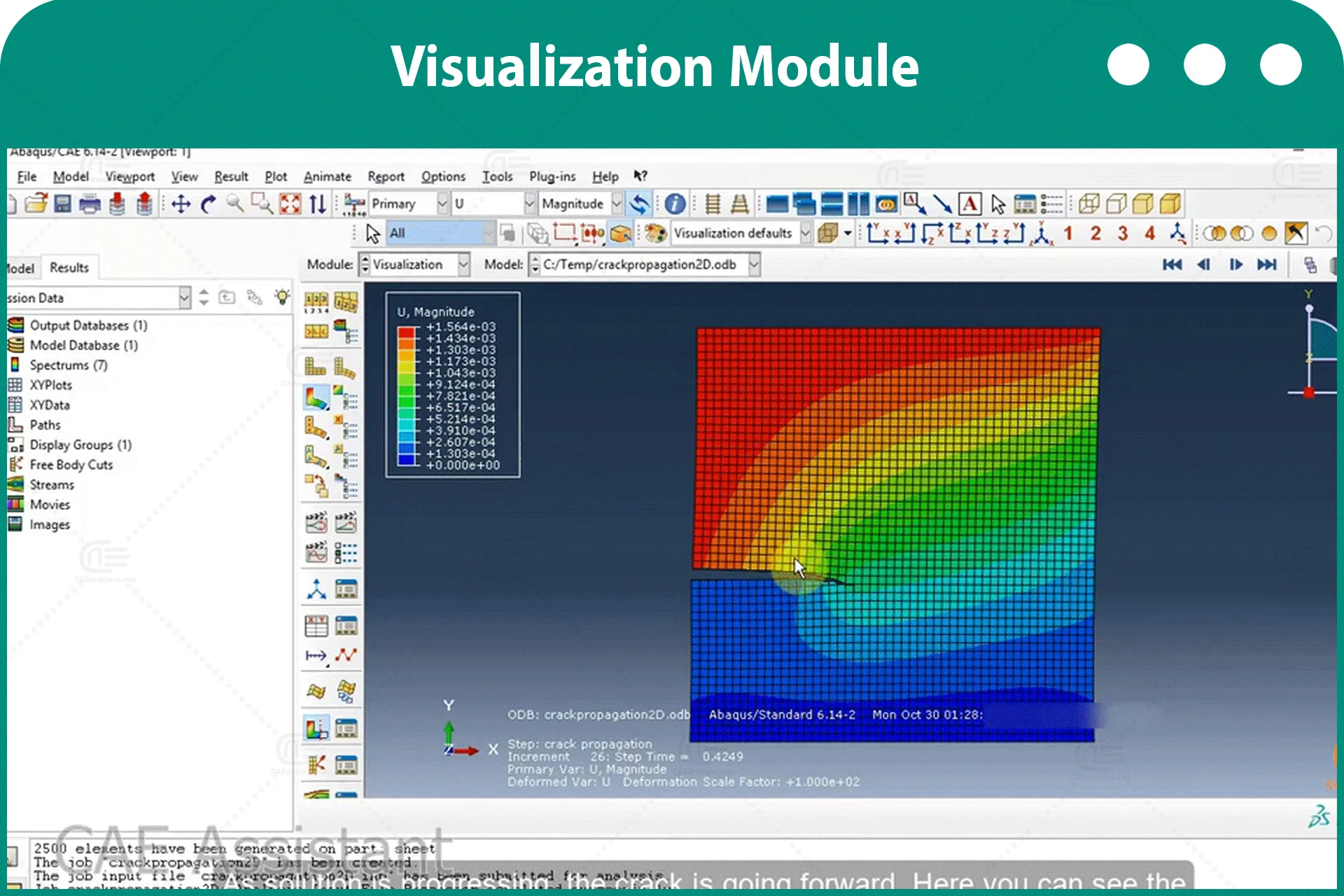
Workshop 1: 2D Crack Propagation with XFEM
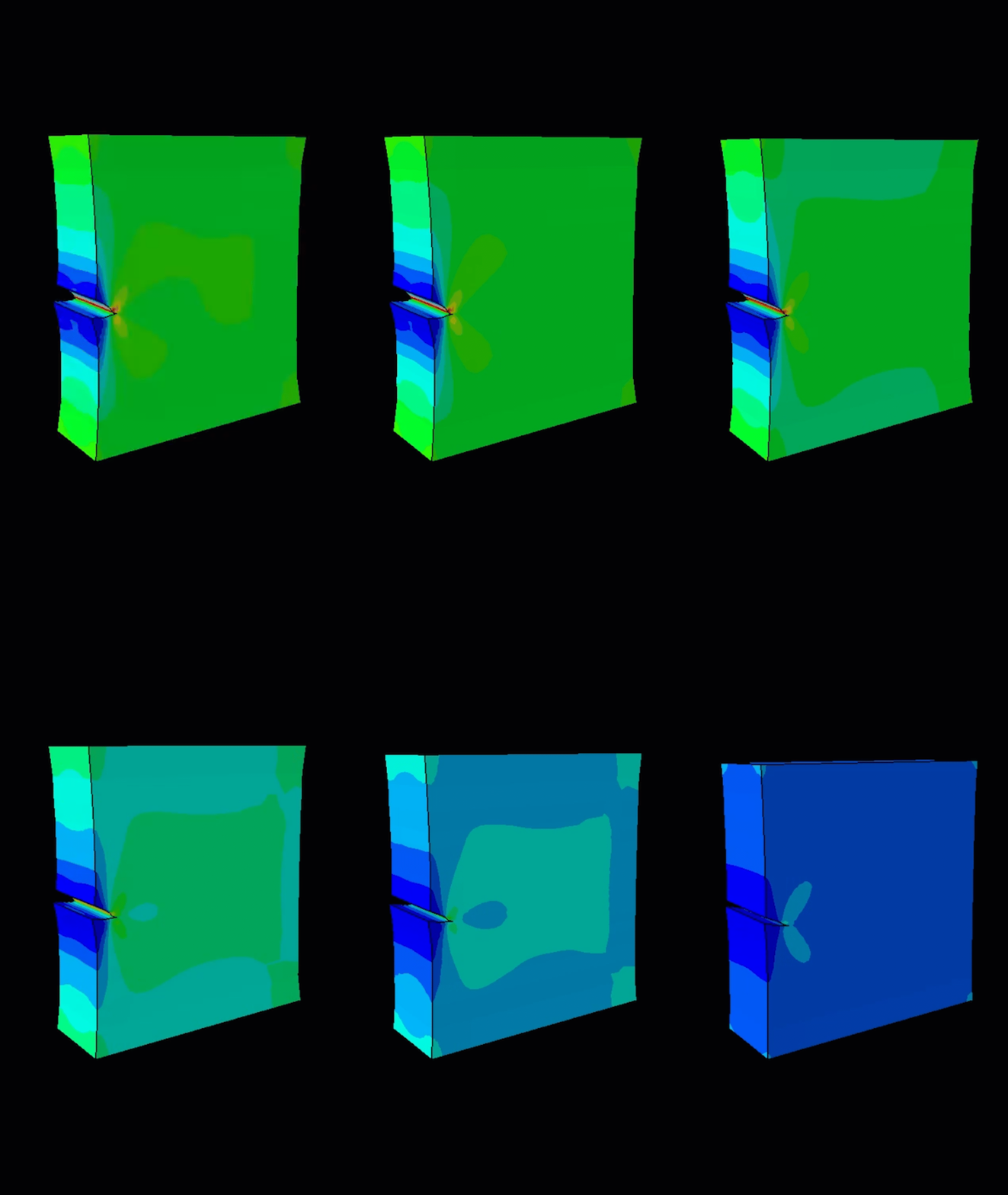
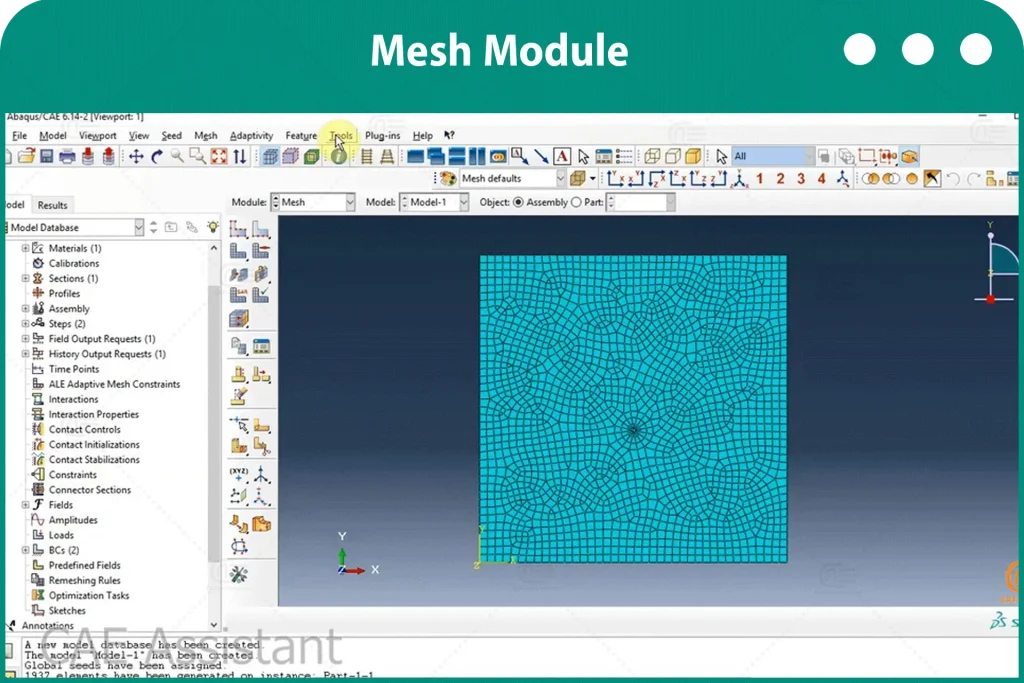
This session focuses on simulating 2D crack growth in a rectangular steel model using the Extended Finite Element Method (XFEM).
Workshop 2: Classic Method Crack Simulation
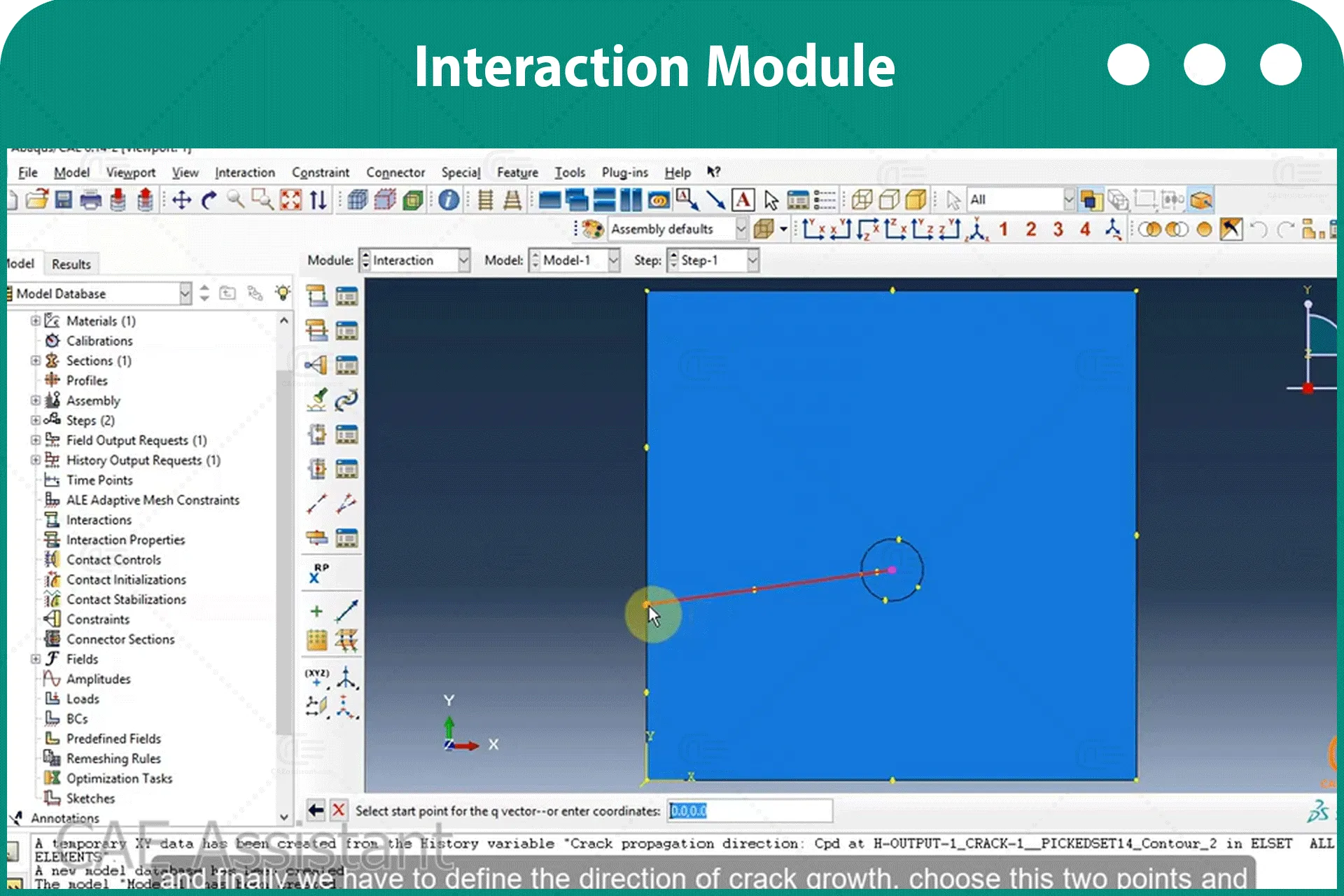
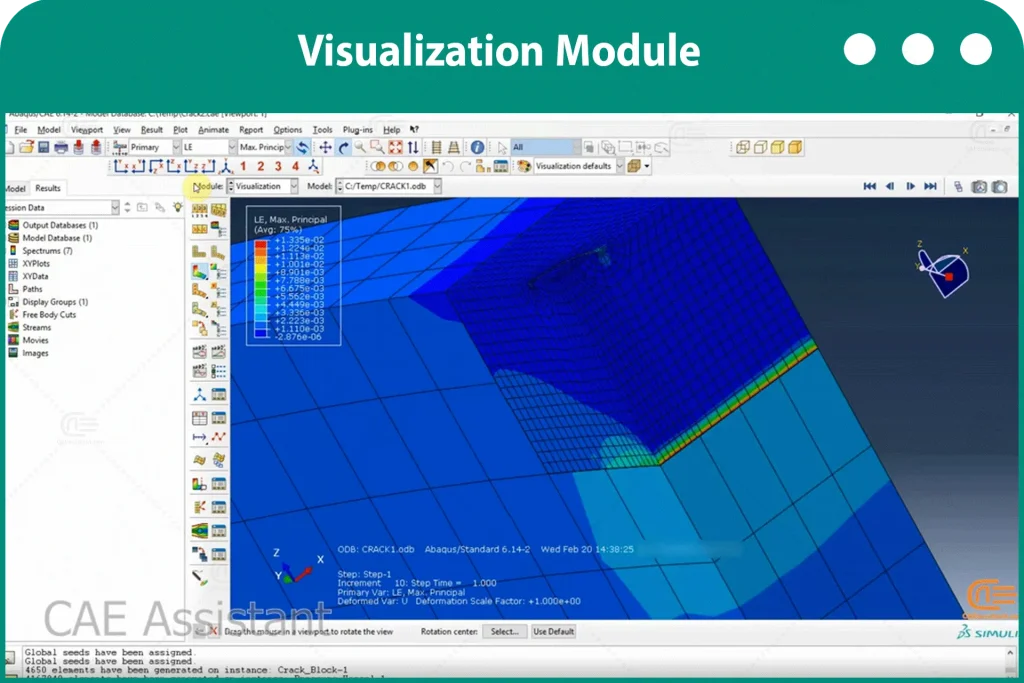
Here, you’ll explore crack simulation using the classic method on a 2D rectangular steel model. This workshop also demonstrates the application of the contour integral criterion.
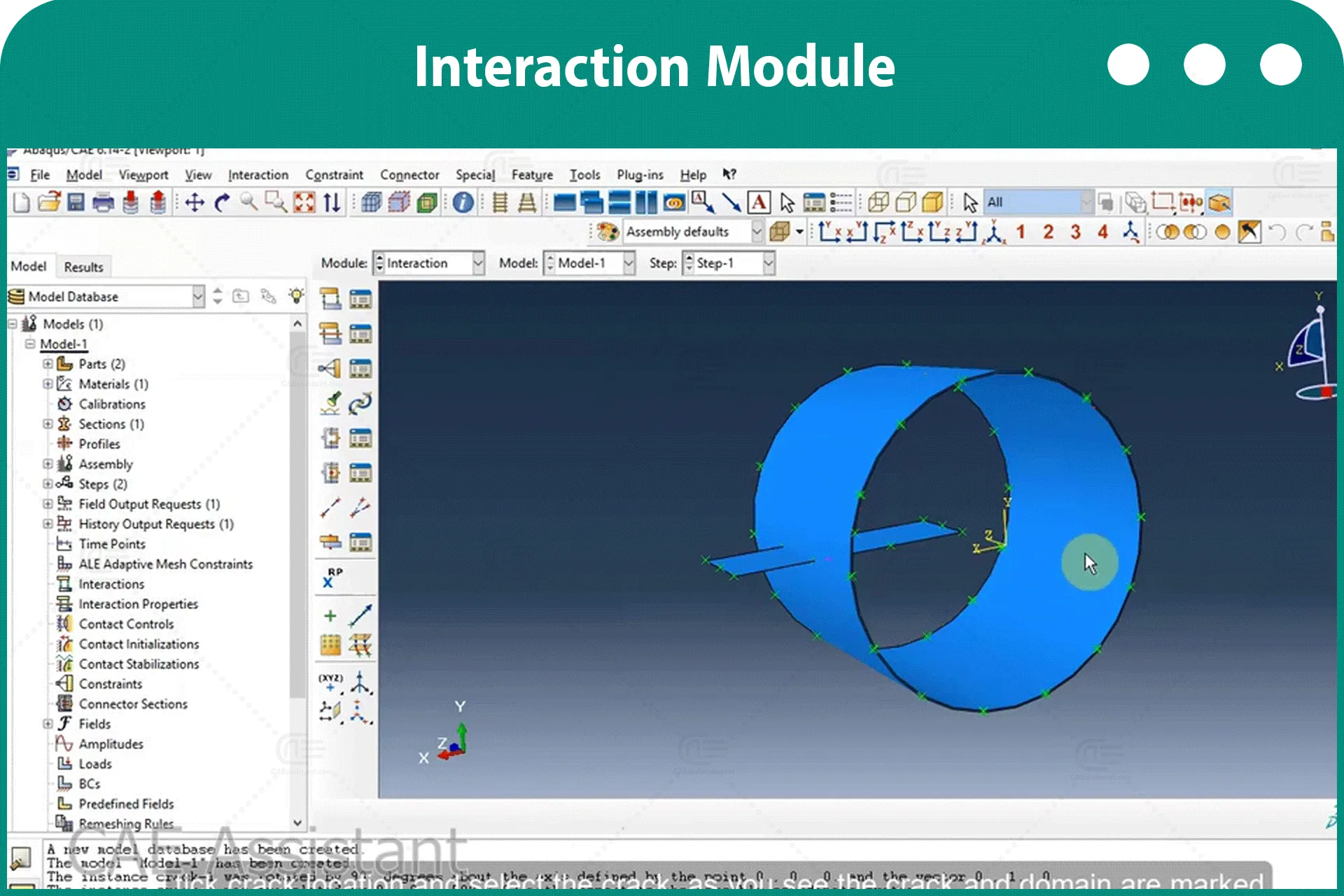
Workshop 3: 3D XFEM Crack Growth
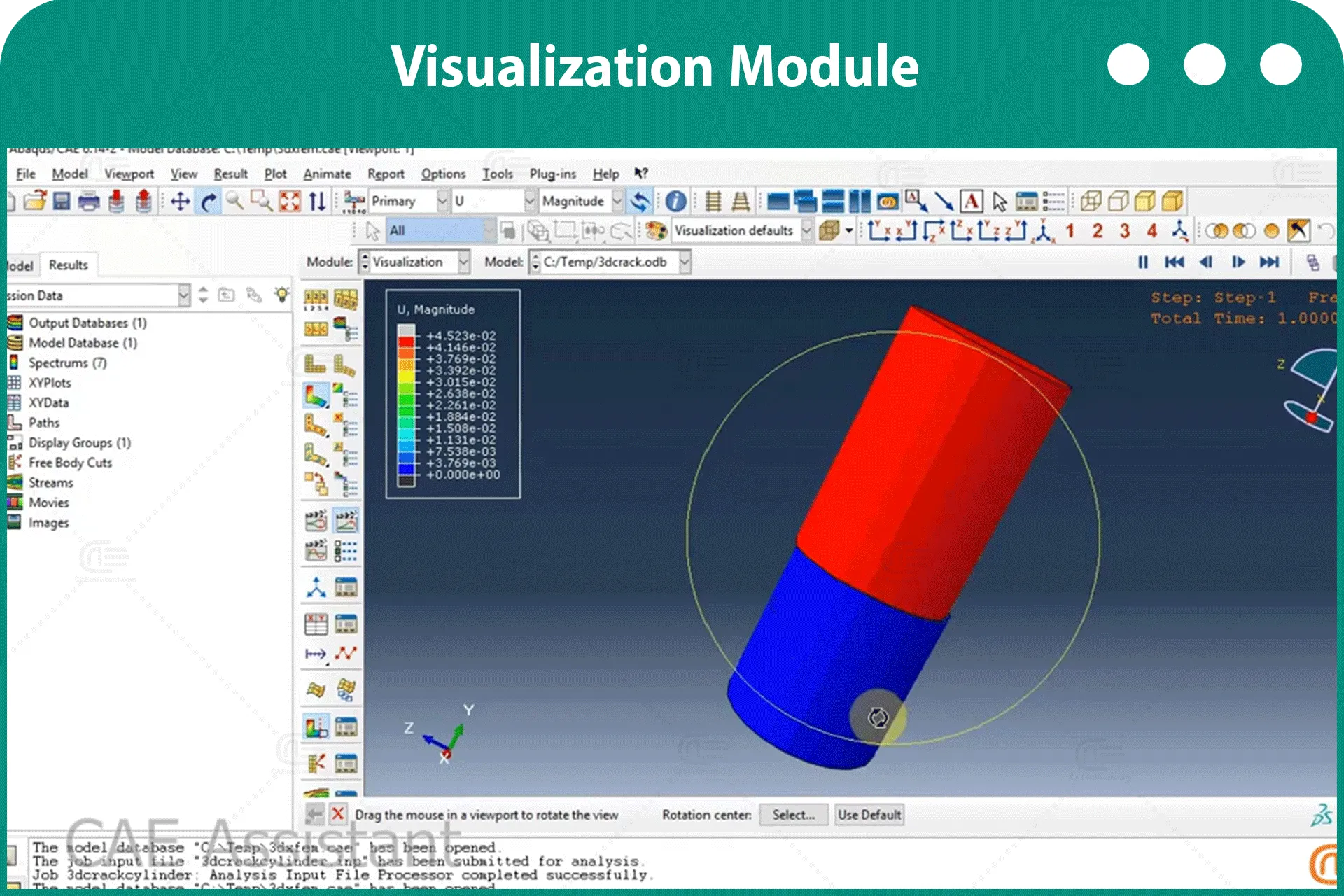
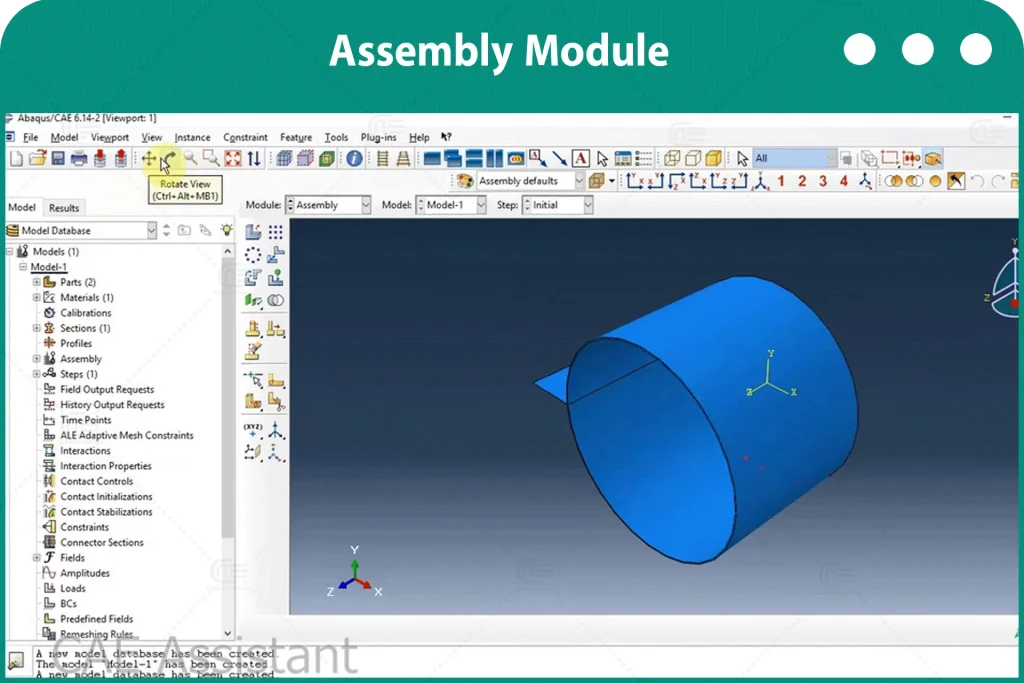
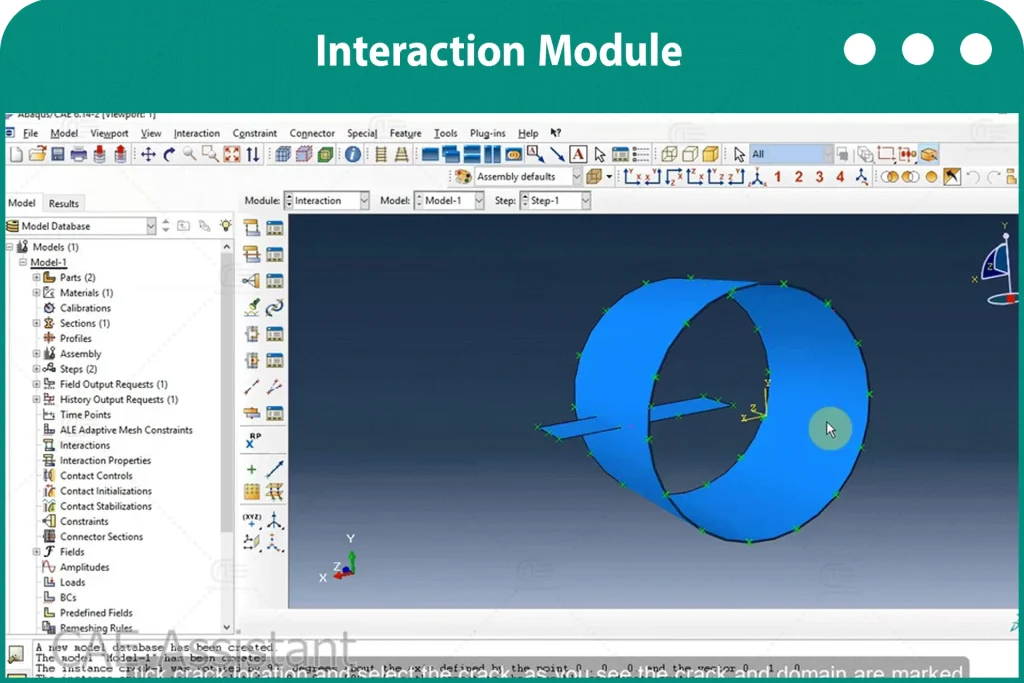
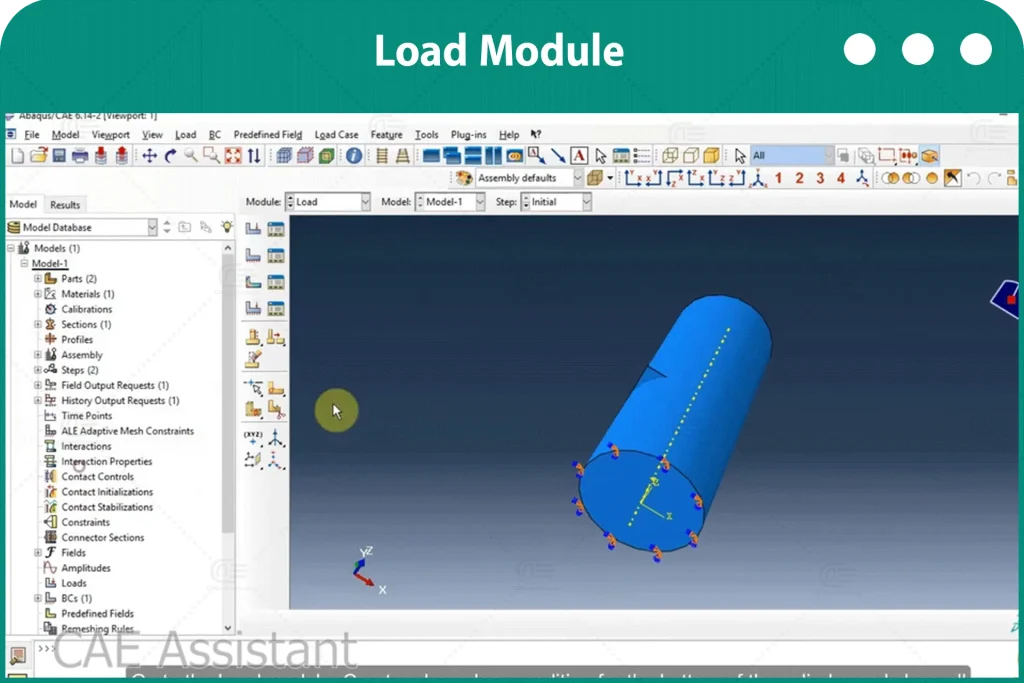
This workshop delves into simulating XFEM crack growth in a 3D cylindrical steel model. The maximum principal stress criterion is used to simulate crack growth in this scenario.
Workshop 4: 3D Crack Simulation in a Tube
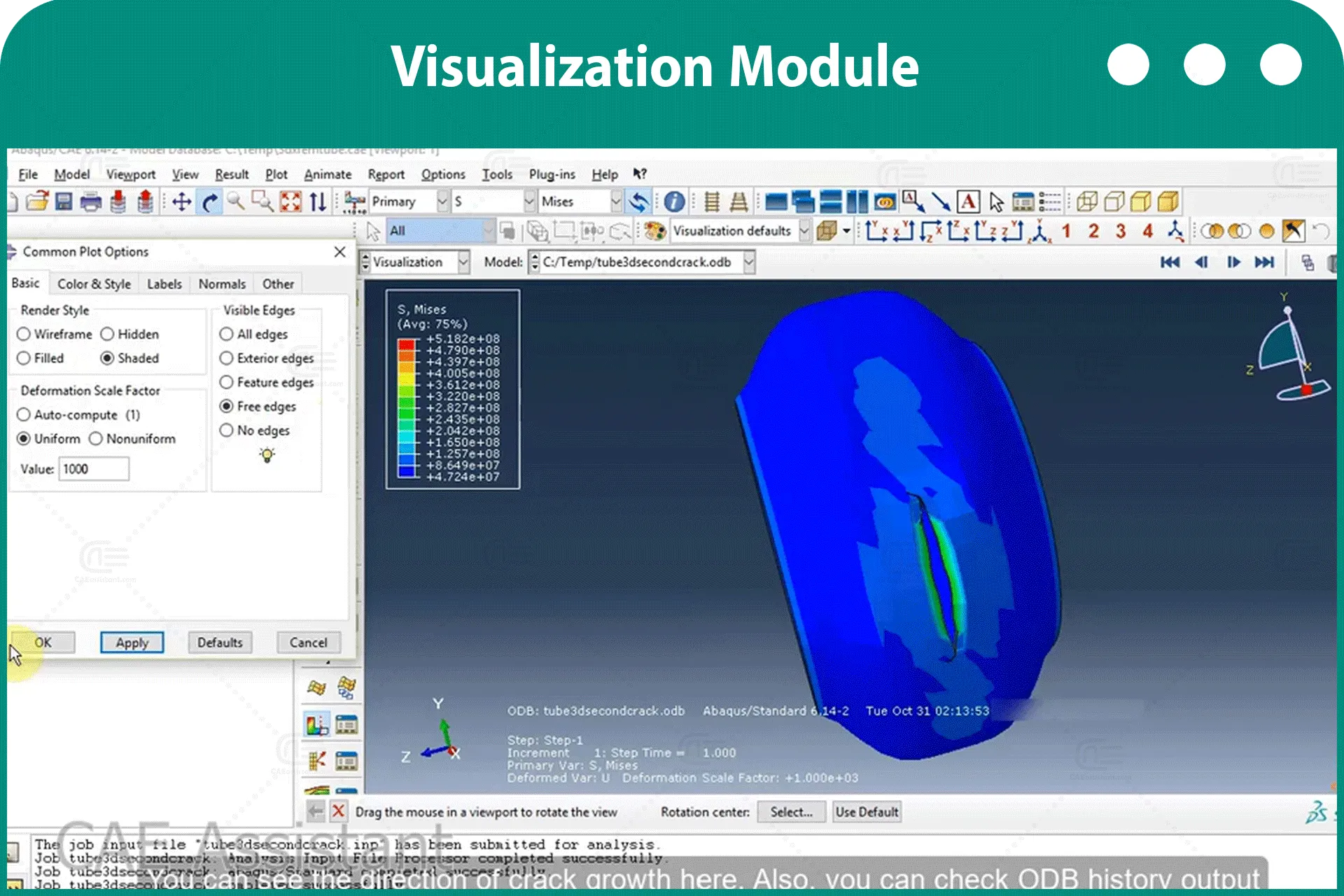
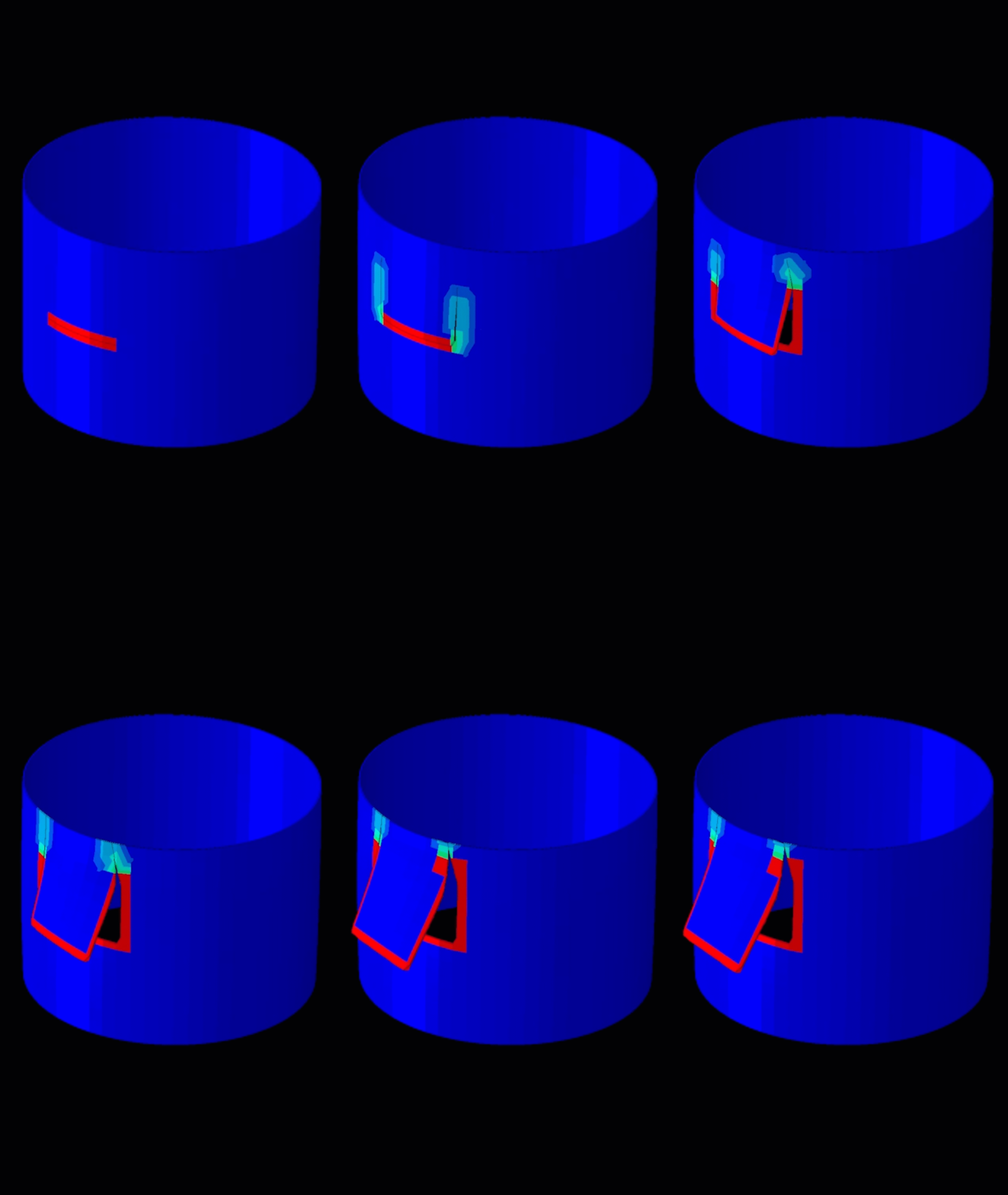
In this example, you’ll observe crack growth effects in a 3D steel tube model. The XFEM method is employed to simulate the crack’s behavior.
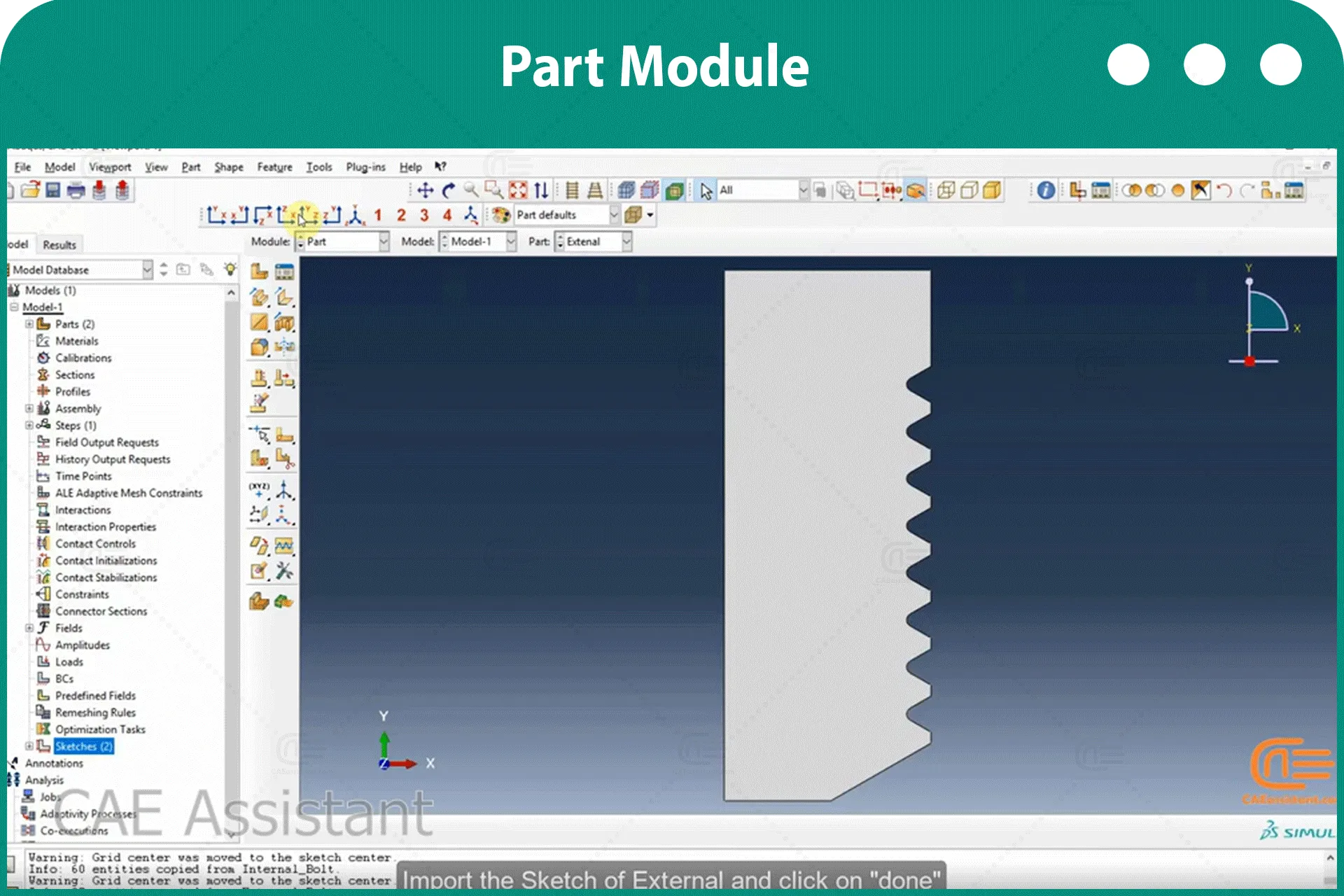
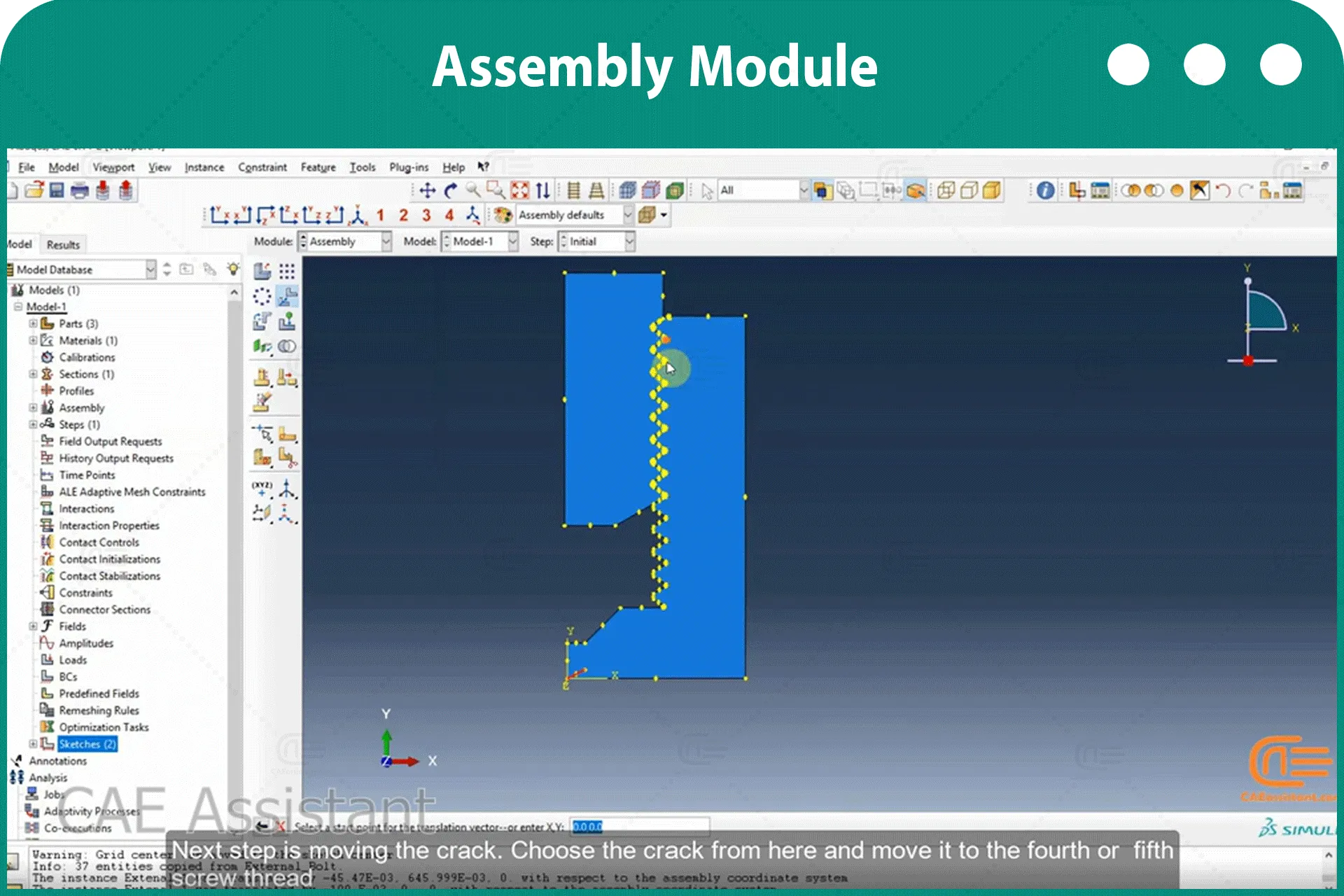
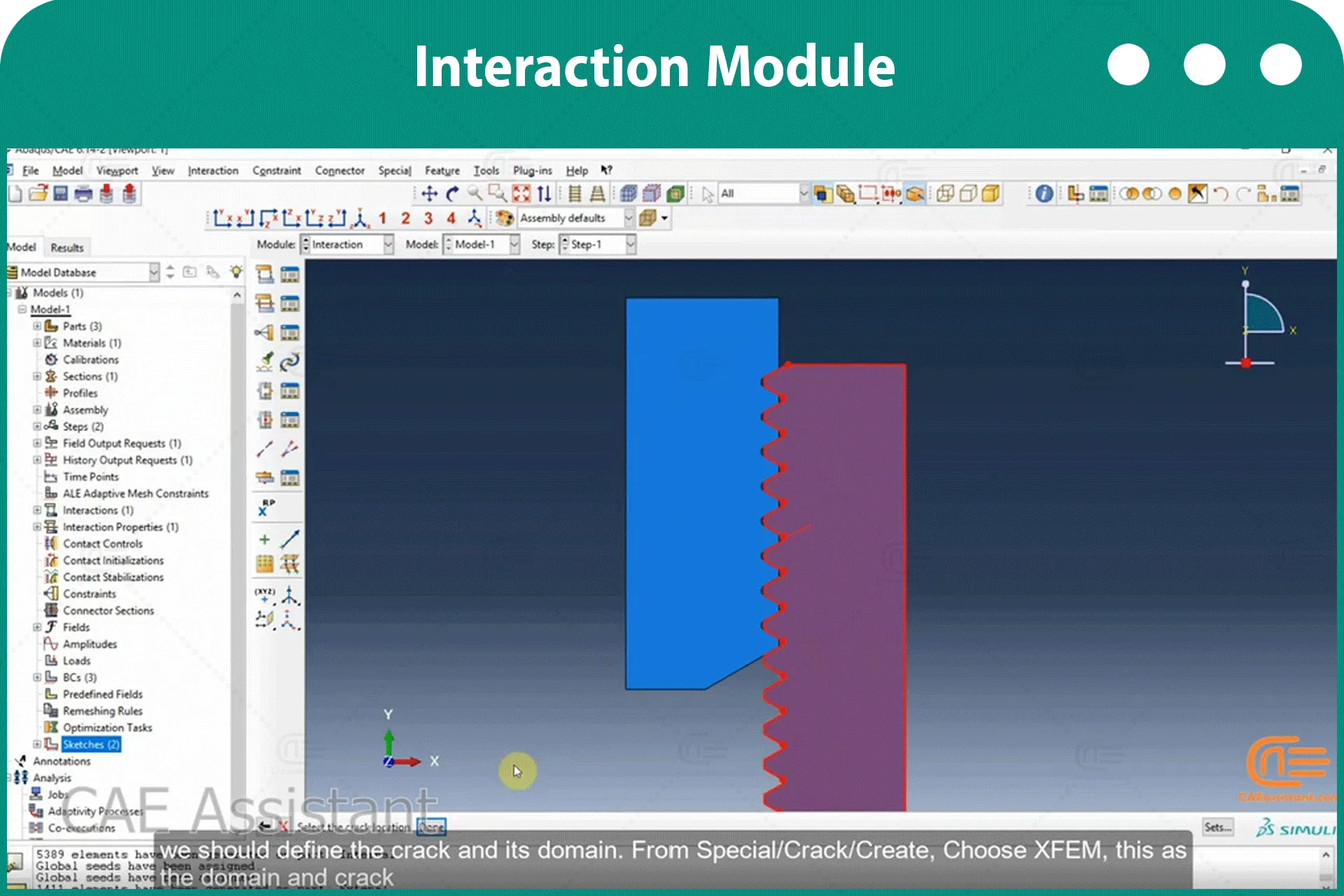
Workshop 5: crack growth Simulation in bolt connection
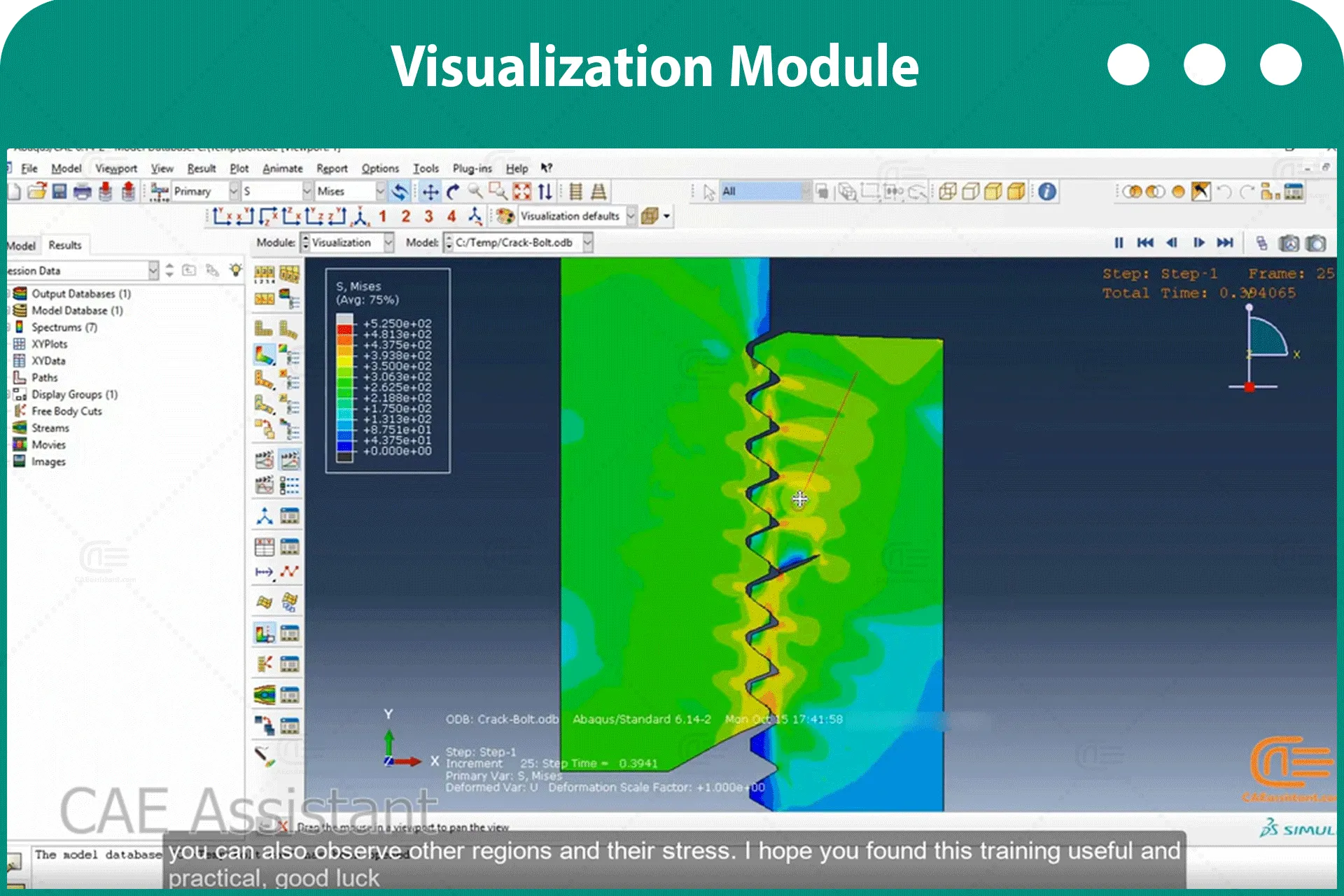
In this workshop, we modeled crack growth in a bolted connection using XFEM in Abaqus, aiming to cover a more realistic and complex example. To simplify the model and reduce computational cost, the connection was simulated in 2D. The damage criterion applied is the maximum stress type, and the material used is steel. CPE4 elements were used for the modeling.
Workshop 6: A step-by-step guide on the simulation of delamination propagation in low-cycle fatigue analyses using the VCCT method and Paris Law
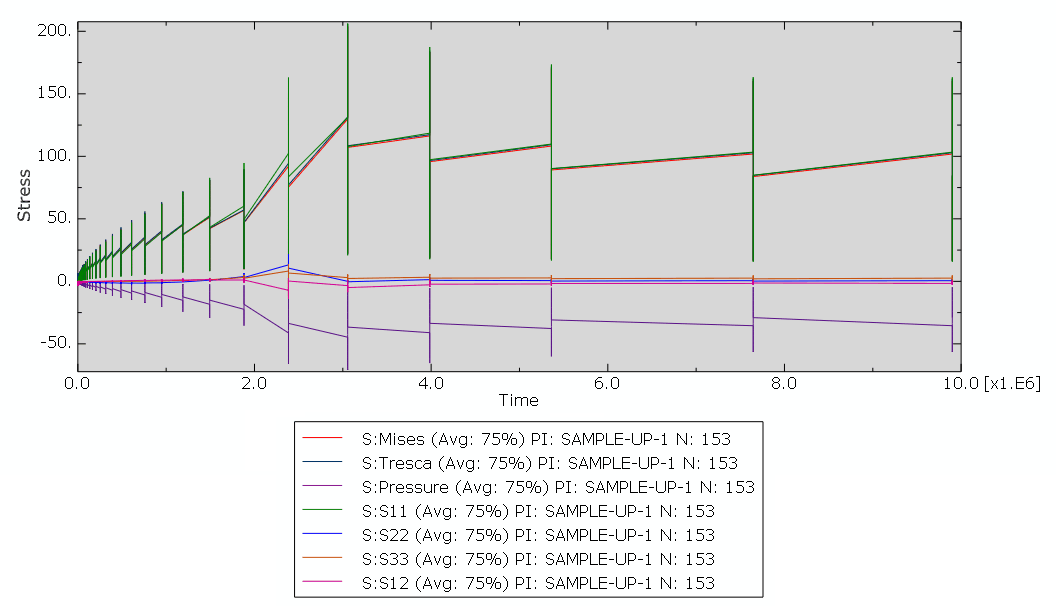
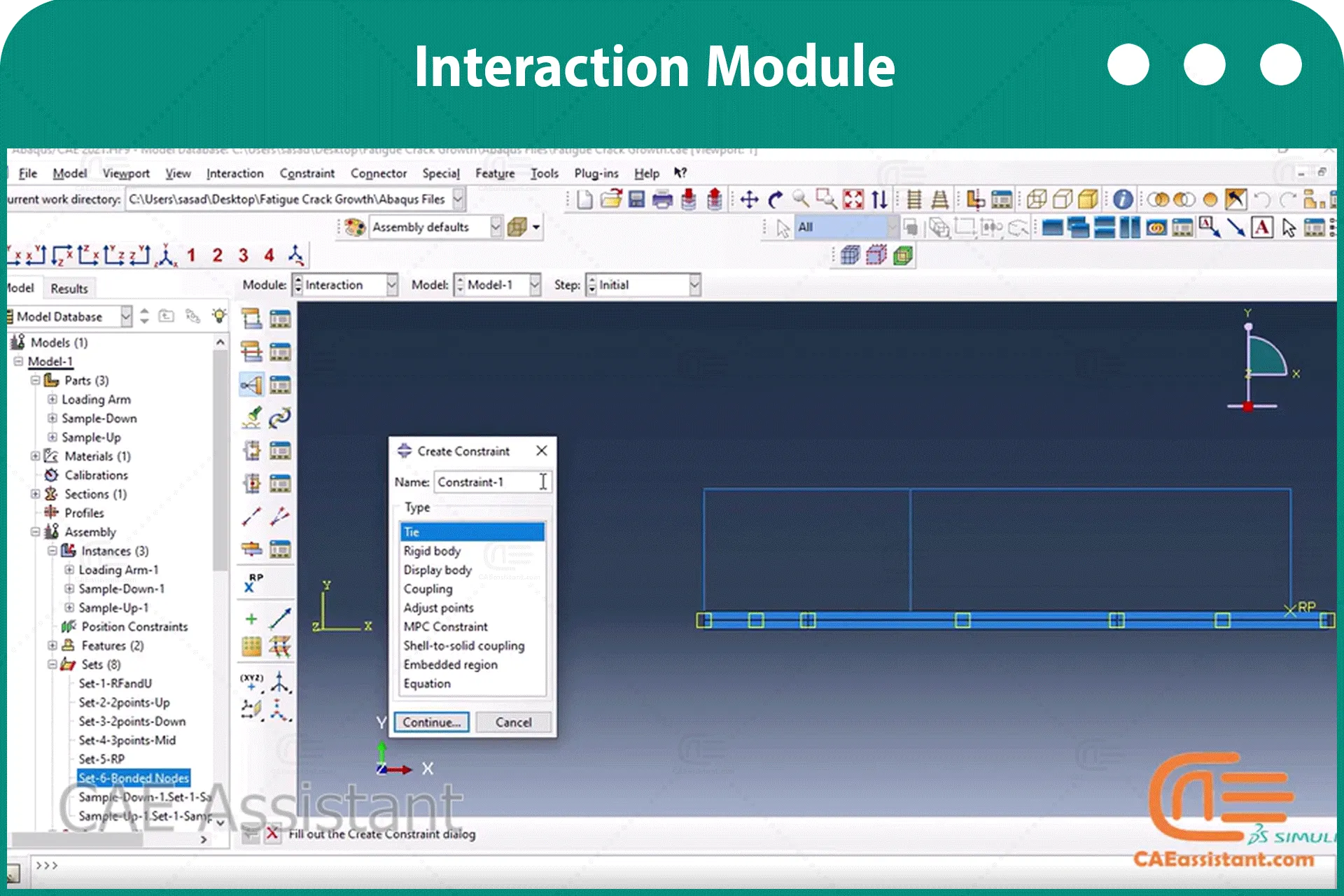
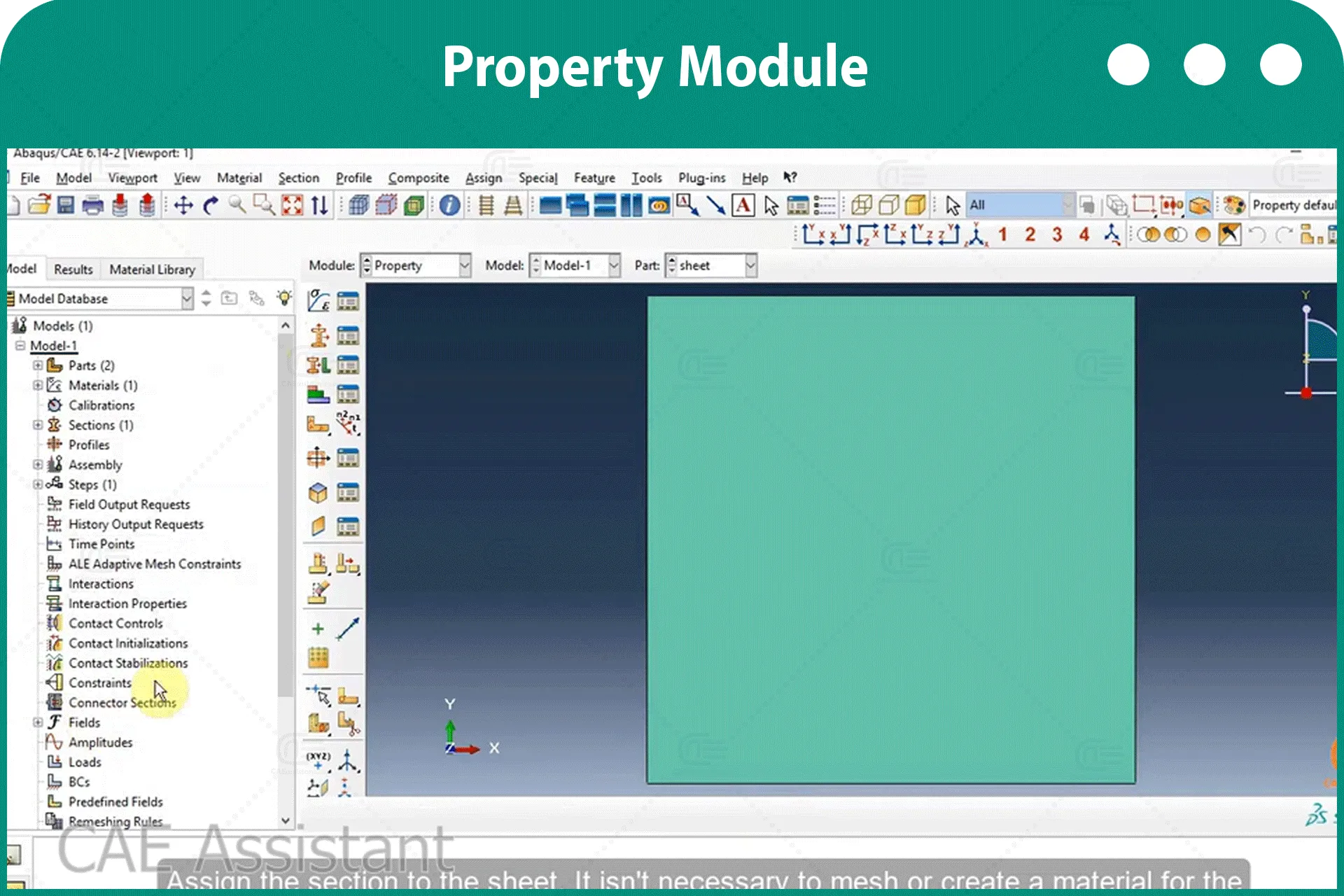
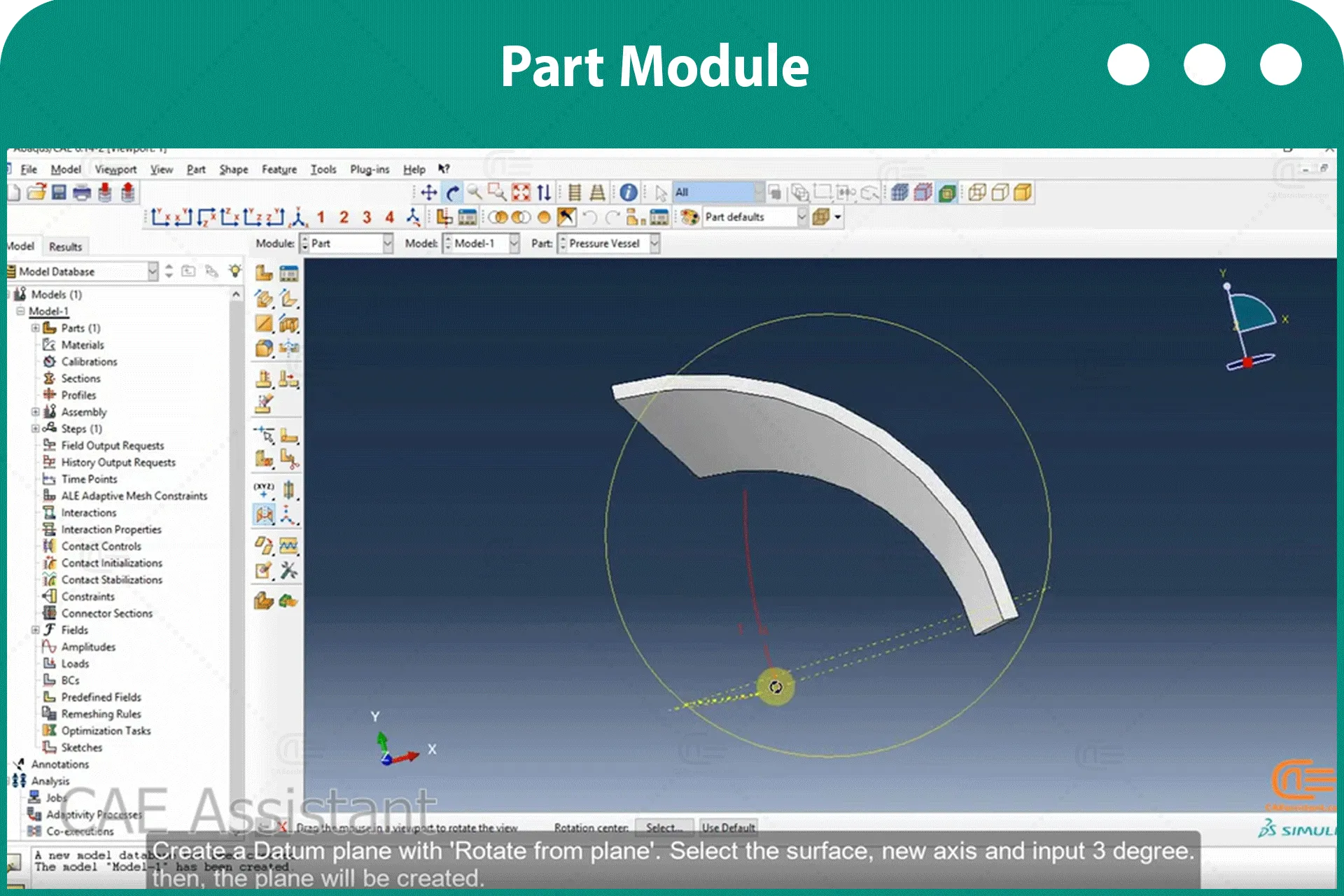
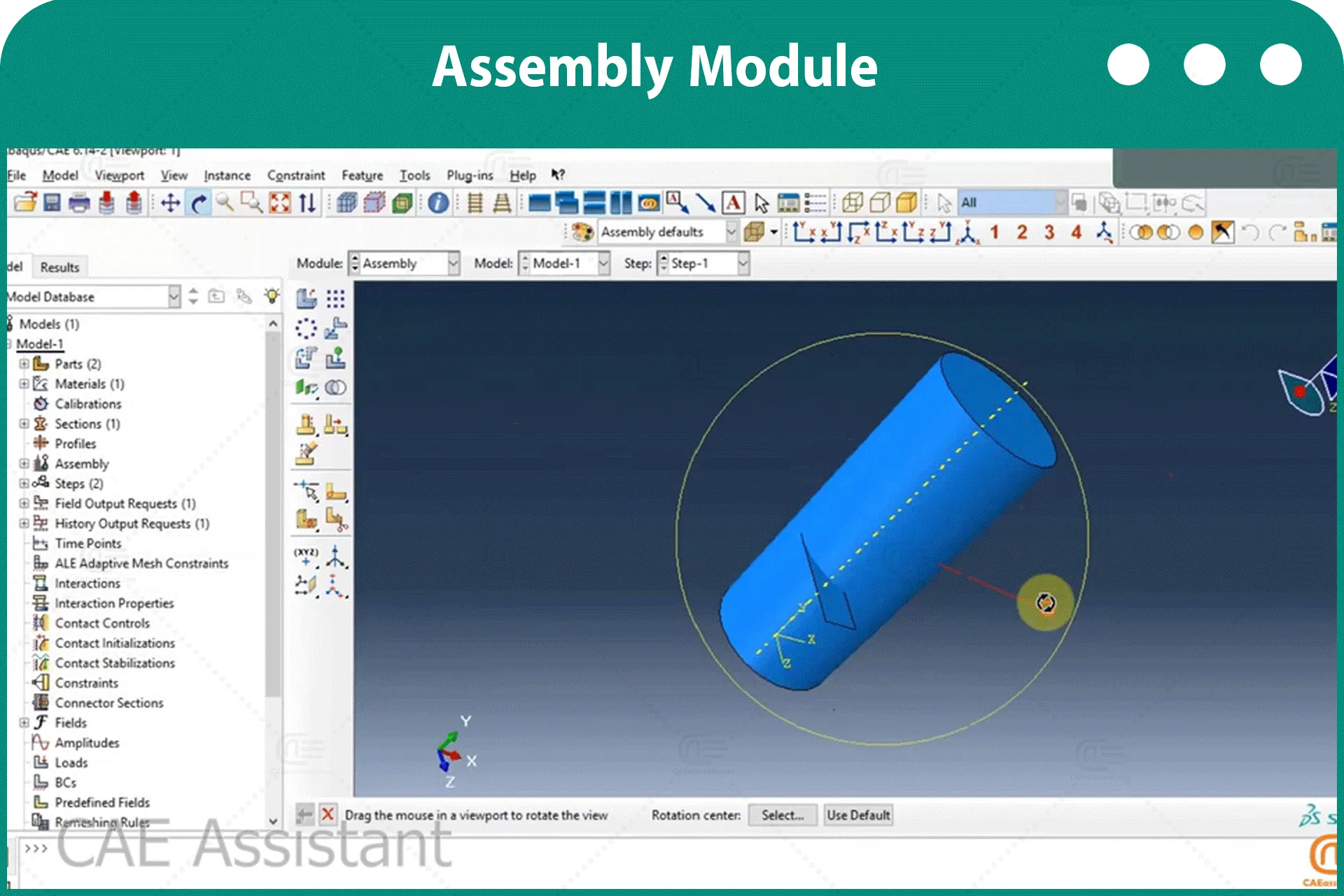
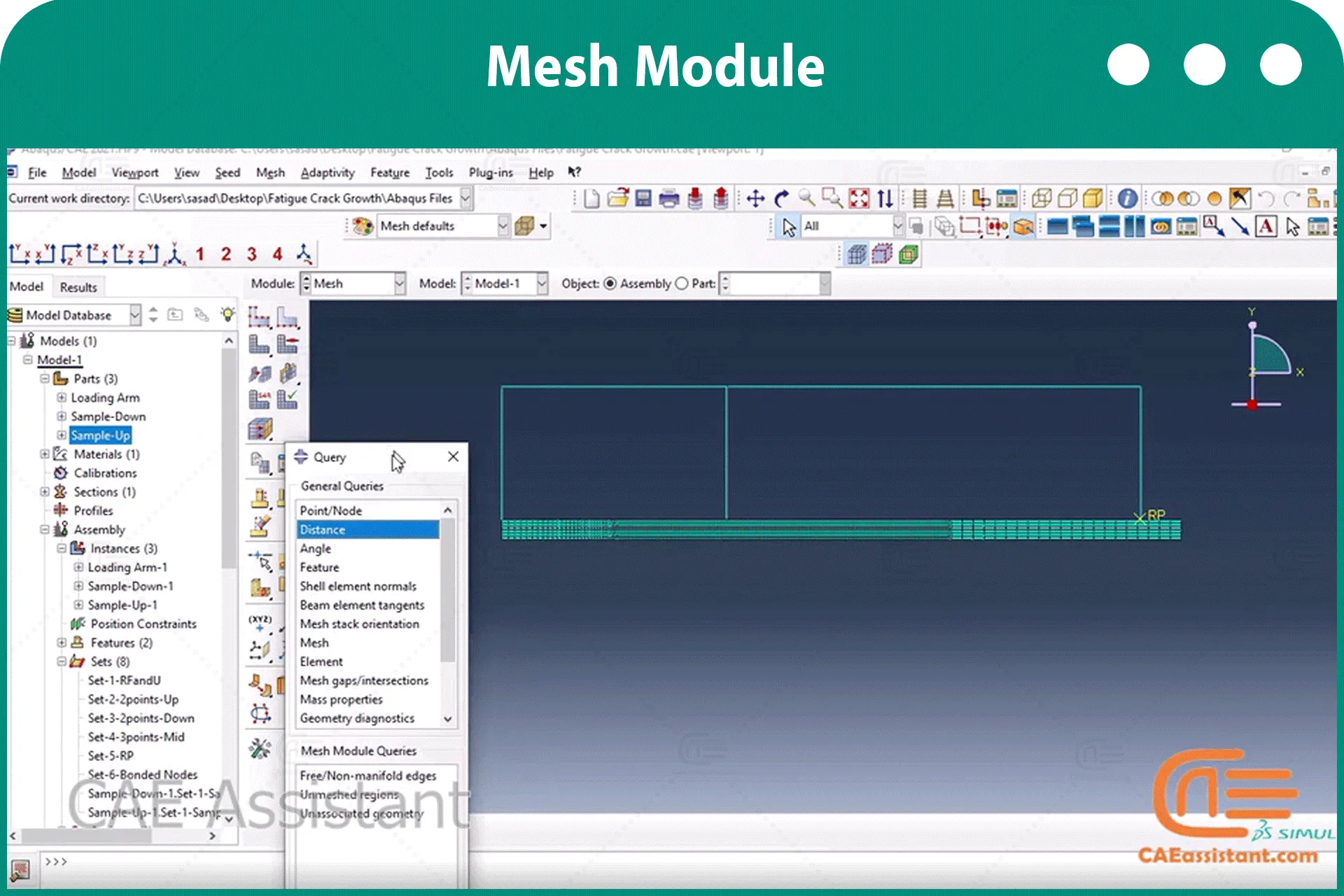
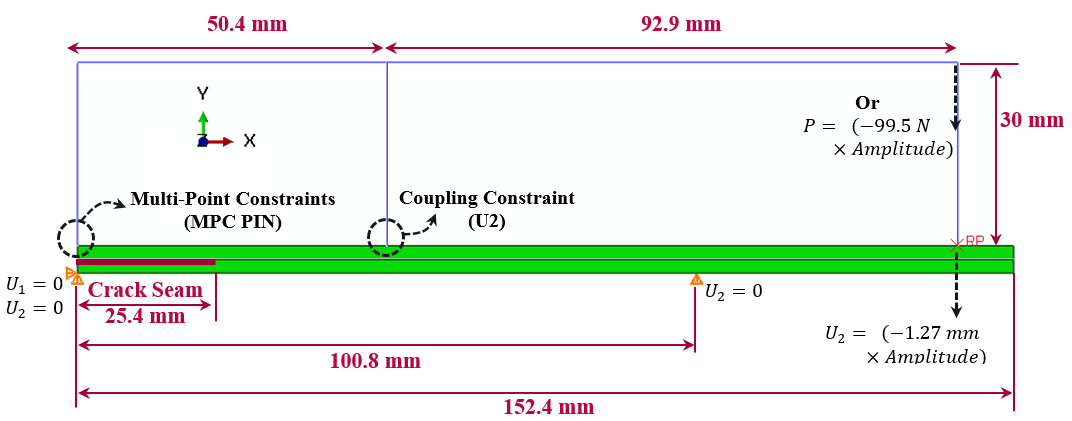
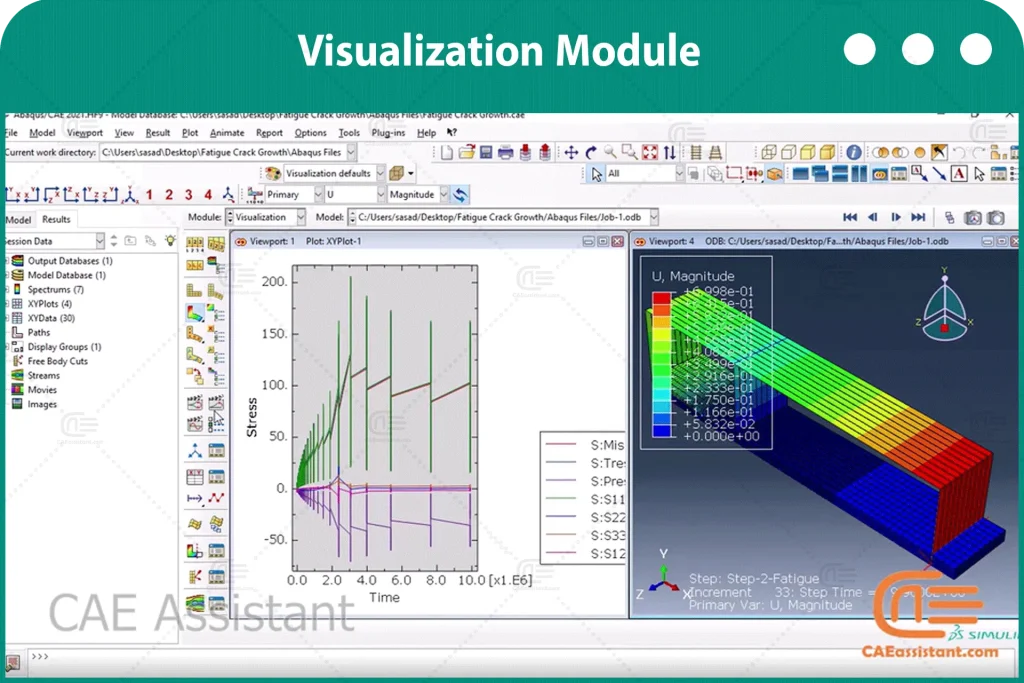
The workshop provides a full step-by-step guide through a video to simplify the simulation of fatigue crack growth using the VCCT method and Paris Law. In the video, how to model, edit keywords, submit the job and extract the results are shown in full detail.
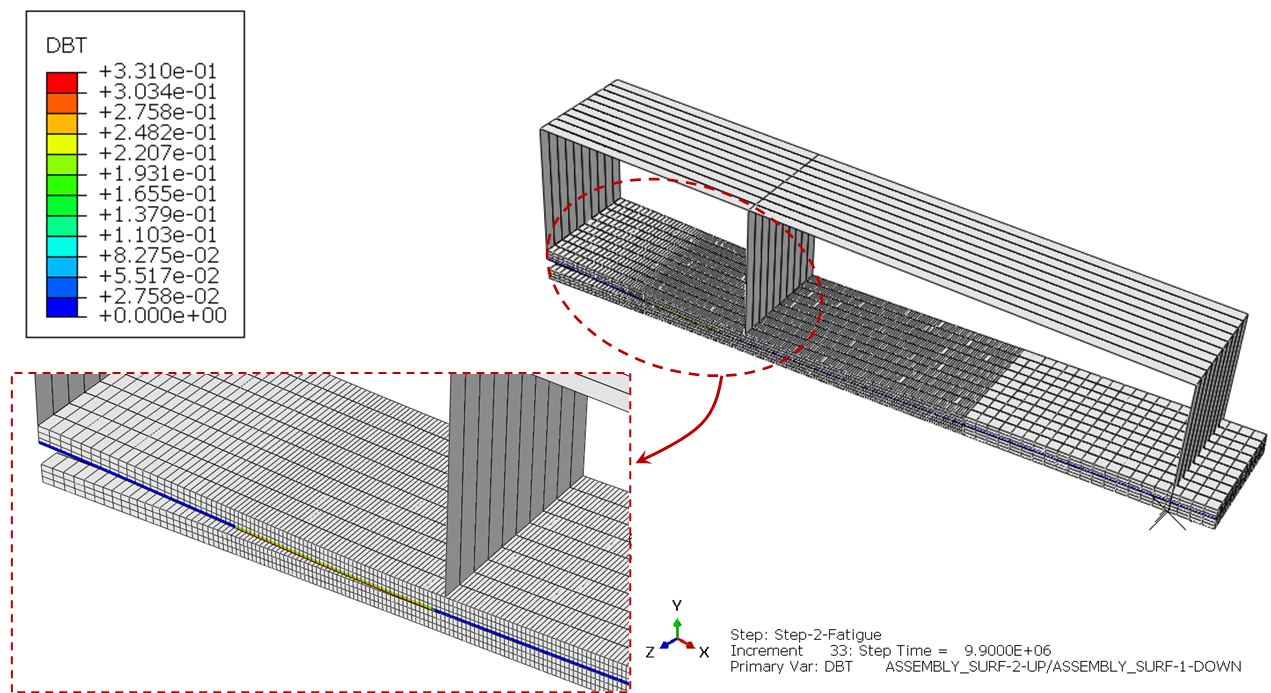
Geometry: This example includes a rigid loading arm and two Lagrangian specimens. The upper specimen is subjected to periodic tension by this arm. The schematic design of problem is shown in Figure 1.
The material properties used in this example is presented in an Excel file named “Material Properties”. The load or displacement applied to the loading arm is multiplied by a periodic amplitude.
Figure 1: The schematic designs of the problem
Workshop 7: Crack Simulation in a Pressurized Tank
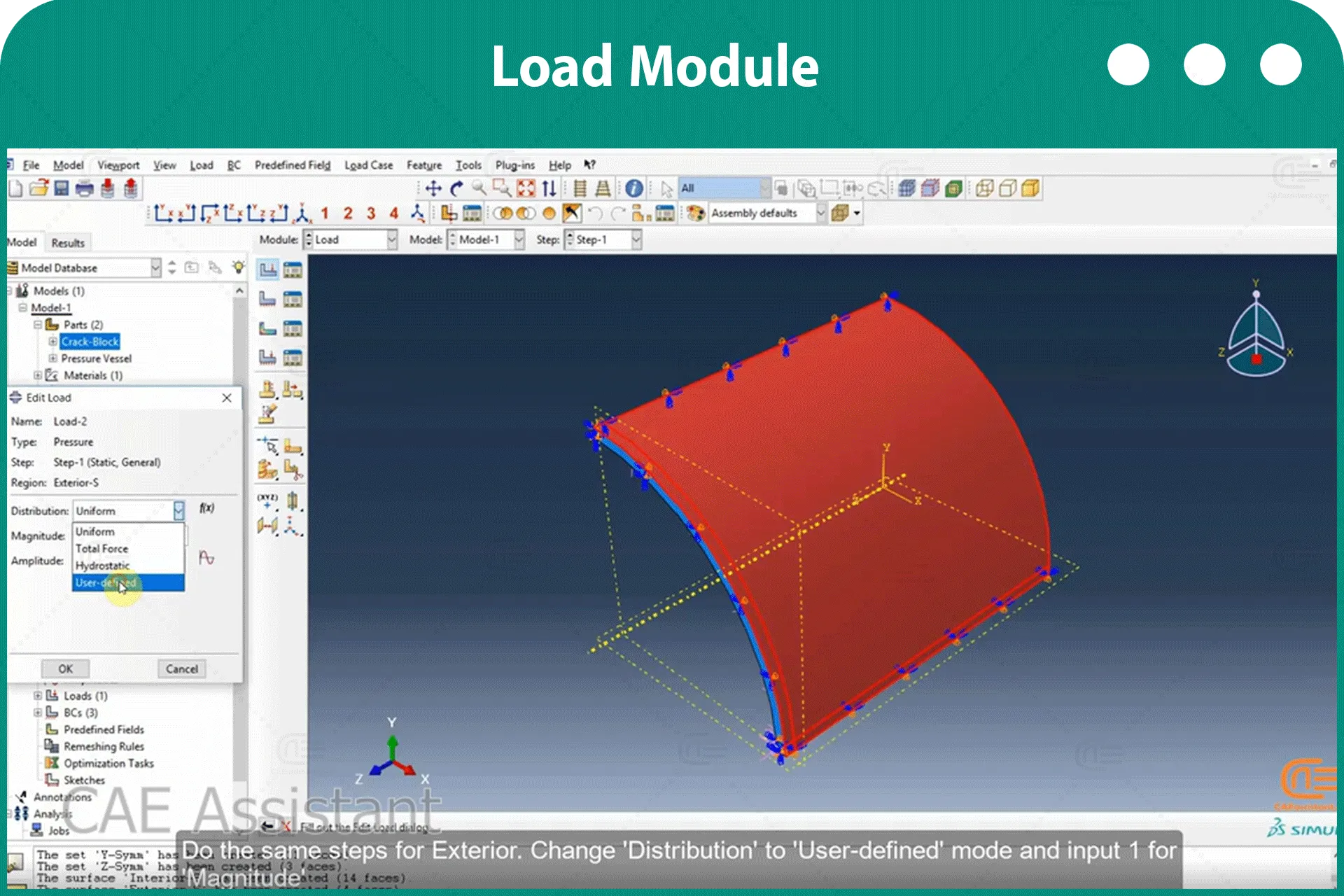
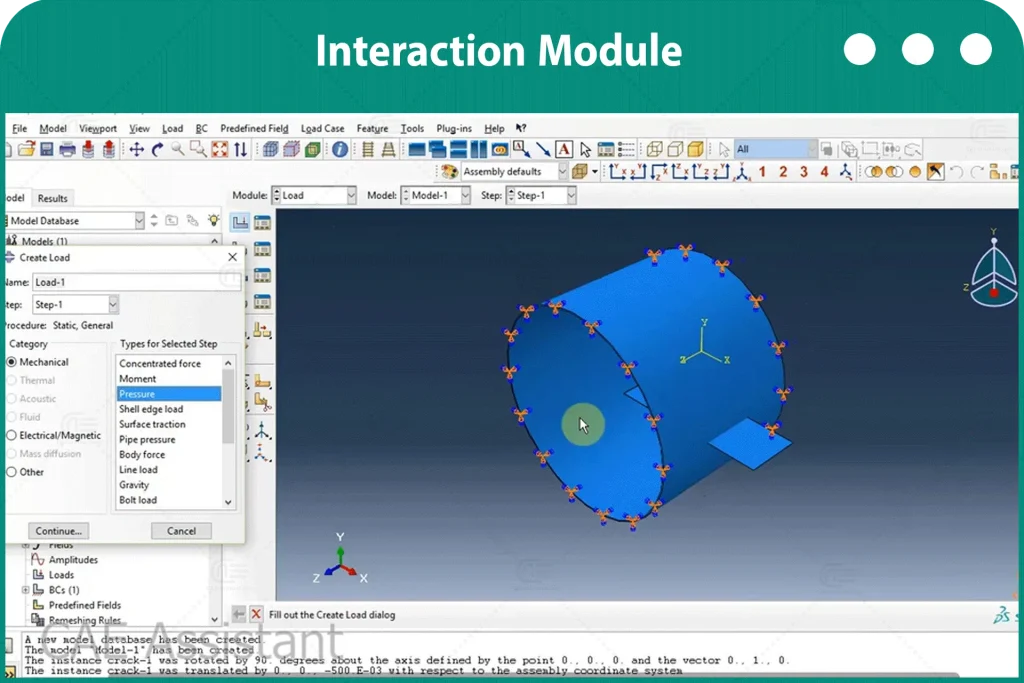
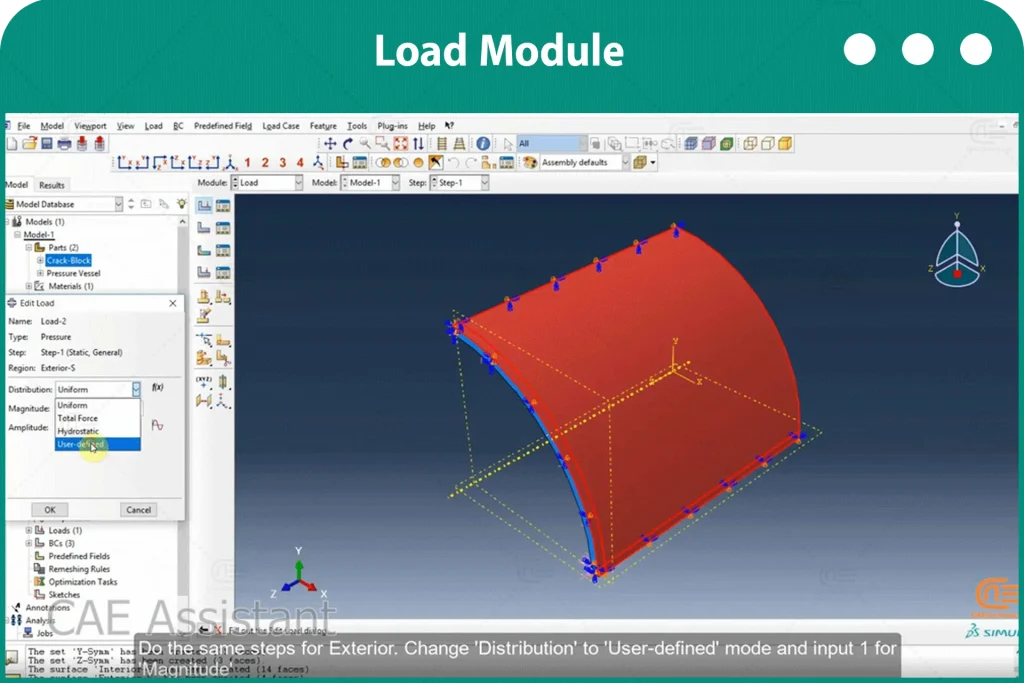
This workshop covers crack simulation in a tank under internal and external pressure. It utilizes the DLOAD subroutine and the contour integral criterion. You’ll also be able to see the J-integral value at the end of the workshop.
Workshop 8 (New): Extracting Crack Length and Other Post-Processing Tasks in 2D Fracture Mechanics Simulation Using the XFEM Method
In this workshop, unlike the previous ones, our goal is not to model fracture mechanics problems in Abaqus. Instead, we focus on teaching you how to extract specific results after the analysis is complete.
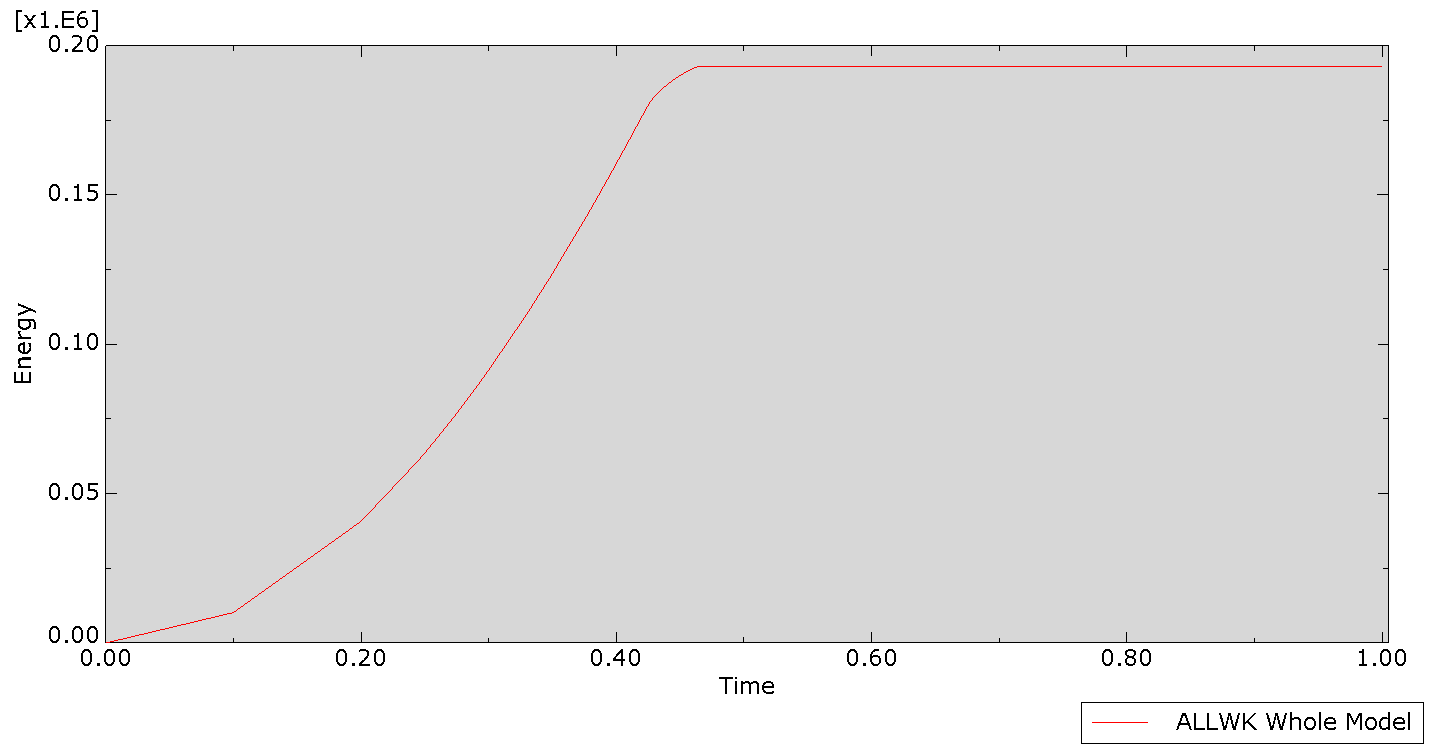
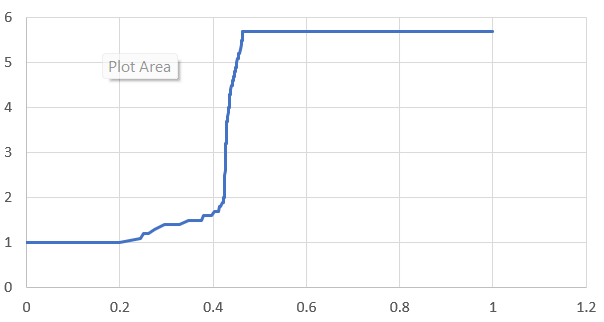
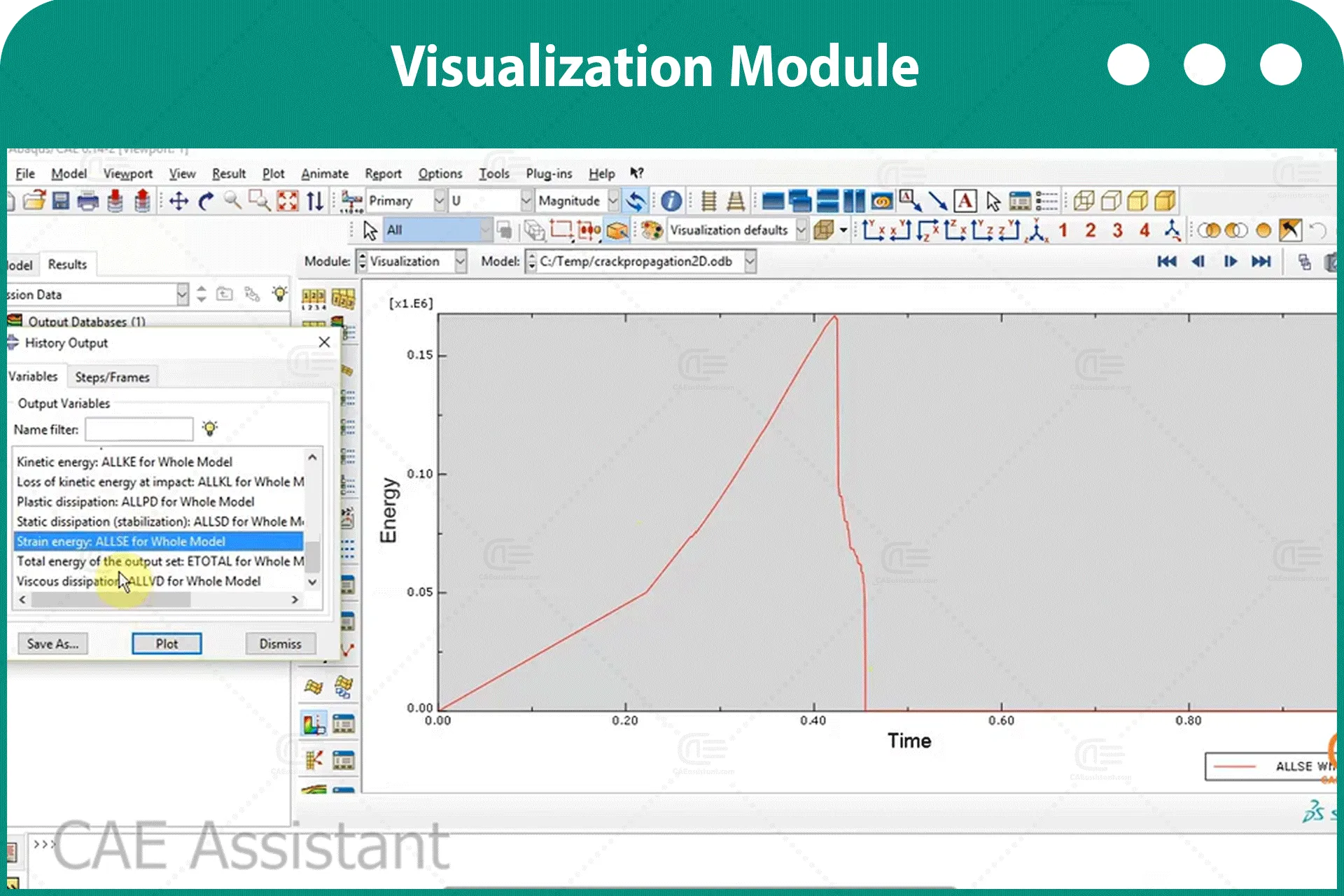
For example, we provide a Python script that, when run in Abaqus, automatically extracts the crack length over time and saves it to a CSV file. We also demonstrate how to extract the force–crack mouth opening displacement (CMOD) curve and how to plot the external work as a function of crack length.
Since the main focus of this workshop is post-processing, no new problem is modeled. We use the same model from Workshop 1 and apply the post-processing procedures to it.
To help you understand how the crack length extraction script works and the logic behind it, we’ve also included a block-by-block explanation of the code in a PDF document.
Here’s what you’ll learn from the Fracture Mechanics in Abaqus course:
Core fracture mechanics theory: Understand brittle vs. ductile fracture, fracture process zones, linear‑elastic fracture mechanics (LFM), energy-based equations, SIF, J‑integral, and energy release rate (G), with detailed PDF lessons.
Simulation preparation: Grasp the interrelations of fracture parameters and modeling strategies before jumping into simulations.
Hands-on modeling: Follow eight comprehensive Abaqus workshops (2D & 3D) employing both XFEM and classical contour-integral methods for fracture simulation.
Automated data extraction: Use a custom Python script in Abaqus to monitor crack length over time and process outputs like COD, strain energy, external work, and crack propagation plots—complete with PDF guides.
Post-processing tutorials: Learn to extract, visualize, and interpret simulation data for both static and fatigue fracture scenarios.
Skill leveling: Course content is structured for both beginners and advanced users tackling fracture mechanics in Abaqus.
Additionally, this package dives deep into crack propagation modeling with real-world case studies using XFEM and H‑integral methods.
This course is suitable for individuals who have a basic understanding of Abaqus and are looking to learn it at a more advanced level. The target audience includes Master’s and Ph.D. students, university professors, researchers in research institutions, and engineers in companies that require advanced simulations for production. This course is taught by an expert, providing theoretical details and step-by-step implementation in Abaqus.
All of our training is in English. Many of them feature human narration in very clear and fluent English, and some also have a tutor explaining in English. However, all training includes accurate and error-free subtitles.
We fully and unconditionally guarantee the accuracy and functionality of our content, ensuring it matches the descriptions provided on our website. This guarantee covers any discrepancies between the training and the presented syllabus, as well as any issues with the files, code, and videos you receive. For more information you can check the Terms and Conditions.
Yes, you can receive this training in a language other than English, which includes an additional fee. If you are interested, please contact our online chat or support email for more information.
Yes, depending on the modifications you require, we can implement the changes you need. To learn more about the terms and conditions for such custom orders, please contact our support email or our online chat.
[woodmart_title woodmart_css_id=”67e8ee8ba2ca3″ responsive_spacing=”eyJwYXJhbV90eXBlIjoid29vZG1hcnRfcmVzcG9uc2l2ZV9zcGFjaW5nIiwic2VsZWN0b3JfaWQiOiI2N2U4ZWU4YmEyY2EzIiwic2hvcnRjb2RlIjoid29vZG1hcnRfdGl0bGUiLCJkYXRhIjp7InRhYmxldCI6e30sIm1vYmlsZSI6e319fQ==” wd_hide_on_desktop=”no” wd_hide_on_tablet=”no” wd_hide_on_mobile=”no” subtitle=”Are you a faculty member or representing a company? Explore our Unlimited Bundle Plan.” title=”Purchase Multiple Packages at Less than Half Price”]
If you are a faculty member or a company requiring multiple training packages for your staff, or If you’re an individual seeking to enhance your skills across various domains, we offer a tailored bundle plan. This plan provides access to a specific number of packages for a duration of 1 or 2 years. By paying the bundle plan fees, you’ll also receive discounts on a range of our additional services. This is a comprehensive and cost-effective solution to enhance the knowledge and skills of your team or students.
Please note: This bundle plan includes a variety of our popular training packages. If you would like to confirm the specific packages included in this plan (all packages under 400€), please check THIS PAGE or feel free to contact our support team via online chat.
55%
Silver
60%
Gold
65%
Platinum
Enterprise
€789/ Yearly
€1389/ Yearly
€2489/ Yearly
Contact Us
5 Download Package Credits
Each tier grants access to a curated selection of downloadable packages, allowing users to explore their chosen area of interest. For a list of a limited number of packages not included in this tier, please refer to the "Excluded Packages" section below.
10 Download Package Credits
Each tier grants access to a curated selection of downloadable packages, allowing users to explore their chosen area of interest. For a list of a limited number of packages not included in this tier, please refer to the "Excluded Packages" section below.
20 Download Package Credits
Each tier grants access to a curated selection of downloadable packages, allowing users to explore their chosen area of interest. For a list of a limited number of packages not included in this tier, please refer to the "Excluded Packages" section below.
Customized Package Selection
Each tier grants access to a curated selection of downloadable packages, allowing users to explore their chosen area of interest. For a list of a limited number of packages not included in this tier, please refer to the "Excluded Packages" section below.
1 Year Package Access
1-Year Access to Packages
2-Years Access to Packages
Negotinalbe Access Duration
25% Discount for Consultation Services
40% Discount for Consultation Services
55% Discount for Consultation Services
Custom Discount (Negotiable) for Consultation Services





































 English
  Korean
  Chinese