
What is Composite curing? Composite curing is a critical thermal and chemical process that transforms a mixture of fibers and a polymer matrix into a rigid fiber-reinforced composite. Through controlled temperature and pressure cycles, curing induces molecular cross-linking, which is essential for achieving the material’s final structural integrity and mechanical performance.
Without precise thermal management, these materials fail to meet the rigorous demands of real-world engineering applications. Because optimizing these parameters experimentally is costly, engineers increasingly rely on advanced computational methods to design effective thermal cycles.
Here at CAE 助手, this comprehensive guide details the core fundamentals of fiber-reinforced composites and examines standard curing methodologies used in modern manufacturing. Furthermore, we demonstrate how to leverage Abaqus simulation software—specifically utilizing custom Fortran subroutines—to accurately model the composite curing process. This provides engineers, researchers, and students with a practical framework to optimize curing cycles, improve composite quality, and reduce production defects.
To ensure the model can properly address the needs of a wide range of users—from beginners to advanced industrial applications requiring high accuracy—various material models have been implemented and developed within these subroutines, including linear elastic instantaneously hardening (Chile), path-dependent, and viscoelastic models.
什么是纤维增强复合材料(FRC)?
纤维增强复合材料是一类由两个主要相组成的材料:增强纤维(相1)嵌入基体(相2)中。然而,一些文献将基体与纤维之间的界面视为一个单独的相。图1展示了一块纤维增强复合材料。 合成的.
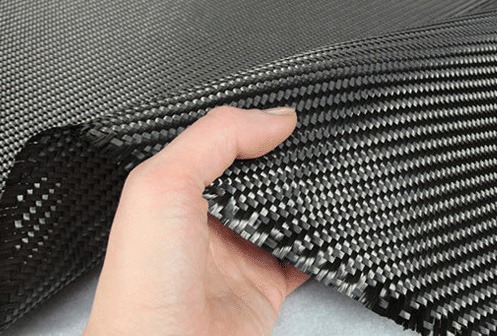
图1:一块纤维增强复合材料
纤维增强复合材料(FRC)中的纤维通常由高刚性材料制成,以提供足够的强度。基体(通常为某种聚合物)将纤维粘合在一起,并在纤维之间传递应力。当这两种组分结合在一起时,就形成了具有独特性能的复合材料。这种复合材料轻质高强,因此适用于各种应用。.
Common types of FRCs
纤维增强复合材料 纤维增强复合材料(FRC)是一个统称,涵盖了一系列具有不同性能的材料。根据纤维和基体的特性,FRC 可以分为多种类型。每种类型都具有其独特的性能,适用于特定的应用。.
图2展示了基于基体材料的纤维增强复合材料(FRC)分类。如图所示,FRC可由多种基体构成,包括聚合物、金属、陶瓷和碳/碳材料。其中,聚合物基FRC是应用最广泛的复合材料。聚合物基FRC又可进一步分为两类:热塑性复合材料和热固性复合材料。.
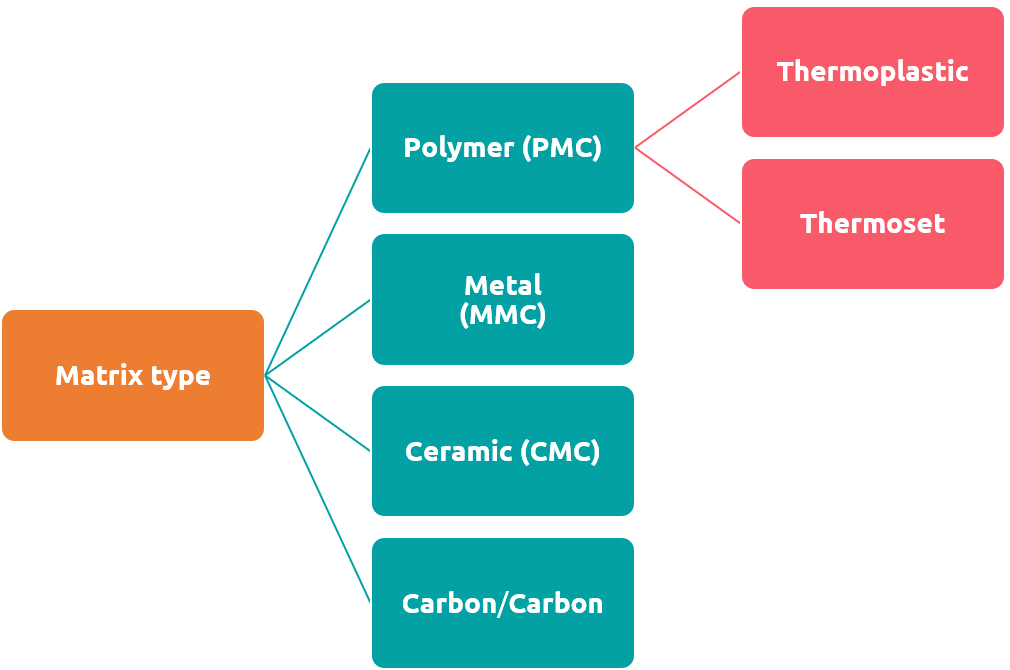
图 2:基于基体材料的复合材料分类
热塑性塑料是一种聚合物基体材料,固化后可以重新熔化。相比之下,热固性塑料一旦加热就会永久固化。图3比较了热塑性塑料和热固性塑料基体在固化后重新加热时的性能。.
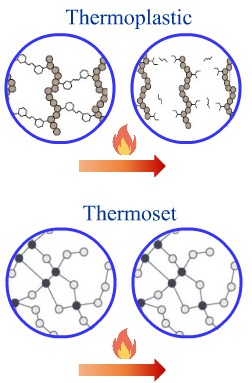
图3:热塑性基体和热固性基体在再加热过程中的行为比较
热固性复合材料是纤维增强复合材料(FRC)中一个涵盖范围广泛的类别,具有多种类型和应用。图4根据基体和纤维材料对热固性复合材料进行了分类,突显了它们的多样性。虽然本文主要关注热固性复合材料,但热塑性复合材料在FRC行业中也发挥着重要作用。.
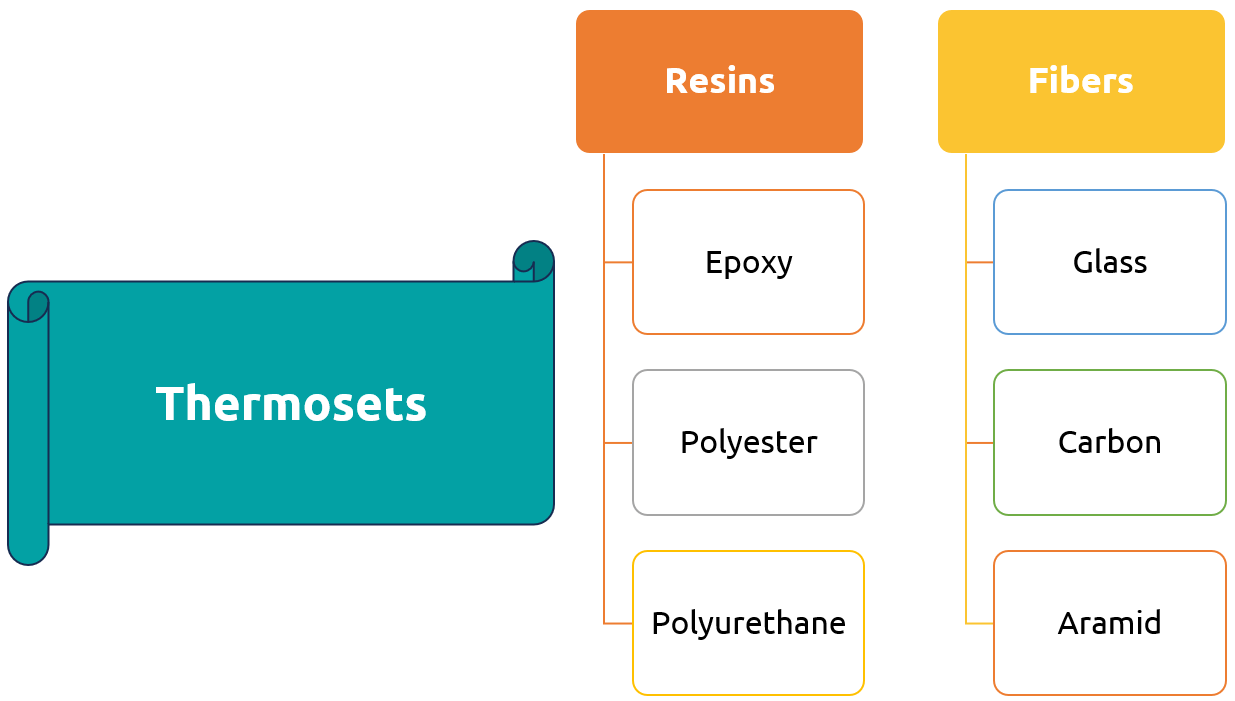
图 4:基于基体和纤维材料的热固性复合材料分类
| 浏览我们内容全面的 Abaqus 教程页面,其中包含免费的 PDF 指南和适合所有技能水平的详细视频。探索免费和付费套餐,以及高效掌握 Abaqus 的必备信息。立即开启您的 Abaqus 学习之旅! Abaqus教程 现在! |
What is the composite curing process?
固化是指对复合材料施加热量和压力,使其基体失去流动性的过程。复合材料的固化过程必须严格控制,才能使最终复合材料达到所需的性能和质量。.
Today, three well-established methods are commonly used for the composite curing process: autoclave, oven curing, and heated die curing (pultrusion). In general, oven-curing is a traditional method, that utilizes a standard oven to apply heat to the composite. As depicted in Figure 5, it needs a vacuum bag to apply pressure and remove the air. Despite its lower cost compared to the autoclave method, oven curing results in higher porosity and lower mechanical properties.
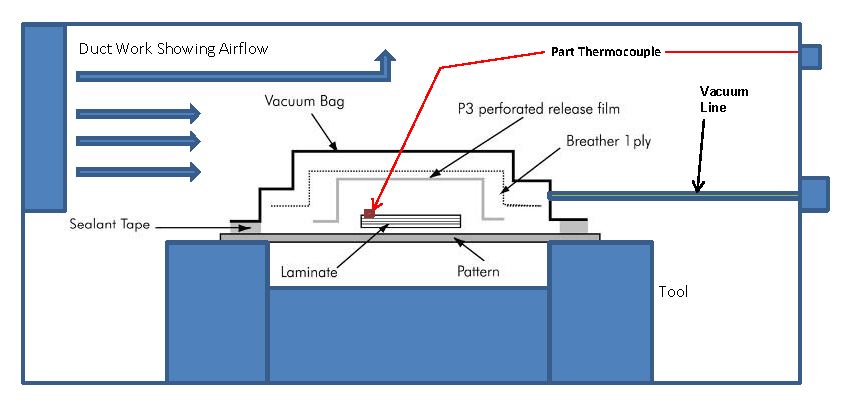
Figure 5: Schematic representation of the oven-curing process [参考资料.]
The autoclave method is more advanced than the oven-curing. It utilizes a pressure vessel (autoclave) to apply both heat and pressure simultaneously to the composite, as shown in Figure 6. This process enables the production of high-quality laminates with low porosity and superior mechanical properties. However, unlike oven curing, the autoclave method is more expensive and requires complex equipment.
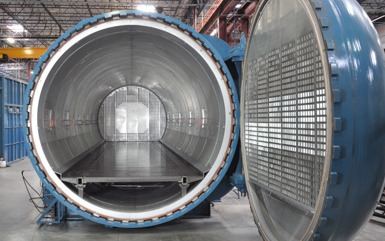
Figure 6: An autoclave device [参考资料.]
Heated die curing, particularly in the context of pultrusion, offers several advantages over traditional oven and autoclave curing methods, especially for continuous composite manufacturing. For example, unlike oven and autoclave curing, which are batch processes, pultrusion with a heated die (figure 7) enables continuous production. Moreover, since heat is applied directly to the material through the die, heat loss is minimized, leading to reduced curing time. Additionally, the die not only heats but also shapes the part during curing, resulting in excellent dimensional accuracy and surface finish without the need for secondary machining. Therefore, this method can be considered a cost-effective and high-quality approach to composite curing.
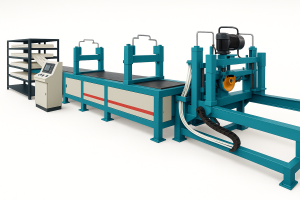
Figure 7: A pultrusion machine
How the composite curing process affects the product quality?
During the composite curing process, FRCs experience specific pressure and temperature cycles to achieve optimal quality. However, the standard composite curing process can last several hours, making it inefficient for industrial production. Manufacturers prefer to shorten the curing cycles by applying higher temperatures within shorter time periods. While this approach can increase production speed, it may impact the product quality and lead to residual deformations. Figure 8 showcases a product that experienced residual deformations after the composite curing process.
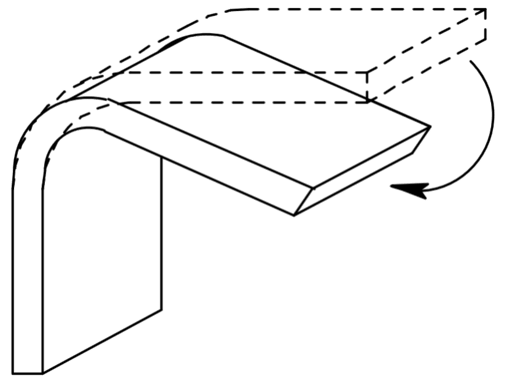
Figure 8: Schematic representation of the residual deformations in a composite [参考资料.]
传统上,平衡生产效率和质量的方法是针对每种产品进行多次固化实验。然而,这种方法既耗时又费力。这就凸显了设计最佳固化工艺以确保产品质量和生产效率的挑战。复合材料固化模拟是应对这一挑战的一种方法。.
Fiber reinforced composite curing simulation
数值方法简化了 纤维增强复合材料固化模拟. 它们是设计固化工艺流程时,替代实验测试的有效方法。这些方法简化了优化固化工艺流程的设计,既能确保所需的产品质量,又能维持高效的生产。纤维增强复合材料固化模拟必须同时考虑化学、热和力学三个耦合场,因此被称为热-化学-力学复合材料固化模拟。.
Simulation of the thermo-chemical reactions in the curing process
在 复合材料固化模拟, 热量来源于两个方面:外部和内部。计算 外部加热 在复合材料固化模拟中,计算相对简单。然而,计算…… 内部热量 within the composite curing simulation is a challenging task. Internal heat arises from the chemical reactions within the composite during curing. Therefore, we need a thermo-chemical model to account for the internal heat within the composite curing simulation. In such a model, the generated heat is a function of the degree of cure. Note that the degree of cure is a parameter between zero and one, that represents the extent of curing. A value of zero indicates an uncured composite, while a value of one represents a fully cured one. Figure 9 compares the applied temperature and the temperature developed during curing within a composite. The difference represents the internal heat generation, predicted by the composite curing simulation.
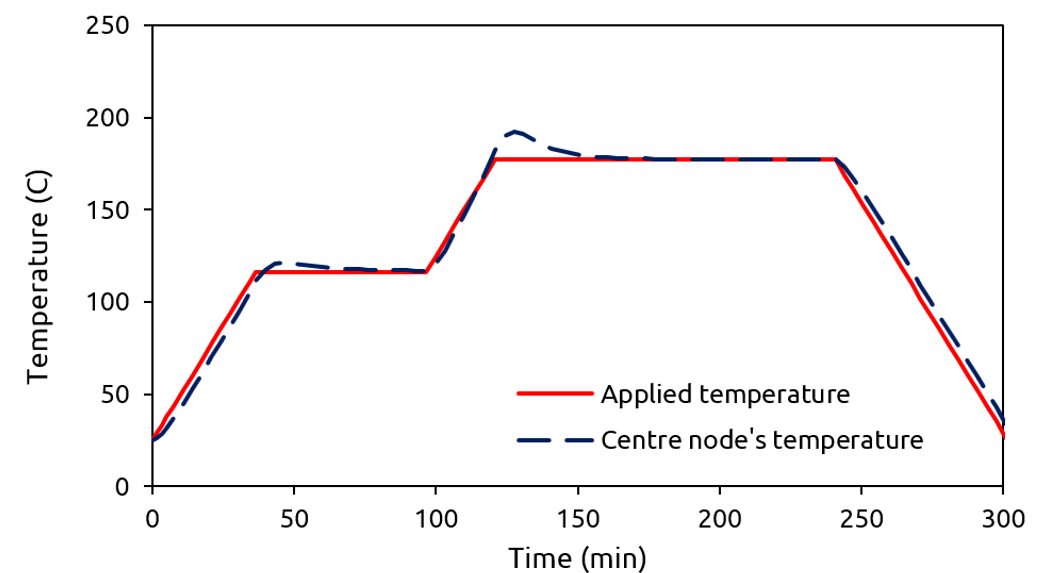
Figure 9: Comparison of the applied temperature and the temperature developed in a composite during curing
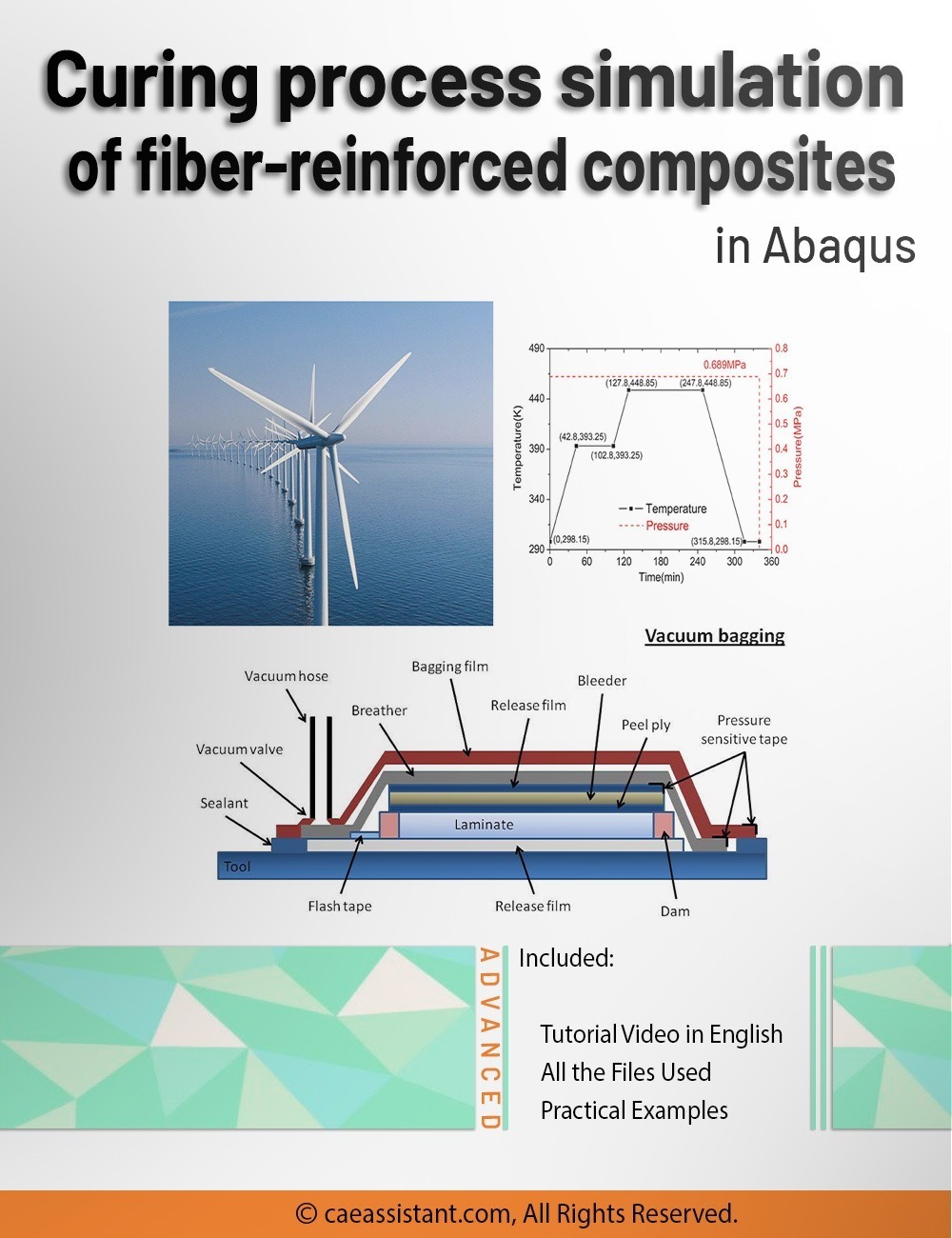
为了更深入地了解复合材料固化模拟,您可以探索我们的学习资料包“在Abaqus中进行固化过程模拟“它提出了计算固化过程中内部热量的公式,特别关注众所周知的 AS4/3501-6 预浸料。.
Evaluation of stress components during the composite curing simulation
Stress prediction is a challenge for the numerical simulation of the composite curing process. This challenge arises due to the changes in the resin’s modulus of elasticity. It makes the composite curing simulation complex. As illustrated in Figure 10, the modulus starts very low and rises significantly during curing as chemical reactions take place. Finally, it reaches a constant value.
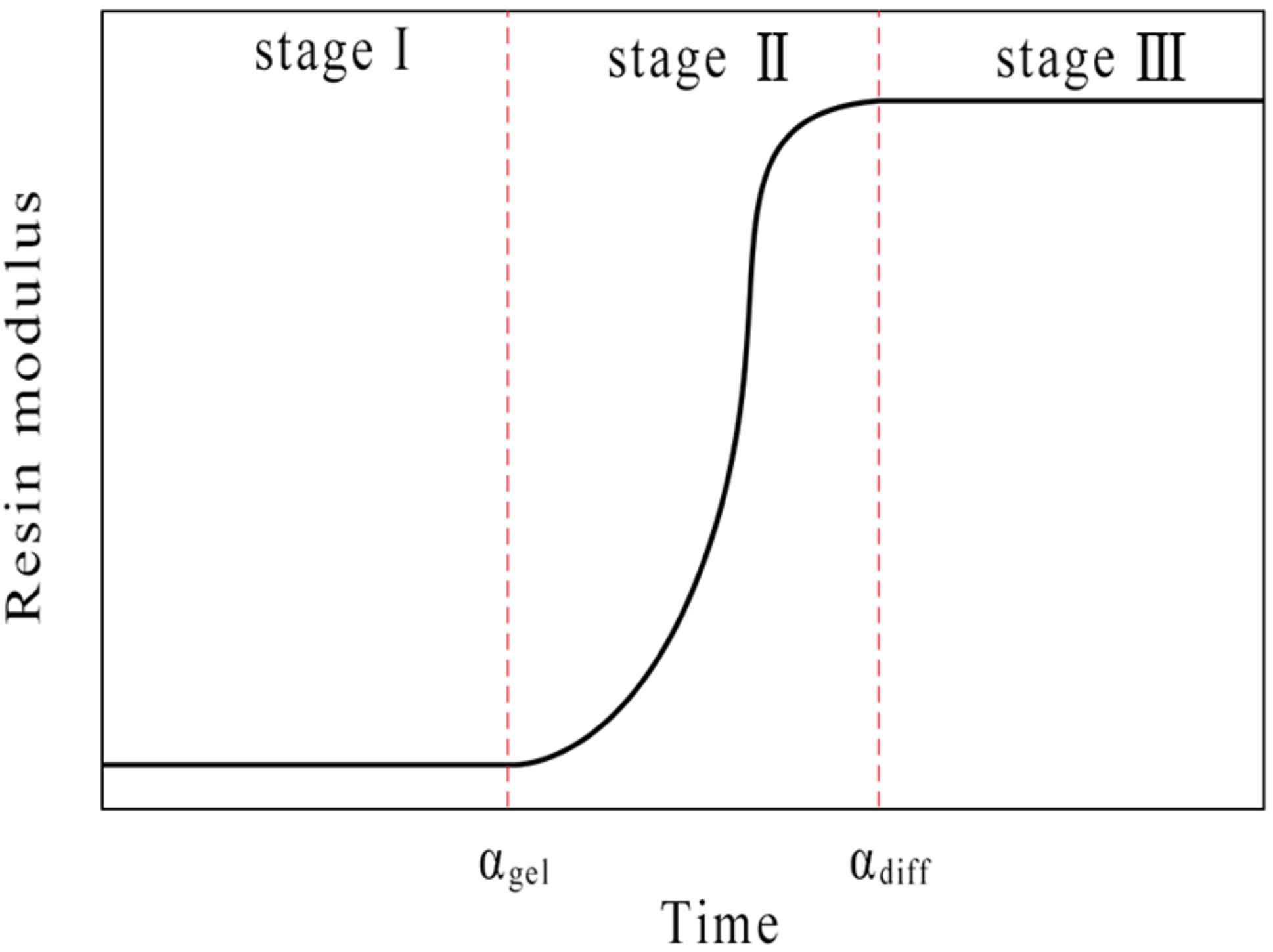
Figure 10: Schematic representation of the resin modulus variation during the curing process [参考文献]
为了捕捉复合材料固化模拟过程中树脂模量的变化,人们提出了多种模型。这些模型包括线弹性模型、粘弹性模型和路径相关模型。每种模型都有其自身的优势和局限性。表1总结了专门用于计算AS4/3501-6预浸料中树脂模量或应力分量的模型。您可以查看这篇文章“利用多物理场耦合分析和多种本构模型研究固化循环对厚复合材料残余应力的影响”有关这些模型的更多详细信息,请参阅相关文档。它们简化了复合材料固化模拟。.
| 类别 | 模型 | 数学公式 |
|---|---|---|
| Linear-elastic | Chile ($\alpha$) | $E_m = (1-\alpha)E_m^0 + \alpha E_m^{\infty}$ |
| Chile ($T$) | $E_m = \begin{cases} E_m^0 & T_* \le T_{c1} \\ \left( \frac{T_{c2}-T_*}{T_{c2}-T_{c1}} \right) E_m^0 + \left( \frac{T_*-T_{c1}}{T_{c2}-T_{c1}} \right) E_m^{\infty} & T_{c1} < T_* < T_{c2} \\ E_m^{\infty} & T_* \ge T_{c2} \end{cases}$ | |
| 粘弹性 | General Model | $\sigma_i(t) = \int_{0}^{t} C_{ij}(\xi-\xi’) \frac{\partial \epsilon_j}{\partial \xi’} d\xi’$ |
| Path-dependent | Temperature Dependent | $\sigma_i = \begin{cases} C_{ij}^0 \epsilon_j & T \ge T_g \\ C_{ij}^1 \epsilon_j – (C_{ij}^1 – C_{ij}^0) \epsilon_j |_{t=t_{vit}} & T < T_g \end{cases}$ |
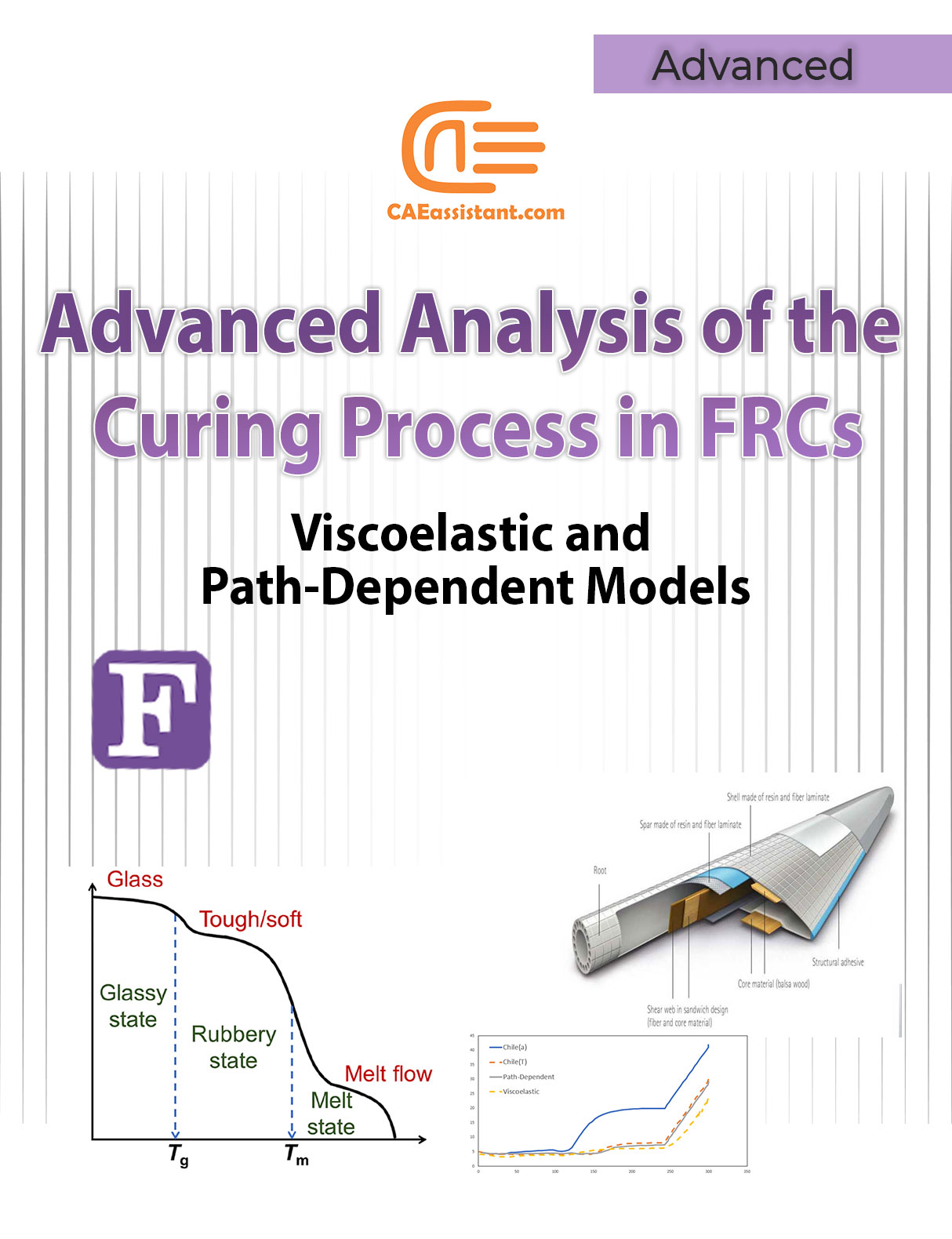
表1中, 前两个方程(线性弹性)模型 用于模拟固化过程,您可以 学习这些方程式 和 如何对它们进行建模 完全在 Curing process simulation in Abaqus Tutorial.
Also, the next two equations (粘弹性和路径依赖性模型用于 治愈模拟 在下面的包裹中。.
我们详细描述了线性弹性模型,并提供了在所提供软件包中实现这些模型的分步指南。这简化了复合材料固化模拟。为了验证模型的有效性,我们将结果与参考解进行了比较,如图 21 所示。.
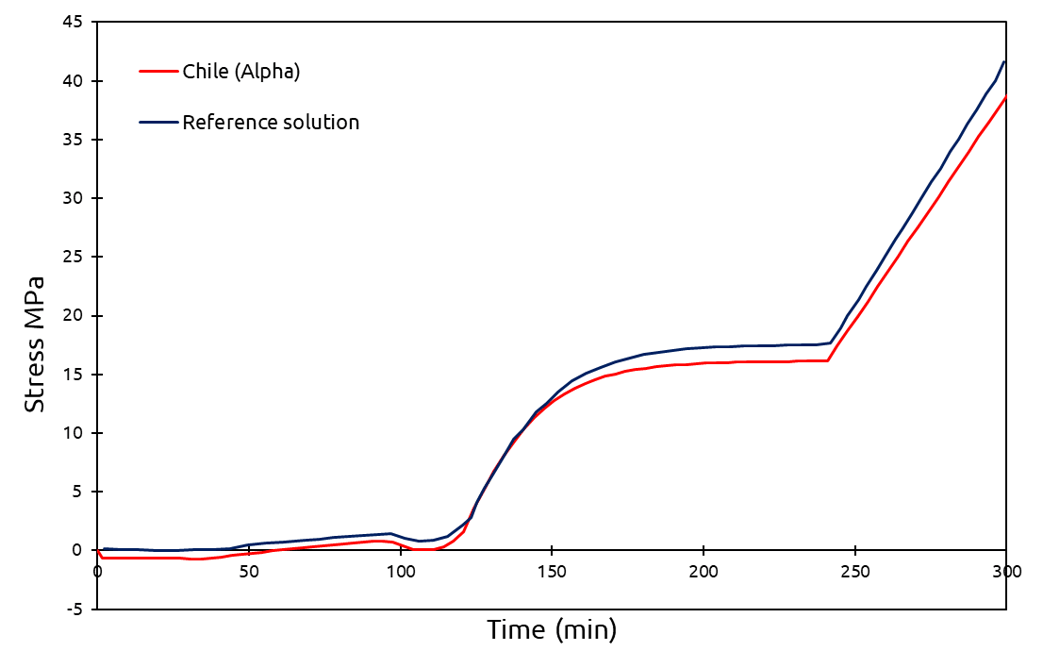
Figure 11: Comparison of the stress in a composite with the reference solution
总之,数值复合材料固化模拟需要同时考虑热场、化学场和力学场。您可能想知道如何实现如此复杂的模型,但别担心!我们将指导您采用一种准确高效的方法来解决这一难题。.
纤维增强混凝土养护过程中的应变评估
复合材料的固化过程会导致不良变形,从而对产品质量产生负面影响。为了最大限度地减少这些变形,我们应该在纤维增强复合材料固化模拟中考虑残余应变。.
在固化过程中,复合材料会经历两种类型的应变:机械应变和非机械应变。复合材料中的非机械应变来源于固化收缩和热膨胀。固化收缩是由于固化过程中基体中气体和溶剂的释放造成的。我们可以通过以下公式计算固化收缩。.
$$\varepsilon_{cu} = \mathbf{CCS} \, \Delta \alpha$$
在这个等式中,, CCS represents the effective chemical shrinkage coefficient of the matrix, and ∆α is the variation in the degree of cure. Figure 12 schematically illustrates how the chemical shrinkage occurs during the curing process.
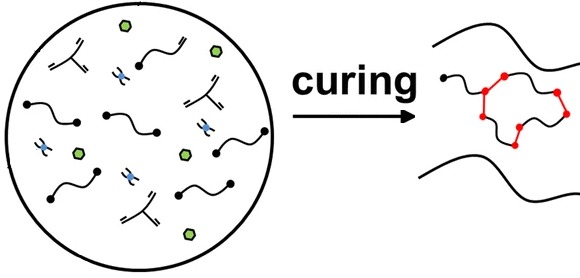
Figure 12: Illustration of the chemical shrinkage effect during the curing process (Adapted form [参考资料.(经过修改)
热膨胀系数取决于外部施加的热量和固化过程中产生的内部热量。由于内部热量取决于固化程度,因此热膨胀系数也受化学反应的影响。您可以使用以下公式进行计算。.
$$\varepsilon_{th} = \boldsymbol{CTE} \, \Delta T$$
在哪里 CTE 是复合材料的热膨胀系数,是其温度变化。.
In summary, several factors influence the total strain experienced by composites during curing, as detailed in Figure 13.
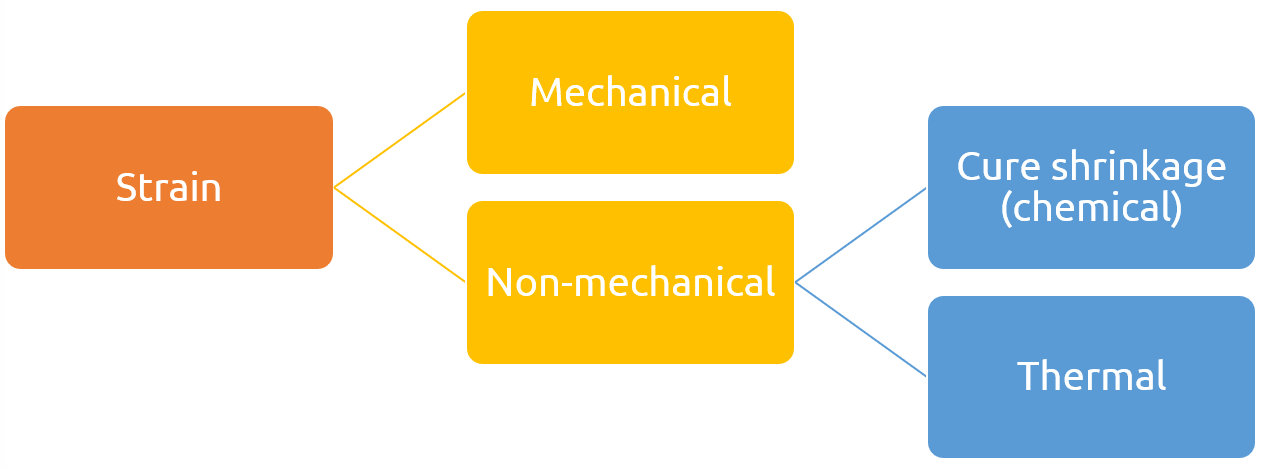
Figure 13: An overview of the strain components generated in a composite during the curing process
在纤维增强复合材料固化模拟中同时考虑所有应变分量可能具有挑战性。然而,“在Abaqus中进行固化过程模拟” learning package on our website simplifies this process. It offers a step-by-step guide on calculating strain components during composite curing simulation. For validation, we compared our results with a reference solution, as shown in Figure 14.
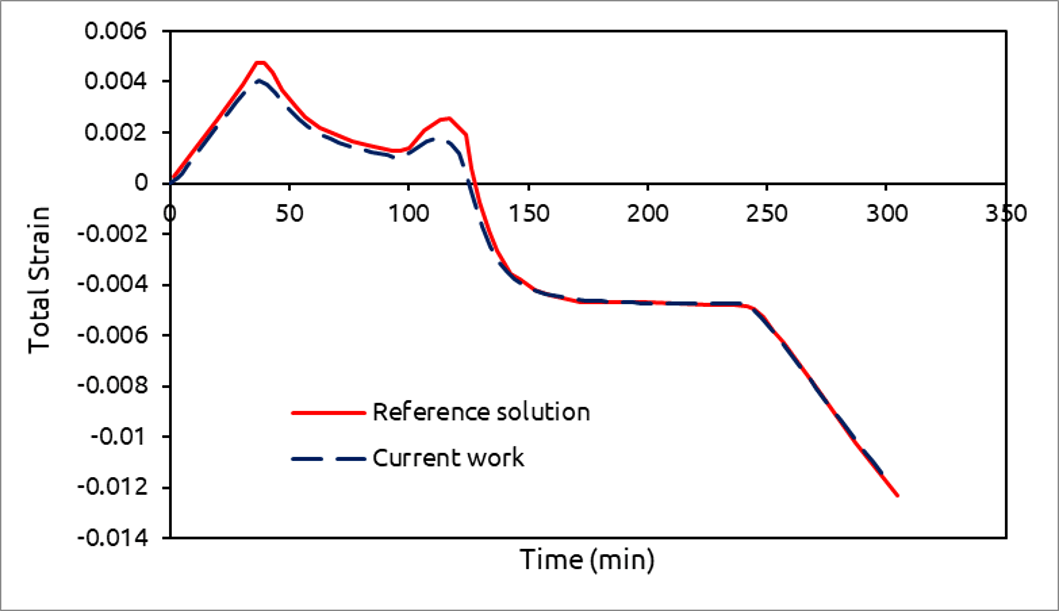
Figure 14: Comparison of the total strain in the composite with the reference solution
Abaqus固化过程模拟
Abaqus is a widely used finite element program, that has simplified the fiber reinforced composite curing simulation.

It has been extensively used in published papers to analyze internal heat generation and mechanical fields during the composite curing process. However, the lack of required thermo-chemo-mechanical models in Abaqus presents a significant challenge for Abaqus curing process simulation.

Fortunately, Abaqus user-defined subroutines provide a powerful solution to overcome this challenge.
Composite curing simulation using subroutines
Have you ever heard of composite curing simulation using subroutines? Abaqus has a large number of user-defined subroutines with diverse functionalities. You need to utilize several subroutines simultaneously for the Abaqus curing process simulation.

Abaqus User Subroutines for Curing Process Analysis
| 子程序 | Purpose | Key Inputs | 输出 | Application |
|---|---|---|---|---|
| 美国林业 | Define user field variables |
|
|
Calculates α and stores it for use in other subroutines. |
| UEXPAN | Calculate non-mechanical strains |
|
|
Calculates deformations caused by chemical reactions and temperature changes. |
| UMAT | Define custom mechanical behavior |
|
|
Calculates α-dependent mechanical properties and returns stresses to Abaqus. |
| 赫特瓦尔 | Calculate internal heat generation |
|
Heat generation | Calculates exothermic heat from the curing reaction and passes it to the thermal solver. |
| 调度 | Define complex boundary conditions |
|
Prescribed Boundary Conditions | Simulates complex thermal cycles and controls mold deformation. |
USDFLD子程序
USDFLD is a subroutine that enables us to define user-defined field variables in Abaqus. You can use USDFLD to calculate the degree of cure and its variation with respect to time, for the composite curing simulation. The subroutine enables us to save these parameters as solution-dependent variables (SDVs). These SDVs can be called by other subroutines to calculate internal heat, non-mechanical strains, and stress components. The subroutine’s interface is shown in Figure 16.
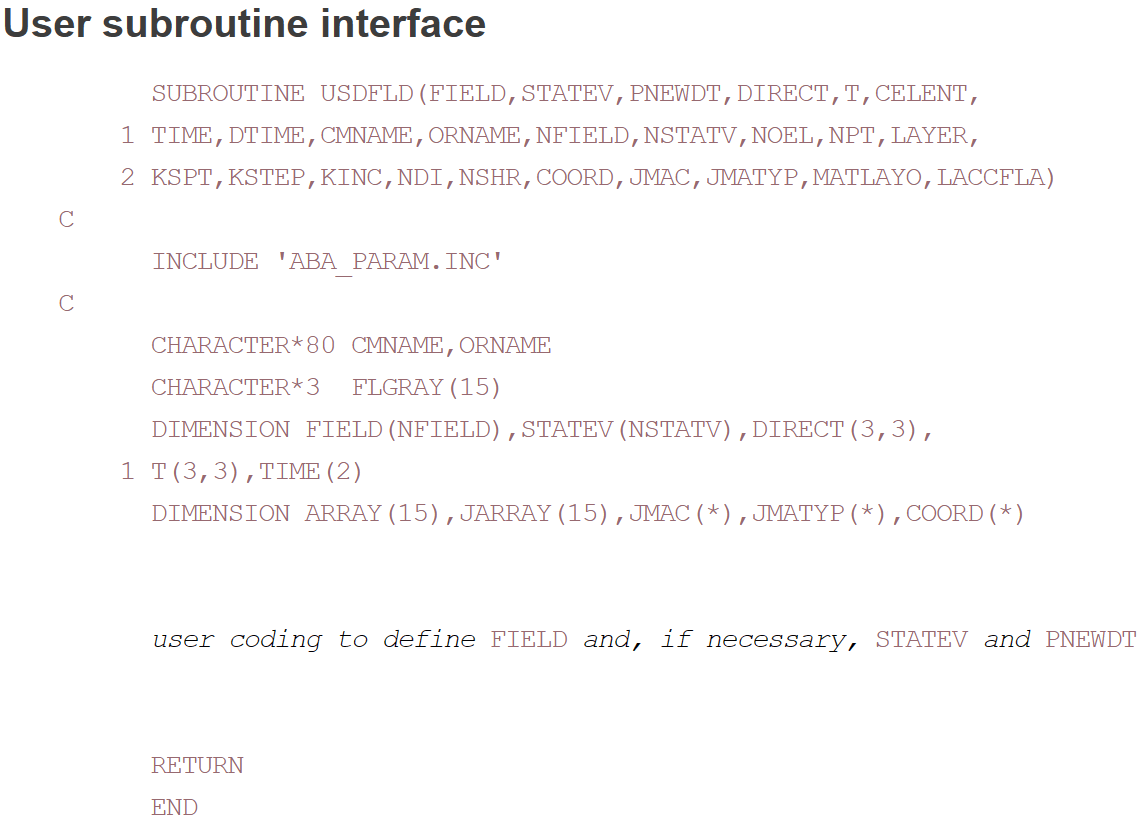
图 16: USDFLD子程序的用户界面
有关 USDFLD 子程序的更多详细信息,您可以参考学习包“USDFLD 和 VUSDFLD 子程序简介“ 在我们的网站上。.
UEXPAN 子程序
UEXPAN is another Abaqus subroutine that enables us to calculate non-mechanical strains during the composite curing process. The subroutine’s interface is presented in Figure 17.
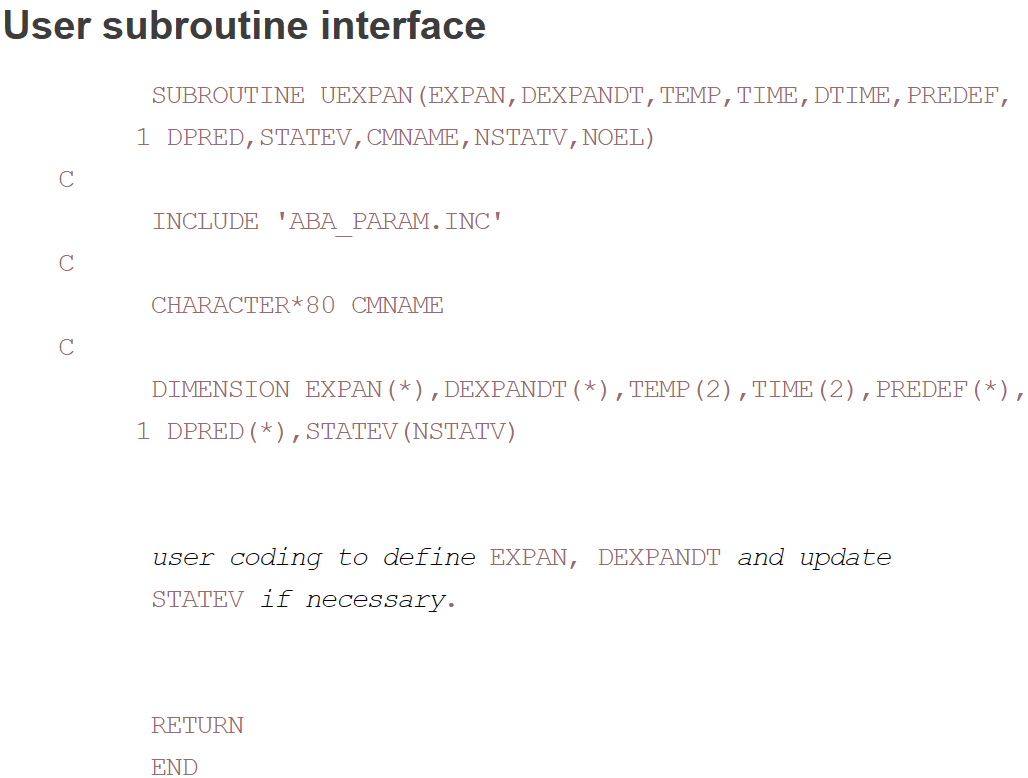
图 17: UEXPAN 子程序的用户界面
在 UEXPAN 中,您可以调用固化度等状态变量来计算固化收缩应变。此外,您还可以获取当前温度来计算热膨胀。有关此子程序的详细说明,请参阅学习包“UEXPAN 和 VUEXPAN 子程序”在我们的网站上。.
UMAT子程序
UMAT is a subroutine that allows users to define their desired material properties, particularly for models not available in the Abaqus library. It enables us to calculate the resin’s density as a function of the degree of cure, for the composite curing simulation. UMAT ultimately returns the calculated stress components to Abaqus for further calculations. The subroutine’s interface is shown in Figure 18.
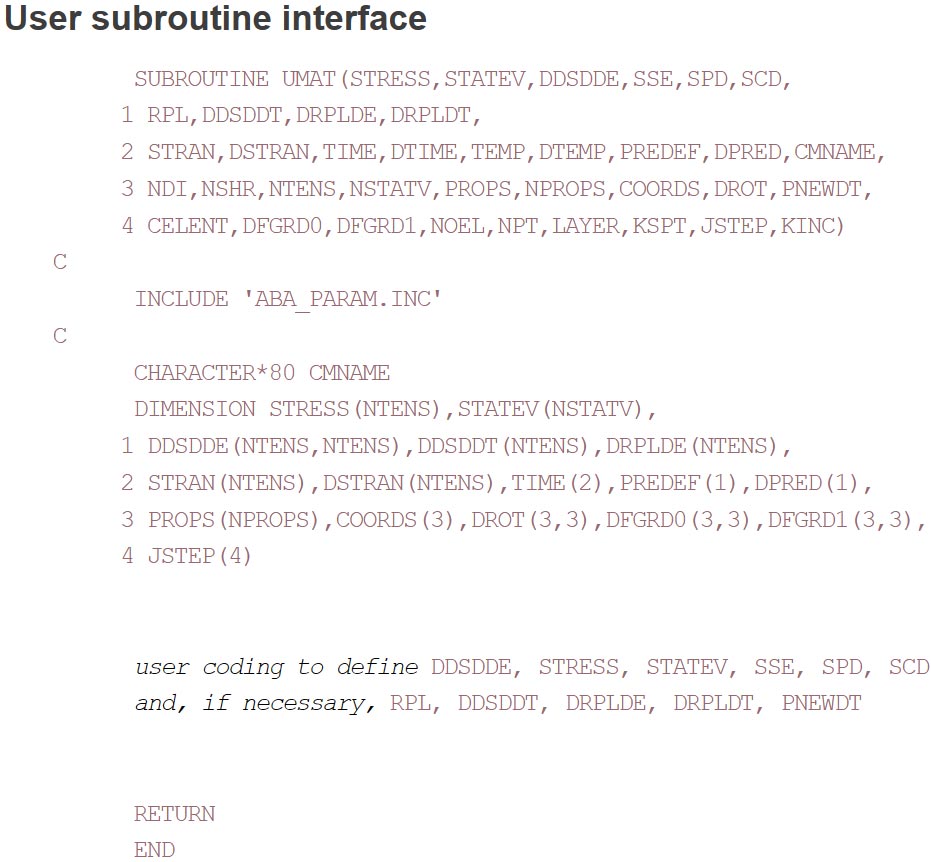
图 18: UMAT子程序的用户界面
要了解编写 UMAT 子程序的基本入门知识,请参阅这篇免费教程“UMAT子程序免费教程“此外,我们还为对高级应用感兴趣的用户提供更详细的分步教程。“UMAT子程序介绍“。”.
HETVAL 子程序
HETVAL, another Abaqus subroutine, allows for calculating internal heat generation during the composite curing process. It enables the user to define the thermo-chemical model and calculate the heat generated due to chemical reactions. The subroutine retrieves the degree of cure and its derivative with respect to time from user-defined state variables, for the composite curing simulation. With this information, the subroutine calculates the internal heat and transfers it to Abaqus CAE for the solution process. The subroutine’s interface is shown in Figure 19.
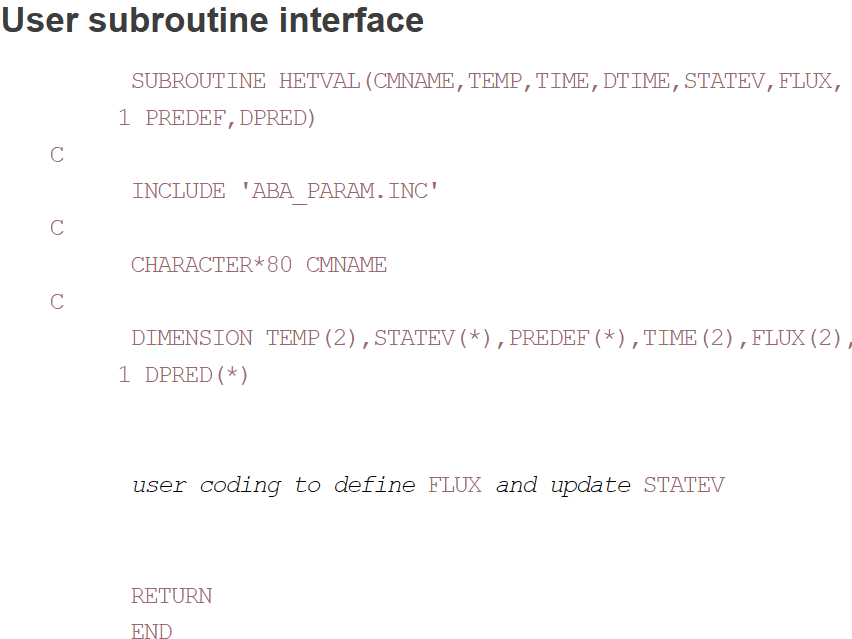
图 19: HETVAL子程序的用户界面
我们建议您查看这篇教程“Abaqus 中的 HETVAL 子程序”在我们的网站上,我们展示了如何针对不同场景编写 HETVAL 子程序。.
DISP 子程序
DISP is a subroutine that allows you to define complex boundary conditions. While Abaqus offers built-in features for defining boundary conditions for composite curing simulation, DISP provides more flexibility and control. So, the subroutine is useful for simulating the curing process under complex temperature cycles. Figure 20 presents the subroutine’s interface.
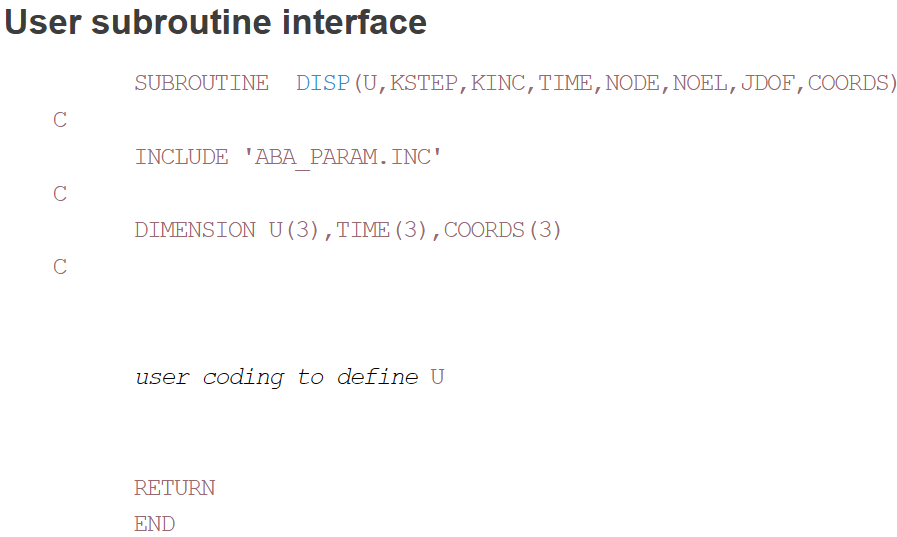
图 20: DISP子程序的用户界面
有关此子程序的更多信息,我们建议您查看提供的学习包。“Abaqus 中的 DISP 和 VDISP 子程序“。”.
A learning package for the simulation of the curing process in Abaqus
利用上述子程序模拟固化过程颇具挑战性,尤其对于不熟悉 Fortran 编程语言的用户而言。此外,在子程序中定义复杂的热-化学-力学方程也增加了难度。不过,我们已简化学习流程,以帮助您克服这些挑战。.
在提供的学习资料包中“复合材料固化模拟“通过本教程,您可以全面了解使用子程序进行纤维增强复合材料固化模拟的基础知识。此外,它还能帮助您熟悉AS4/3501-6预浸料中纤维增强复合材料固化模拟的常用热-化学-力学模型。本教程提供了编写所有提及的子程序和Abaqus固化过程模拟的分步指南。为了验证结果,我们将复合材料固化模拟的结果与以下论文中的结果进行了比较。这些论文详细讨论了复合材料固化过程的数值建模。.
- 热固性预浸料固化过程的数值模拟和多目标优化
- 利用多物理场耦合分析和多种本构模型研究固化循环对厚复合材料残余应力的影响
Abaqus version 2022 was used for the simulation. However, the procedure can also be applied to other versions, although there may be minor differences in some of them. For example, we also performed the simulation once in Abaqus 2024, and as shown in the figure below, we had to change the element type to hybrid; you can do the same as well.

For validation, several results such as the stress–time curve, strain–time curve, and the Deborah number were checked. You can see the details in the figure below. In this way, you can trust the results of the Abaqus simulation.


概括
本文重点介绍了在Abaqus软件中模拟复合材料固化过程,特别是纤维增强复合材料(FRC)的固化过程。理解和优化这一过程至关重要,因为它直接影响复合材料的质量、强度和耐久性,而这些对于航空航天、汽车和其他高性能行业的应用至关重要。.
本文首先探讨了纤维增强复合材料(FRC)的性质、类型及其制备方法。随后,重点介绍了FRC相对于传统材料的优势及其广泛的应用。文章概述了FRC的固化过程,比较了烘箱固化和高压釜固化两种方法,并强调了精确模拟对于优化该过程的重要性。文章还探讨了复合材料固化模拟的复杂性,详细阐述了需要考虑的热-化学-力学因素。最后,文章讨论了如何使用Abaqus子程序进行这些模拟,特别是USDFLD、UEXPAN、UMAT、HETVAL和DISP子程序,这些子程序可以对固化过程进行精细的控制和建模。.
总之,本文全面介绍了如何使用 Abaqus 软件模拟复合材料固化过程,涵盖了精确高效模拟所需的基本方法、挑战和工具。文章通过使用特定的子程序,展示了如何精确控制固化过程,从而确保生产出高质量的复合材料。.
The CAE Assistant is committed to addressing all your CAE needs, and your feedback greatly assists us in achieving this goal. If you have any questions or encounter complications, please feel free to share it with us through our social media accounts including WhatsApp.
如果您需要深入的培训,我们的 Abaqus 课程可以满足您的需求。请访问我们的网站。 Abaqus课程 立即查找最适合您需求的课程,并将您的 Abaqus 知识提升到新的水平!
您随时可以了解更多关于 Abaqus 的信息。 Abaqus 文档.
Composite Curing FAQs
Basically, curing is when you apply heat and pressure to the composite so the resin hardens and turns from a liquid into a solid, giving the material its final strength.
Oven curing is simpler and cheaper, but the quality isn’t as high. Autoclaves, on the other hand, use both heat and pressure, so you end up with much stronger and cleaner parts.
Thermosets are kind of a one-way process—once they’re cured, that’s it, you can’t melt them again. But thermoplastics can be reheated and reshaped, which makes them more flexible in that sense.
Because curing isn’t just about heat—it’s a mix of chemical reactions, temperature changes, and mechanical effects all happening together. You need this type of simulation to really understand and predict what’s going on.
Residual stresses mainly come from the resin shrinking and the different thermal behavior between fibers and matrix as the part cools down.
It basically tells you how far the resin has gone in the curing process, and that directly affects the final properties, heat generation, and internal stresses.









 English
  Korean
  Chinese