
What is Composite curing? Composite curing is a critical thermal and chemical process that transforms a mixture of fibers and a polymer matrix into a rigid fiber-reinforced composite. Through controlled temperature and pressure cycles, curing induces molecular cross-linking, which is essential for achieving the material’s final structural integrity and mechanical performance.
Without precise thermal management, these materials fail to meet the rigorous demands of real-world engineering applications. Because optimizing these parameters experimentally is costly, engineers increasingly rely on advanced computational methods to design effective thermal cycles.
Here at CAE 보조원, this comprehensive guide details the core fundamentals of fiber-reinforced composites and examines standard curing methodologies used in modern manufacturing. Furthermore, we demonstrate how to leverage Abaqus simulation software—specifically utilizing custom Fortran subroutines—to accurately model the composite curing process. This provides engineers, researchers, and students with a practical framework to optimize curing cycles, improve composite quality, and reduce production defects.
To ensure the model can properly address the needs of a wide range of users—from beginners to advanced industrial applications requiring high accuracy—various material models have been implemented and developed within these subroutines, including linear elastic instantaneously hardening (Chile), path-dependent, and viscoelastic models.
섬유 강화 복합재(FRC)란 무엇인가요?
섬유 강화 복합재는 두 가지 주요 상으로 구성된 재료입니다. 강화 섬유(1상)와 매트릭스(2상)에 매립된 섬유입니다. 그러나 일부 참고문헌에서는 매트릭스와 섬유 사이의 계면을 별도의 상으로 간주합니다. 그림 1은 섬유 강화 복합재를 보여줍니다. 합성물.
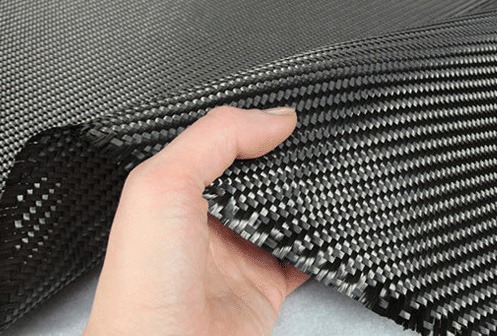
그림 1: 섬유 강화 복합재 조각
FRC의 섬유는 일반적으로 복합재에 충분한 강도를 제공하기 위해 단단한 재료로 만들어집니다. 매트릭스는 종종 폴리머의 일종으로, 섬유를 서로 연결하고 섬유 사이에 응력을 전달합니다. 이 두 성분이 결합되면 고유한 특성을 가진 복합재가 형성됩니다. 이 복합재는 가볍지만 강하기 때문에 다양한 용도에 적합합니다.
Common types of FRCs
섬유 강화 복합재 (FRC)는 다양한 특성을 가진 광범위한 재료를 지칭하는 일반적인 용어입니다. 섬유와 매트릭스의 특성에 따라 FRC는 여러 유형으로 분류될 수 있습니다. 각 유형은 고유한 특성을 가지고 있어 특정 응용 분야에 적합합니다.
그림 2는 매트릭스 재료에 따른 FRC의 분류를 보여줍니다. 그림에서 알 수 있듯이 FRC는 폴리머, 금속, 세라믹, 탄소/탄소 재료 등 다양한 매트릭스로 제작될 수 있습니다. 이 중 폴리머 매트릭스 FRC가 가장 널리 사용되는 복합재입니다. FRC는 열가소성 수지와 열경화성 수지의 두 가지 하위 그룹으로 나뉩니다.
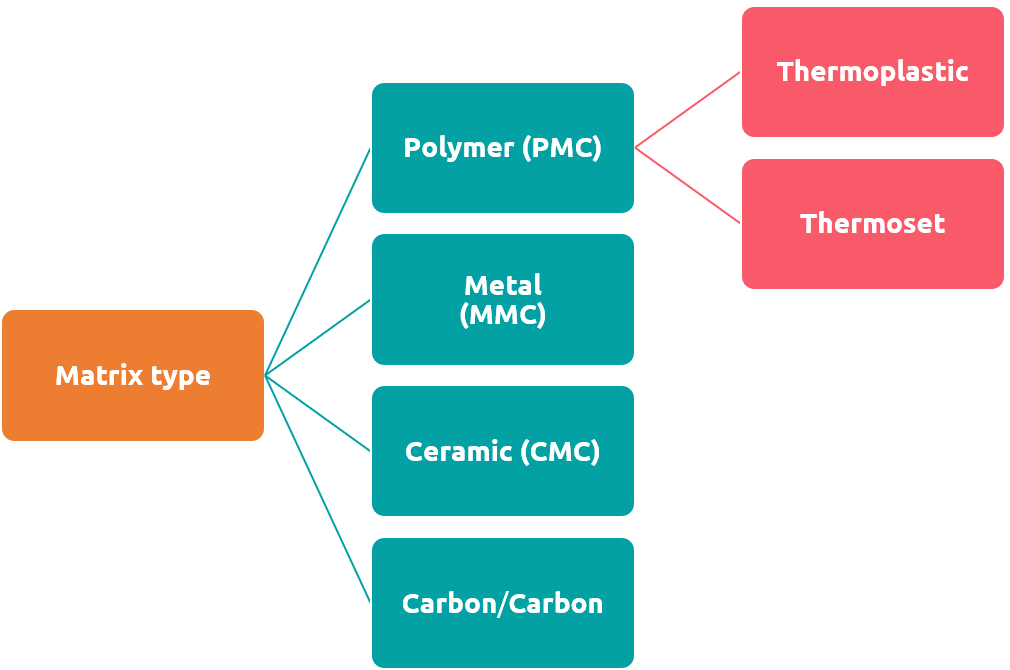
그림 2: 매트릭스 재료에 따른 복합재 분류
열가소성 수지는 경화 후 재용융될 수 있는 고분자 기반 매트릭스의 한 유형입니다. 반면, 열경화성 수지는 가열 후 영구적으로 경화된 상태를 유지합니다. 그림 3은 경화 후 재가열 시 열가소성 수지와 열경화성 수지를 비교한 것입니다.
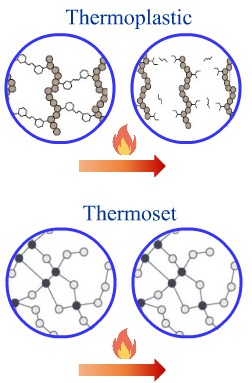
그림 3: 재가열 시 열가소성 및 열경화성 매트릭스의 동작 비교
열경화성 수지는 다양한 유형과 용도를 가진 광범위한 FRC 그룹을 형성합니다. 그림 4는 매트릭스와 섬유 재료를 기반으로 열경화성 복합재를 분류하여 그 다양성을 강조합니다. 이 글에서는 열경화성 복합재에 초점을 맞추었지만, 열가소성 복합재 또한 FRC 산업에서 중요한 역할을 합니다.
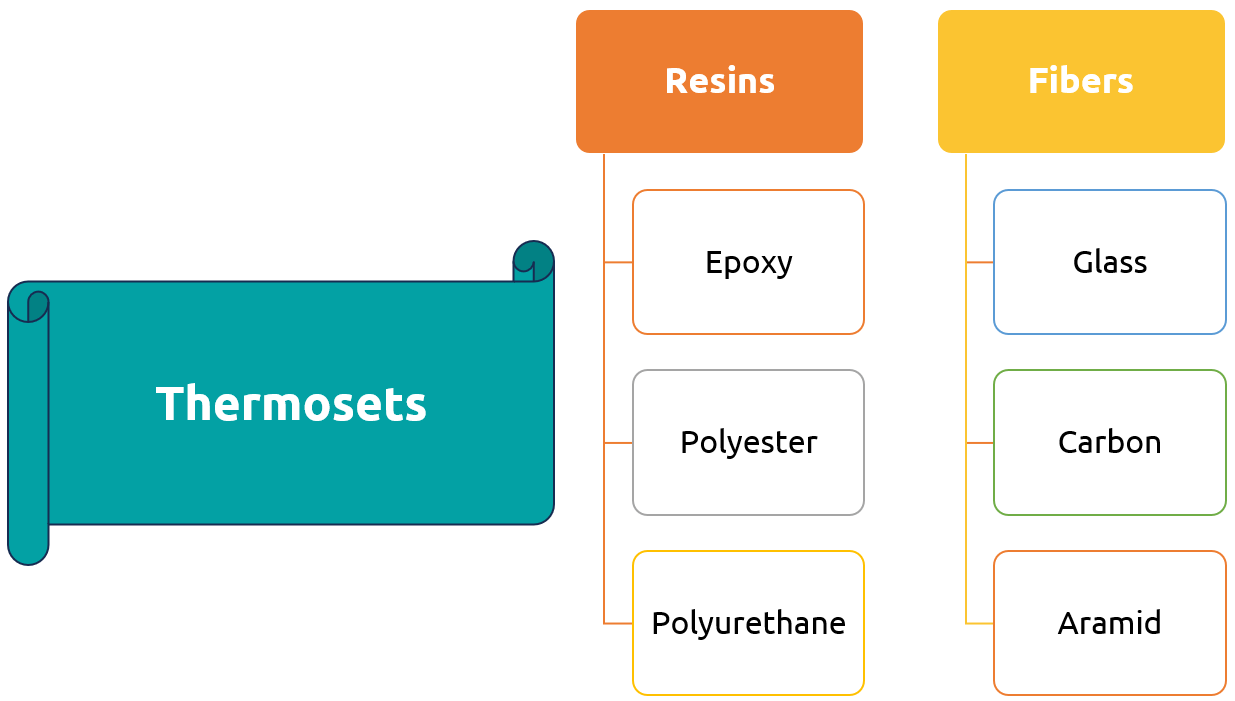
그림 4: 매트릭스 및 섬유 재료를 기반으로 한 열경화성 복합재의 분류
| 모든 수준의 사용자를 위한 무료 PDF 가이드와 자세한 동영상이 포함된 포괄적인 Abaqus 튜토리얼 페이지를 살펴보세요. 무료 및 프리미엄 패키지와 함께 Abaqus를 효율적으로 마스터하는 데 필요한 필수 정보를 확인하세요. Abaqus 여정을 시작하세요. Abaqus 튜토리얼 지금! |
What is the composite curing process?
경화는 복합재에 열과 압력을 가하여 매트릭스의 유동성을 감소시키는 과정입니다. 최종 복합재에서 원하는 성능과 품질을 얻으려면 복합재 경화 공정을 신중하게 제어해야 합니다.
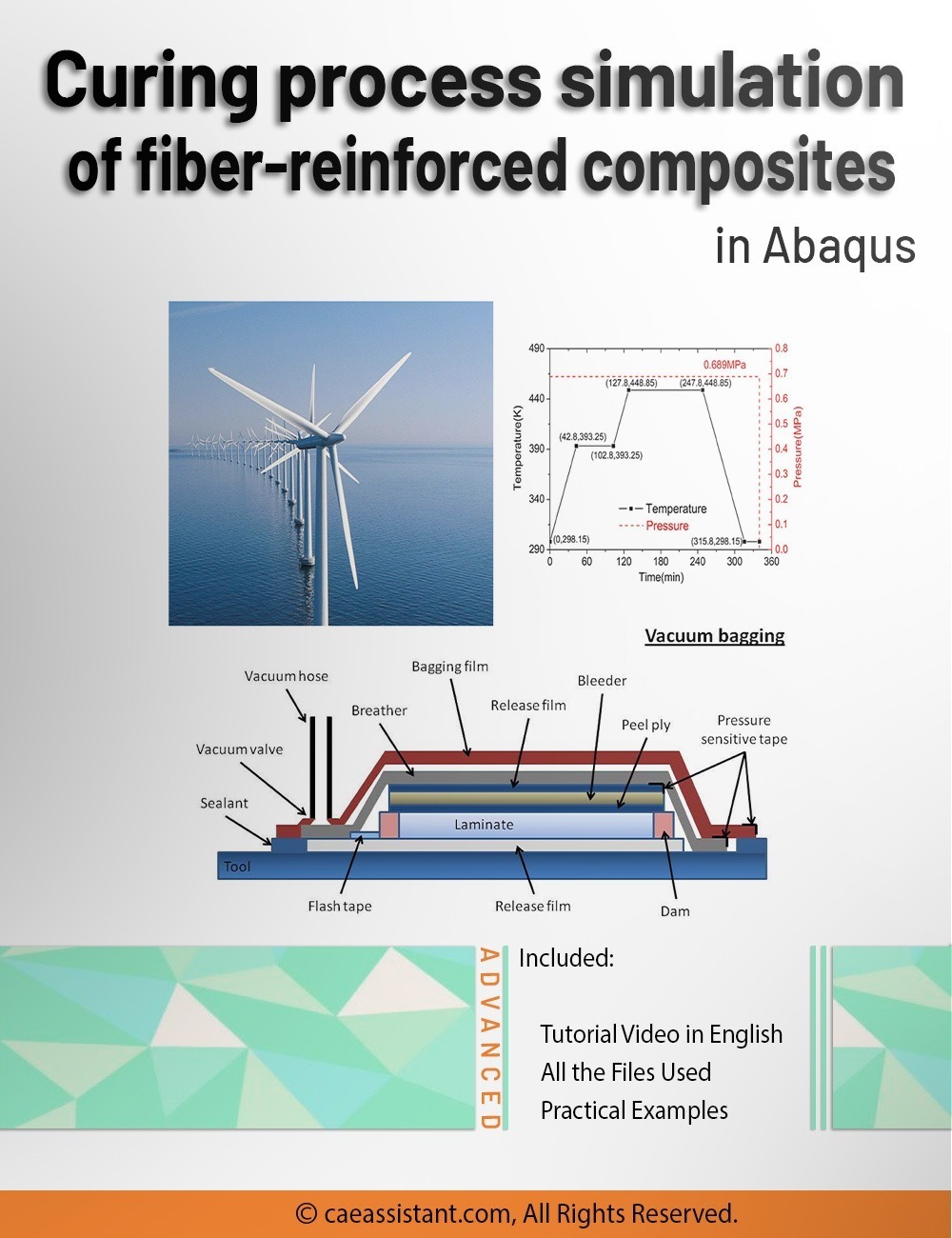
Today, three well-established methods are commonly used for the composite curing process: autoclave, oven curing, and heated die curing (pultrusion). In general, oven-curing is a traditional method, that utilizes a standard oven to apply heat to the composite. As depicted in Figure 5, it needs a vacuum bag to apply pressure and remove the air. Despite its lower cost compared to the autoclave method, oven curing results in higher porosity and lower mechanical properties.
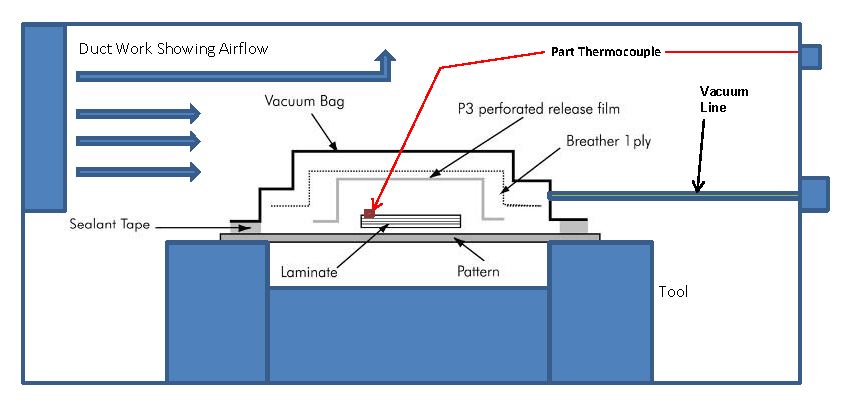
Figure 5: Schematic representation of the oven-curing process [참고문헌.]
The autoclave method is more advanced than the oven-curing. It utilizes a pressure vessel (autoclave) to apply both heat and pressure simultaneously to the composite, as shown in Figure 6. This process enables the production of high-quality laminates with low porosity and superior mechanical properties. However, unlike oven curing, the autoclave method is more expensive and requires complex equipment.
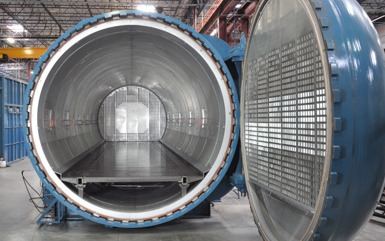
Figure 6: An autoclave device [참고문헌.]
Heated die curing, particularly in the context of pultrusion, offers several advantages over traditional oven and autoclave curing methods, especially for continuous composite manufacturing. For example, unlike oven and autoclave curing, which are batch processes, pultrusion with a heated die (figure 7) enables continuous production. Moreover, since heat is applied directly to the material through the die, heat loss is minimized, leading to reduced curing time. Additionally, the die not only heats but also shapes the part during curing, resulting in excellent dimensional accuracy and surface finish without the need for secondary machining. Therefore, this method can be considered a cost-effective and high-quality approach to composite curing.
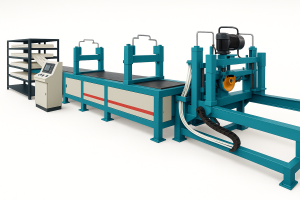
Figure 7: A pultrusion machine
How the composite curing process affects the product quality?
During the composite curing process, FRCs experience specific pressure and temperature cycles to achieve optimal quality. However, the standard composite curing process can last several hours, making it inefficient for industrial production. Manufacturers prefer to shorten the curing cycles by applying higher temperatures within shorter time periods. While this approach can increase production speed, it may impact the product quality and lead to residual deformations. Figure 8 showcases a product that experienced residual deformations after the composite curing process.
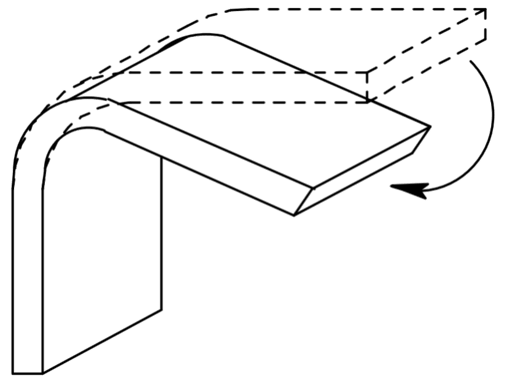
Figure 8: Schematic representation of the residual deformations in a composite [참고문헌.]
생산 효율성과 품질의 균형을 맞추기 위한 전통적인 접근 방식은 각 제품에 대해 여러 번의 실험적 경화 사이클을 수행하는 것입니다. 그러나 이 과정은 비용과 시간이 많이 소요됩니다. 이는 생산 품질과 효율성을 모두 보장하는 최적의 경화 사이클을 설계하는 것이 얼마나 어려운지를 보여줍니다. 복합재 경화 시뮬레이션은 이러한 과제를 해결하는 한 가지 방법입니다.
Fiber reinforced composite curing simulation
수치적 방법은 단순화되었습니다 섬유 강화 복합재 경화 시뮬레이션. 이러한 방법은 경화 사이클 설계를 위한 실험적 시험의 귀중한 대안입니다. 이러한 방법은 효율적인 생산을 유지하면서 원하는 제품 품질을 보장하는 최적의 경화 사이클 설계 과정을 간소화합니다. 섬유 강화 복합재 경화 시뮬레이션은 결합된 화학적, 열적, 기계적 분야를 동시에 고려해야 합니다. 따라서 이를 열-화학-기계적 복합재 경화 시뮬레이션이라고 합니다.
Simulation of the thermo-chemical reactions in the curing process
동안 복합 경화 시뮬레이션, 열은 외부와 내부의 두 가지 원천에서 발생합니다. 계산 외부 열 복합 경화 시뮬레이션 내에서는 비교적 간단합니다. 그러나 계산은 내부 열 within the composite curing simulation is a challenging task. Internal heat arises from the chemical reactions within the composite during curing. Therefore, we need a thermo-chemical model to account for the internal heat within the composite curing simulation. In such a model, the generated heat is a function of the degree of cure. Note that the degree of cure is a parameter between zero and one, that represents the extent of curing. A value of zero indicates an uncured composite, while a value of one represents a fully cured one. Figure 9 compares the applied temperature and the temperature developed during curing within a composite. The difference represents the internal heat generation, predicted by the composite curing simulation.
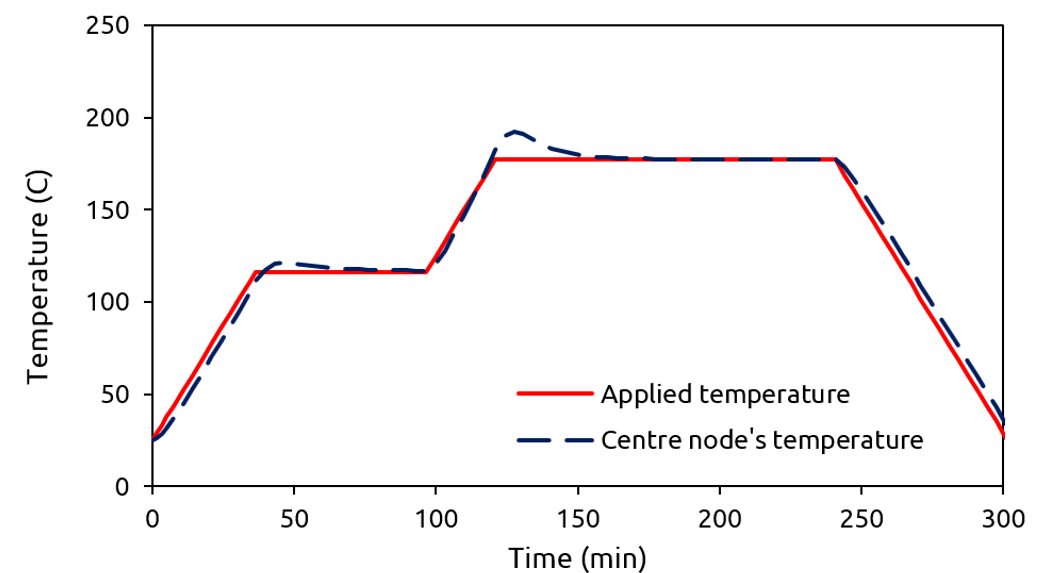
Figure 9: Comparison of the applied temperature and the temperature developed in a composite during curing
복합 경화 시뮬레이션에 대한 보다 심층적인 이해를 위해 학습 패키지 "를 탐색할 수 있습니다.“아바쿠스에서의 경화 공정 시뮬레이션“. 이 논문에서는 잘 알려진 AS4/3501-6 프리프레그에 특히 초점을 맞춰 경화 중 내부 열을 계산하는 공식을 제시합니다.
Evaluation of stress components during the composite curing simulation
Stress prediction is a challenge for the numerical simulation of the composite curing process. This challenge arises due to the changes in the resin’s modulus of elasticity. It makes the composite curing simulation complex. As illustrated in Figure 10, the modulus starts very low and rises significantly during curing as chemical reactions take place. Finally, it reaches a constant value.
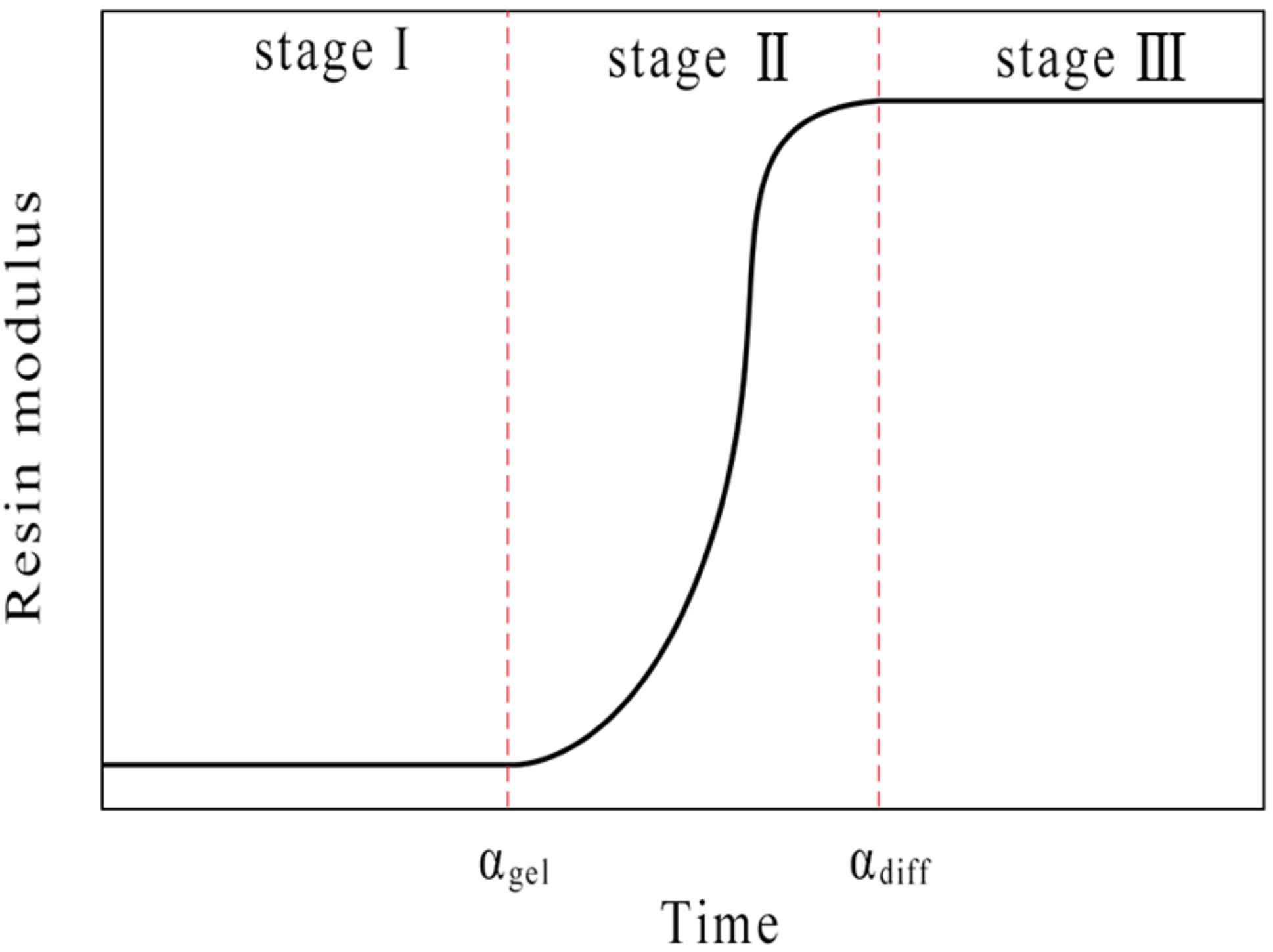
Figure 10: Schematic representation of the resin modulus variation during the curing process [참고]
복합재 경화 시뮬레이션 중 수지 탄성률 변화를 포착하기 위해 여러 모델이 제안되었습니다. 제안된 모델에는 선형 탄성 모델, 점탄성 모델, 경로 의존 모델이 포함됩니다. 각 모델은 장단점을 가지고 있습니다. 표 1은 AS4/3501-6 프리프레그의 수지 탄성률 또는 응력 성분을 계산하기 위해 특별히 개발된 모델을 요약한 것입니다. 관련 내용은 이 문서 "“다중 구성 모델을 사용한 다중 물리 결합 해석을 사용하여 두꺼운 복합재의 잔류 응력에 대한 경화 사이클의 영향” 이러한 모델에 대한 자세한 내용은 를 참조하십시오. 이 모델들은 복합재 경화 시뮬레이션을 단순화했습니다.
| 범주 | 모델 | 수학적 공식화 |
|---|---|---|
| Linear-elastic | Chile ($\alpha$) | $E_m = (1-\alpha)E_m^0 + \alpha E_m^{\infty}$ |
| Chile ($T$) | $E_m = \begin{cases} E_m^0 & T_* \le T_{c1} \\ \left( \frac{T_{c2}-T_*}{T_{c2}-T_{c1}} \right) E_m^0 + \left( \frac{T_*-T_{c1}}{T_{c2}-T_{c1}} \right) E_m^{\infty} & T_{c1} < T_* < T_{c2} \\ E_m^{\infty} & T_* \ge T_{c2} \end{cases}$ | |
| 점탄성 | General Model | $\sigma_i(t) = \int_{0}^{t} C_{ij}(\xi-\xi’) \frac{\partial \epsilon_j}{\partial \xi’} d\xi’$ |
| Path-dependent | Temperature Dependent | $\sigma_i = \begin{cases} C_{ij}^0 \epsilon_j & T \ge T_g \\ C_{ij}^1 \epsilon_j – (C_{ij}^1 – C_{ij}^0) \epsilon_j |_{t=t_{vit}} & T < T_g \end{cases}$ |
표 1에서, 첫 번째 두 방정식(선형-탄성) 모델 경화 시뮬레이션에 사용됩니다. 방정식을 배우다 그리고 모델링하는 방법 완전히 Curing process simulation in Abaqus Tutorial.
Also, the next two equations (점탄성 및 경로 의존성) 모델은 다음에 사용됩니다. 경화 시뮬레이션 아래 패키지에 들어있습니다.
제공된 패키지 내에서 선형 탄성 모델에 대한 자세한 설명과 구현을 위한 단계별 가이드를 제공합니다. 이를 통해 복합재 경화 시뮬레이션이 간소화됩니다. 검증을 위해 그림 21과 같이 결과를 기준 솔루션과 비교했습니다.
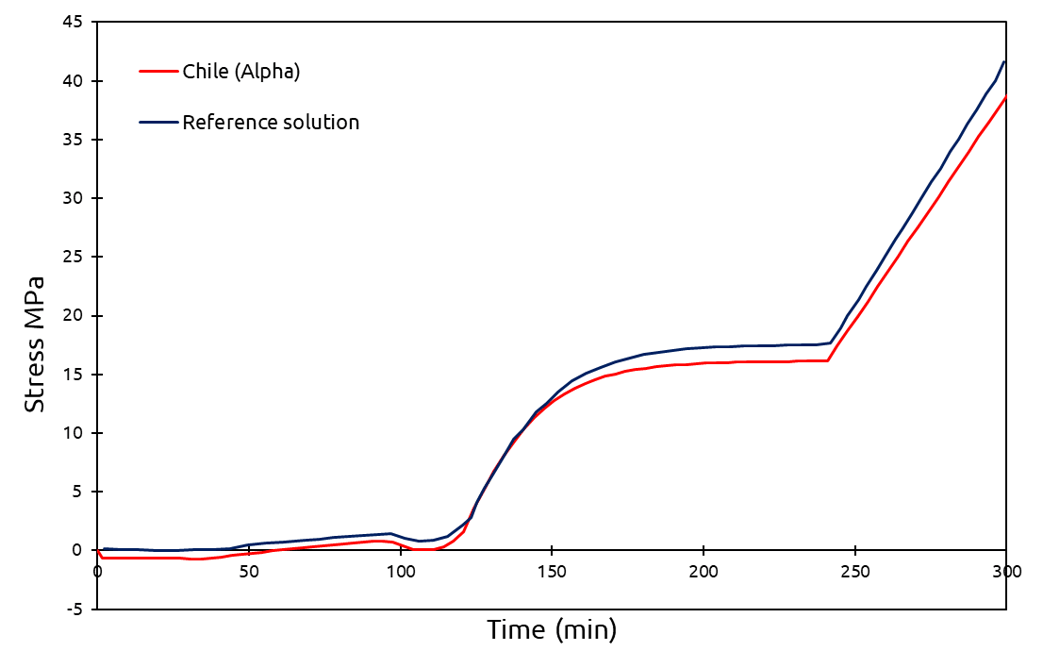
Figure 11: Comparison of the stress in a composite with the reference solution
요약하자면, 수치 복합재 경화 시뮬레이션은 열, 화학, 그리고 기계적 측면을 동시에 고려해야 합니다. 이처럼 복잡한 모델을 어떻게 구현해야 할지 고민되실 수 있지만, 걱정하지 마세요! 이 과제를 해결할 수 있는 정확하고 효율적인 방법을 안내해 드리겠습니다.
경화 중 FRC의 변형률 평가
경화 과정은 복합재에 바람직하지 않은 변형을 초래하고 제품 품질에 부정적인 영향을 미칠 수 있습니다. 이러한 변형을 최소화하기 위해 섬유 강화 복합재 경화 시뮬레이션에서 잔류 변형률을 고려해야 합니다.
경화 과정에서 복합재는 기계적 변형과 비기계적 변형, 두 가지 유형의 변형을 겪습니다. 복합재의 비기계적 변형은 경화 수축과 열 팽창 모두에서 발생합니다. 경화 수축은 경화 과정에서 매트릭스 내 기체와 용매의 방출로 인해 발생합니다. 다음 방정식을 통해 이를 계산할 수 있습니다.
$$\varepsilon_{cu} = \mathbf{CCS} \, \Delta \alpha$$
이 방정식에서, CCS represents the effective chemical shrinkage coefficient of the matrix, and ∆α is the variation in the degree of cure. Figure 12 schematically illustrates how the chemical shrinkage occurs during the curing process.
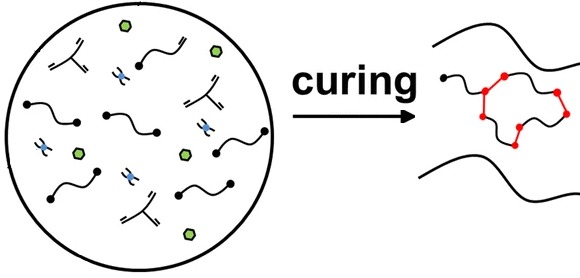
Figure 12: Illustration of the chemical shrinkage effect during the curing process (Adapted form [참고문헌.] 수정됨)
열팽창은 외부에서 가해지는 열과 경화 중 발생하는 내부 열 모두에 따라 달라집니다. 내부 열은 경화 정도에 따라 달라지므로, 열팽창은 화학 반응의 영향도 받습니다. 다음 방정식을 사용하여 열팽창을 계산할 수 있습니다.
$$\varepsilon_{th} = \boldsymbol{CTE} \, \Delta T$$
어디 CTE 는 복합재의 열팽창 계수이고, 는 온도 변화입니다.
In summary, several factors influence the total strain experienced by composites during curing, as detailed in Figure 13.
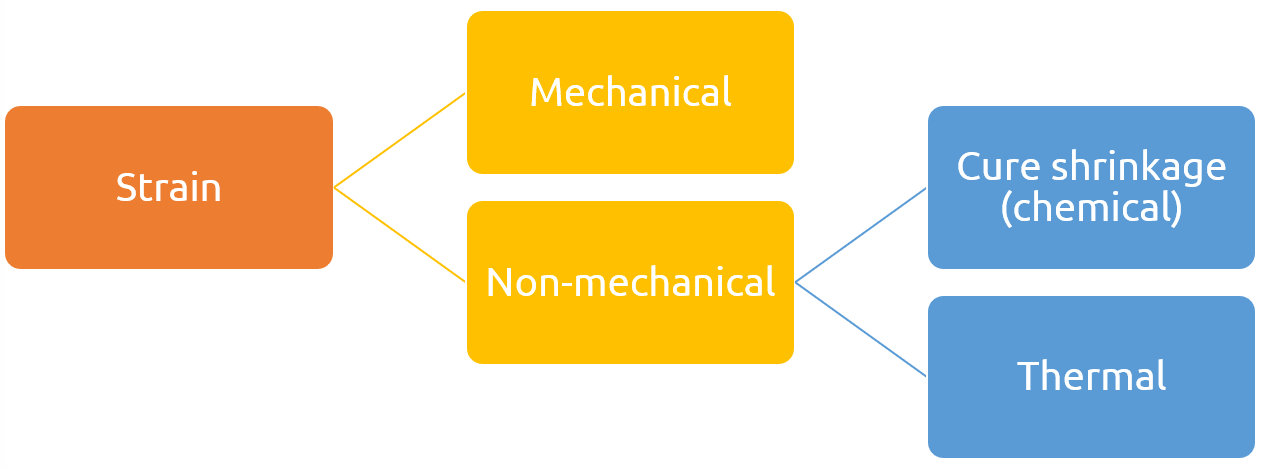
Figure 13: An overview of the strain components generated in a composite during the curing process
섬유 강화 복합재 경화 시뮬레이션에서 모든 변형률 성분을 함께 고려하는 것은 어려울 수 있습니다. 그러나 "“아바쿠스에서의 경화 공정 시뮬레이션” learning package on our website simplifies this process. It offers a step-by-step guide on calculating strain components during composite curing simulation. For validation, we compared our results with a reference solution, as shown in Figure 14.
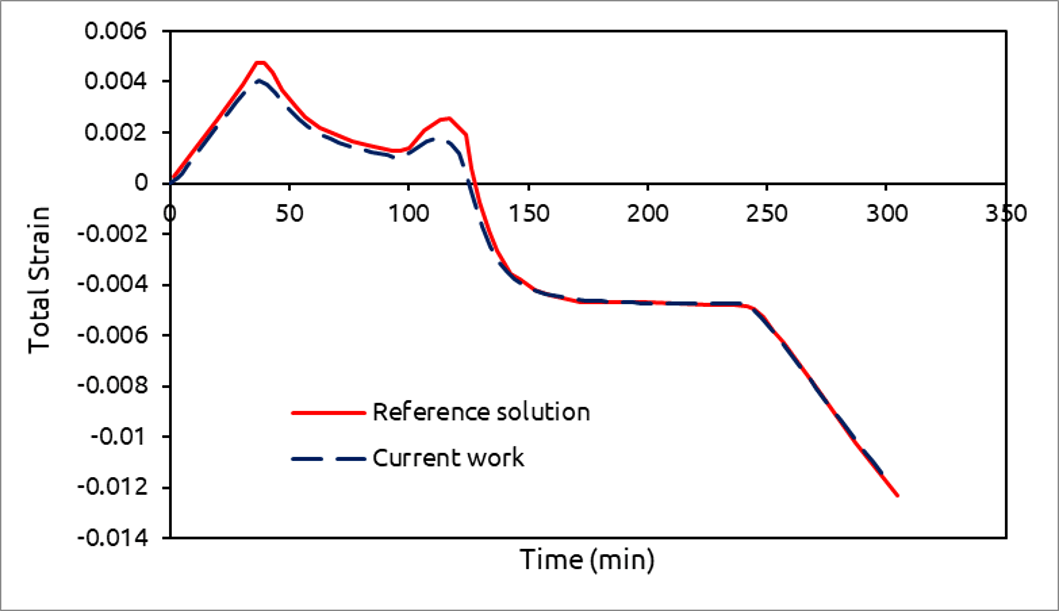
Figure 14: Comparison of the total strain in the composite with the reference solution
Abaqus 경화 공정 시뮬레이션
Abaqus is a widely used finite element program, that has simplified the fiber reinforced composite curing simulation.

It has been extensively used in published papers to analyze internal heat generation and mechanical fields during the composite curing process. However, the lack of required thermo-chemo-mechanical models in Abaqus presents a significant challenge for Abaqus curing process simulation.

Fortunately, Abaqus user-defined subroutines provide a powerful solution to overcome this challenge.
Composite curing simulation using subroutines
Have you ever heard of composite curing simulation using subroutines? Abaqus has a large number of user-defined subroutines with diverse functionalities. You need to utilize several subroutines simultaneously for the Abaqus curing process simulation.

Abaqus User Subroutines for Curing Process Analysis
| 서브루틴 | Purpose | Key Inputs | 출력 | Application |
|---|---|---|---|---|
| 미국 달러 | Define user field variables |
|
|
Calculates α and stores it for use in other subroutines. |
| 유엑스판 | Calculate non-mechanical strains |
|
|
Calculates deformations caused by chemical reactions and temperature changes. |
| 유맷 | Define custom mechanical behavior |
|
|
Calculates α-dependent mechanical properties and returns stresses to Abaqus. |
| 헤트발 | Calculate internal heat generation |
|
Heat generation | Calculates exothermic heat from the curing reaction and passes it to the thermal solver. |
| 디스플레이 | Define complex boundary conditions |
|
Prescribed Boundary Conditions | Simulates complex thermal cycles and controls mold deformation. |
USDFLD 서브루틴
USDFLD is a subroutine that enables us to define user-defined field variables in Abaqus. You can use USDFLD to calculate the degree of cure and its variation with respect to time, for the composite curing simulation. The subroutine enables us to save these parameters as solution-dependent variables (SDVs). These SDVs can be called by other subroutines to calculate internal heat, non-mechanical strains, and stress components. The subroutine’s interface is shown in Figure 16.
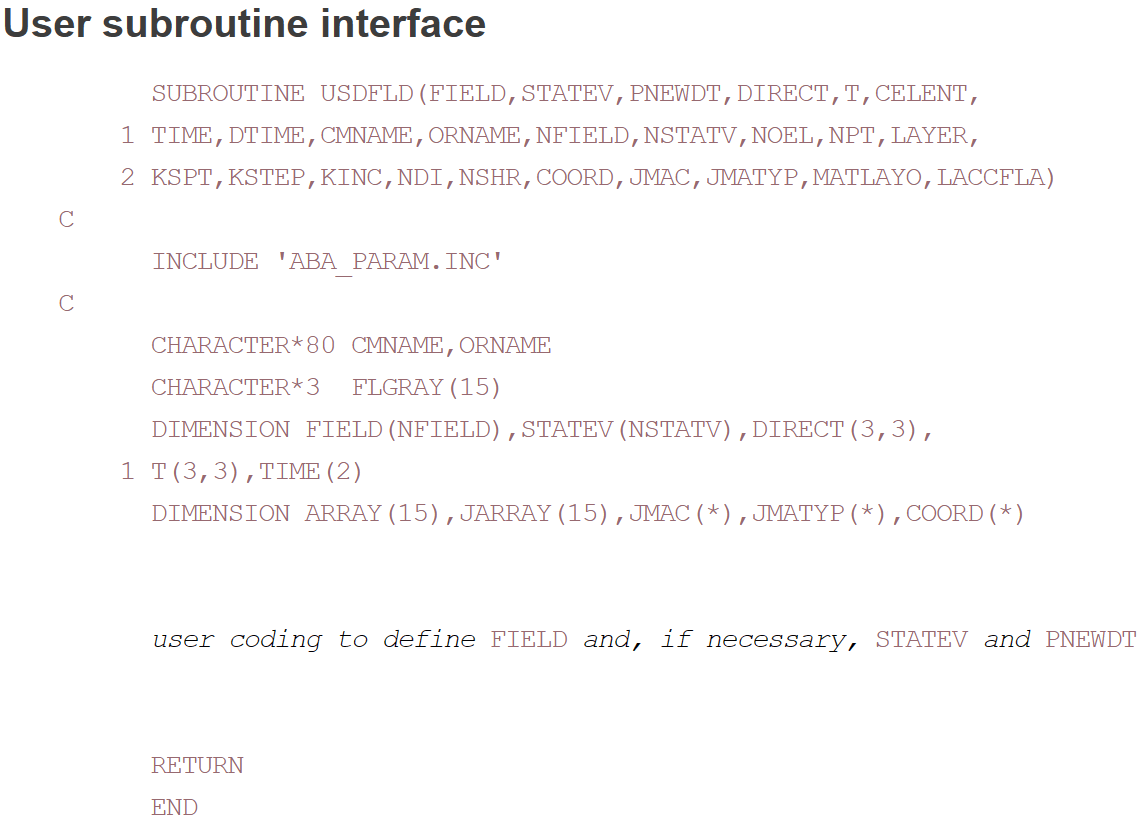
그림 16: USDFLD 서브루틴의 사용자 인터페이스
USDFLD 서브루틴에 대한 자세한 내용은 학습 패키지 "를 참조하세요.“유에스디에프엘디 및 브이유에스디에프엘디 서브루틴 소개“ 저희 웹사이트에서.
UEXPAN 서브루틴
UEXPAN is another Abaqus subroutine that enables us to calculate non-mechanical strains during the composite curing process. The subroutine’s interface is presented in Figure 17.
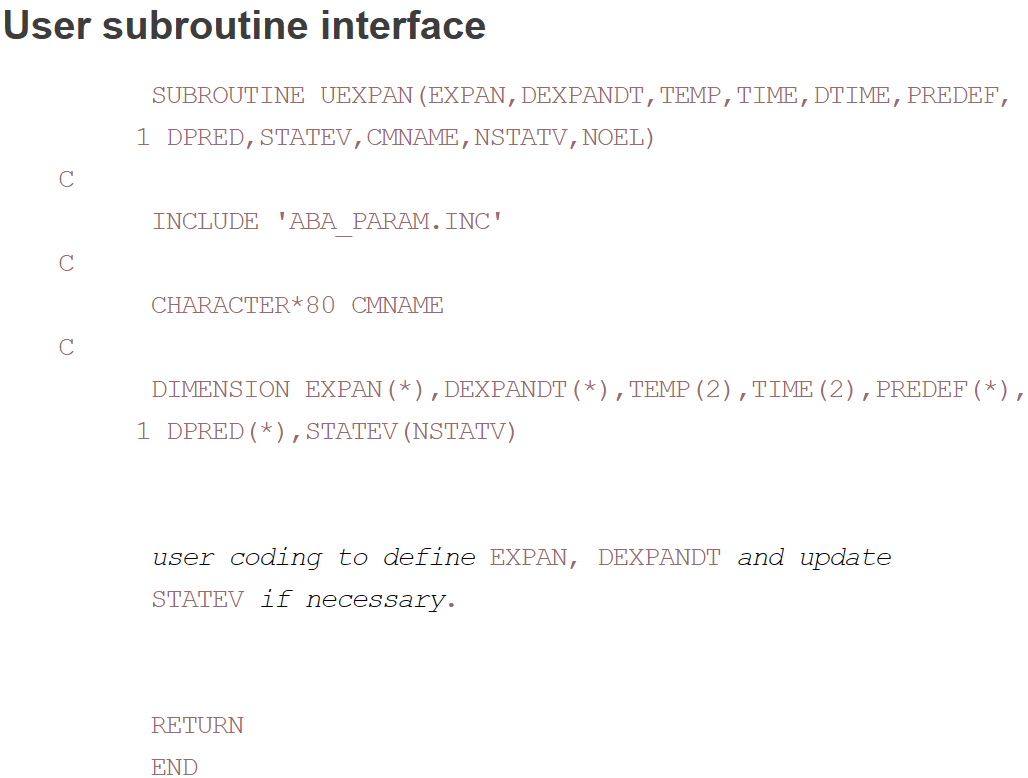
그림 17: UEXPAN 서브루틴의 사용자 인터페이스
UEXPAN 내에서 경화도와 같은 상태 변수를 호출하여 경화 수축 변형률을 계산할 수 있습니다. 또한, 현재 온도를 얻어 열팽창을 계산할 수 있습니다. 이 서브루틴에 대한 자세한 설명은 학습 패키지 "“유익스팬 및 브이유익스팬 서브루틴” 저희 웹사이트에서.
UMAT 서브루틴
UMAT is a subroutine that allows users to define their desired material properties, particularly for models not available in the Abaqus library. It enables us to calculate the resin’s density as a function of the degree of cure, for the composite curing simulation. UMAT ultimately returns the calculated stress components to Abaqus for further calculations. The subroutine’s interface is shown in Figure 18.
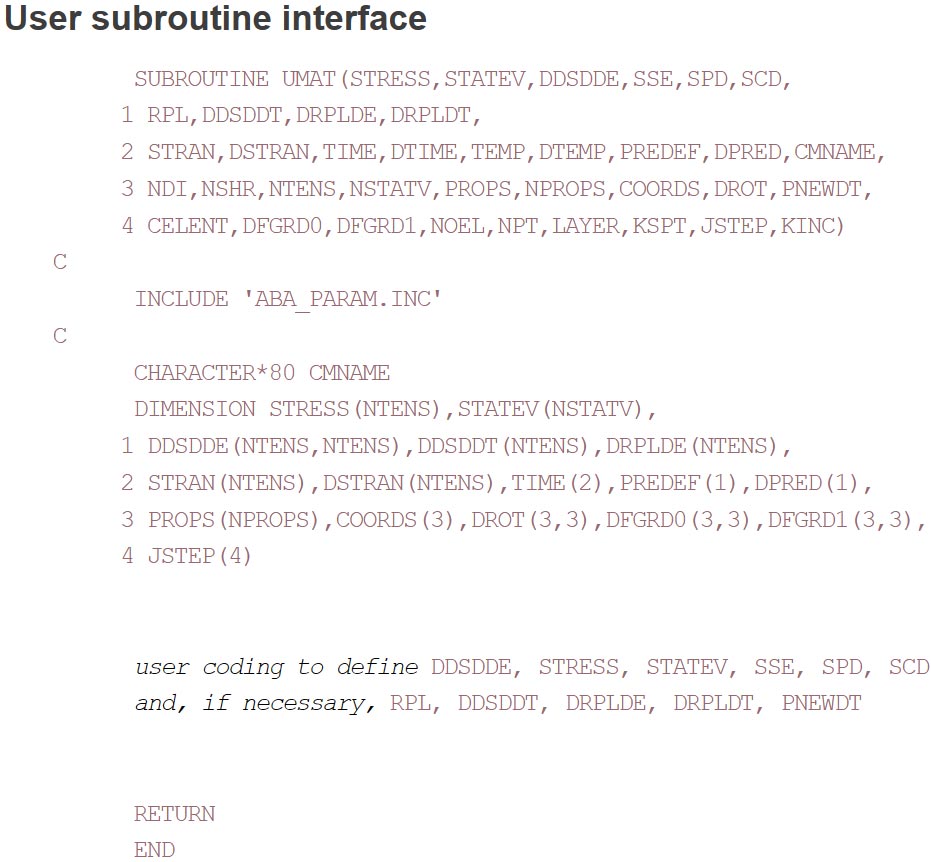
그림 18: UMAT 서브루틴의 사용자 인터페이스
UMAT 서브루틴 작성에 대한 기본 소개는 이 무료 튜토리얼을 참조하세요.“UMAT 서브루틴 무료 튜토리얼“또한, 고급 애플리케이션에 관심이 있는 분들을 위해 단계별 가이드가 포함된 보다 자세한 튜토리얼이 제공됩니다.“UMAT 서브루틴 소개“.
HETVAL 서브루틴
HETVAL, another Abaqus subroutine, allows for calculating internal heat generation during the composite curing process. It enables the user to define the thermo-chemical model and calculate the heat generated due to chemical reactions. The subroutine retrieves the degree of cure and its derivative with respect to time from user-defined state variables, for the composite curing simulation. With this information, the subroutine calculates the internal heat and transfers it to Abaqus CAE for the solution process. The subroutine’s interface is shown in Figure 19.
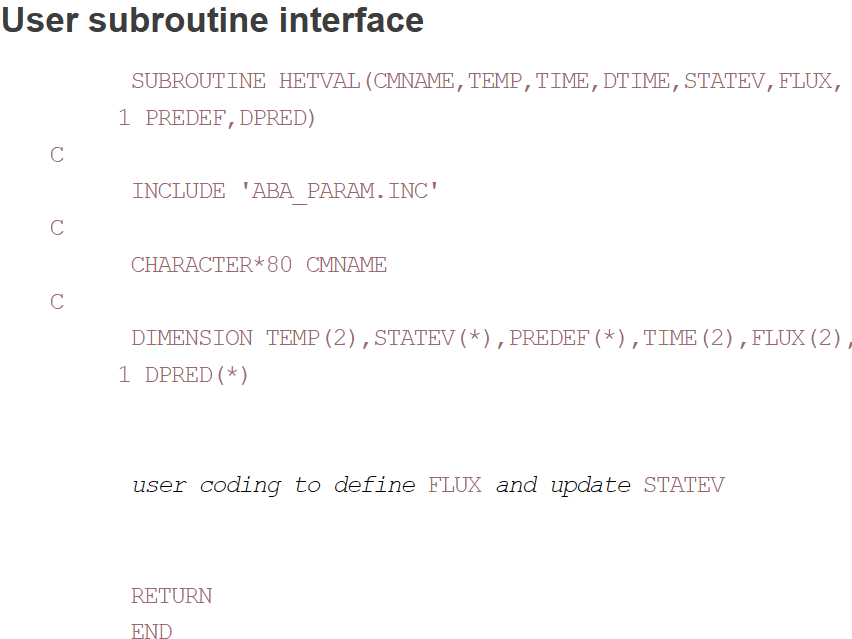
그림 19: HETVAL 서브루틴의 사용자 인터페이스
이 튜토리얼을 확인해 보시기 바랍니다.“Abaqus의 HETVAL 서브루틴”다양한 시나리오에 맞춰 HETVAL 서브루틴을 작성하는 방법을 보여주는 웹사이트의 ".
DISP 서브루틴
DISP is a subroutine that allows you to define complex boundary conditions. While Abaqus offers built-in features for defining boundary conditions for composite curing simulation, DISP provides more flexibility and control. So, the subroutine is useful for simulating the curing process under complex temperature cycles. Figure 20 presents the subroutine’s interface.
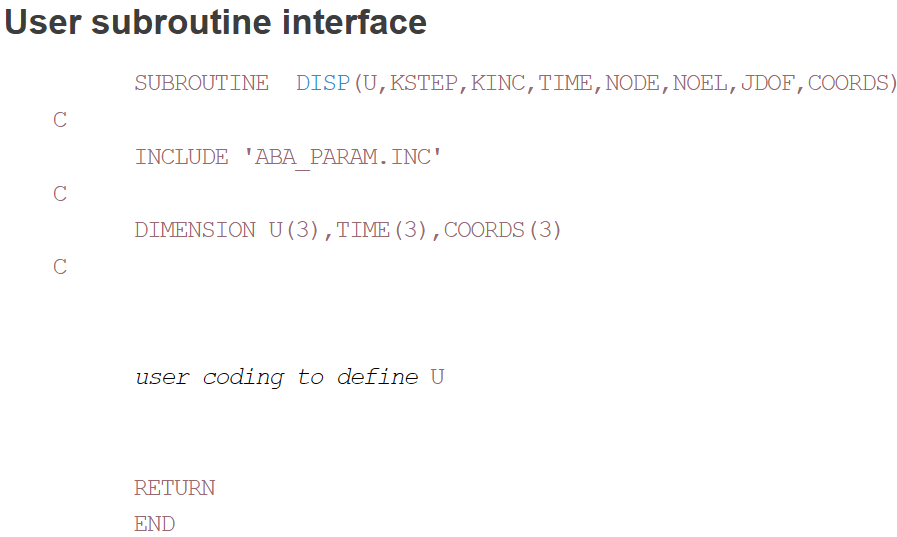
그림 20: DISP 서브루틴의 사용자 인터페이스
이 서브루틴에 대한 자세한 내용은 제공된 학습 패키지 "를 확인하는 것이 좋습니다.“Abaqus의 DISP 및 VDISP 서브루틴“.
A learning package for the simulation of the curing process in Abaqus
언급된 서브루틴을 사용하여 경화 과정을 시뮬레이션하는 것은 어려운 일이며, 특히 포트란 프로그래밍 언어에 익숙하지 않은 사람들에게는 더욱 그렇습니다. 더욱이, 서브루틴 내에 복잡한 열-화학-기계 방정식을 정의하는 것은 이러한 어려움을 가중시킵니다. 하지만 저희는 이러한 어려움을 극복할 수 있도록 학습 환경을 단순화했습니다.
제공된 학습 패키지에서 “복합 경화 시뮬레이션“"서브루틴을 사용하여 섬유 강화 복합재 경화 시뮬레이션의 기본 원리를 종합적으로 이해할 수 있습니다. 또한, AS4/3501-6 프리프레그에서 섬유 강화 복합재 경화 시뮬레이션을 위한 잘 알려진 열-화학-기계 모델에 익숙해지는 데 도움이 됩니다. 이 튜토리얼은 언급된 모든 서브루틴과 Abaqus 경화 공정 시뮬레이션을 작성하는 단계별 가이드를 제공합니다. 검증을 위해 복합재 경화 시뮬레이션 결과를 다음 논문의 결과와 비교했습니다. 해당 논문에서는 복합재 경화 공정의 수치 모델링을 자세히 논의했습니다.
- 열경화성 프리프레그 경화 공정을 위한 수치 시뮬레이션 및 다목적 최적화
- 다중 구성 모델을 사용한 다중 물리 결합 해석을 사용하여 두꺼운 복합재의 잔류 응력에 대한 경화 사이클의 영향
Abaqus version 2022 was used for the simulation. However, the procedure can also be applied to other versions, although there may be minor differences in some of them. For example, we also performed the simulation once in Abaqus 2024, and as shown in the figure below, we had to change the element type to hybrid; you can do the same as well.

For validation, several results such as the stress–time curve, strain–time curve, and the Deborah number were checked. You can see the details in the figure below. In this way, you can trust the results of the Abaqus simulation.


요약
본 논문은 Abaqus에서 복합재 경화 공정, 특히 섬유 강화 복합재(FRC)의 경화 공정 시뮬레이션에 중점을 두었습니다. 이 공정을 이해하고 최적화하는 것은 항공우주, 자동차 및 기타 고성능 산업 분야에 필수적인 복합재의 품질, 강도 및 내구성에 직접적인 영향을 미치기 때문에 중요합니다.
본 논문은 FRC의 특성, 유형, 그리고 생산 방법에 대한 논의로 시작했습니다. 이어서 기존 소재에 비해 FRC가 갖는 장점과 그 광범위한 응용 분야를 조명했습니다. 본 논문은 오븐 경화와 오토클레이브 경화 방식을 비교하여 경화 공정을 간략하게 설명하고, 이 공정을 최적화하기 위한 정확한 시뮬레이션의 필요성을 강조했습니다. 복합재 경화 시뮬레이션의 복잡성을 살펴보고, 해결해야 할 열-화학-기계적 측면을 자세히 설명했습니다. 마지막으로, 본 논문은 경화 공정의 세부적인 제어 및 모델링을 가능하게 하는 Abaqus 서브루틴, 특히 USDFLD, UEXPAN, UMAT, HETVAL, DISP를 사용하여 이러한 시뮬레이션을 수행하는 방법을 논의했습니다.
결론적으로, 본 논문은 Abaqus를 이용한 복합재 경화 공정 시뮬레이션에 대한 포괄적인 가이드를 제공하며, 정확하고 효율적인 시뮬레이션에 필요한 필수적인 방법, 과제, 그리고 도구를 다룹니다. 본 논문은 특정 서브루틴을 사용하여 경화 공정을 정밀하게 제어하고 고품질 복합재 생산을 보장하는 방법을 보여주었습니다.
The CAE Assistant is committed to addressing all your CAE needs, and your feedback greatly assists us in achieving this goal. If you have any questions or encounter complications, please feel free to share it with us through our social media accounts including WhatsApp.
심층적인 학습이 필요하시다면 Abaqus Course가 도와드리겠습니다. Abaqus 과정 오늘 귀하의 필요에 맞는 완벽한 과정을 찾아 Abaqus 지식을 한 단계 더 높여보세요!
Abaqus에 대해 더 자세히 알아보려면 다음 링크를 클릭하세요. Abaqus 문서.
Composite Curing FAQs
Basically, curing is when you apply heat and pressure to the composite so the resin hardens and turns from a liquid into a solid, giving the material its final strength.
Oven curing is simpler and cheaper, but the quality isn’t as high. Autoclaves, on the other hand, use both heat and pressure, so you end up with much stronger and cleaner parts.
Thermosets are kind of a one-way process—once they’re cured, that’s it, you can’t melt them again. But thermoplastics can be reheated and reshaped, which makes them more flexible in that sense.
Because curing isn’t just about heat—it’s a mix of chemical reactions, temperature changes, and mechanical effects all happening together. You need this type of simulation to really understand and predict what’s going on.
Residual stresses mainly come from the resin shrinking and the different thermal behavior between fibers and matrix as the part cools down.
It basically tells you how far the resin has gone in the curing process, and that directly affects the final properties, heat generation, and internal stresses.








 English
  Korean
  Chinese