
Mechanical engineering spans everything from conceptual design to long-term maintenance. Traditional workflows often involve repetitive, manual steps that can be slow and error-prone.
Today, AI in mechanical engineering is changing the game. By automating tasks, enhancing precision, and enabling data-driven decision-making, engineers can innovate faster, reduce costs, and deliver better results.
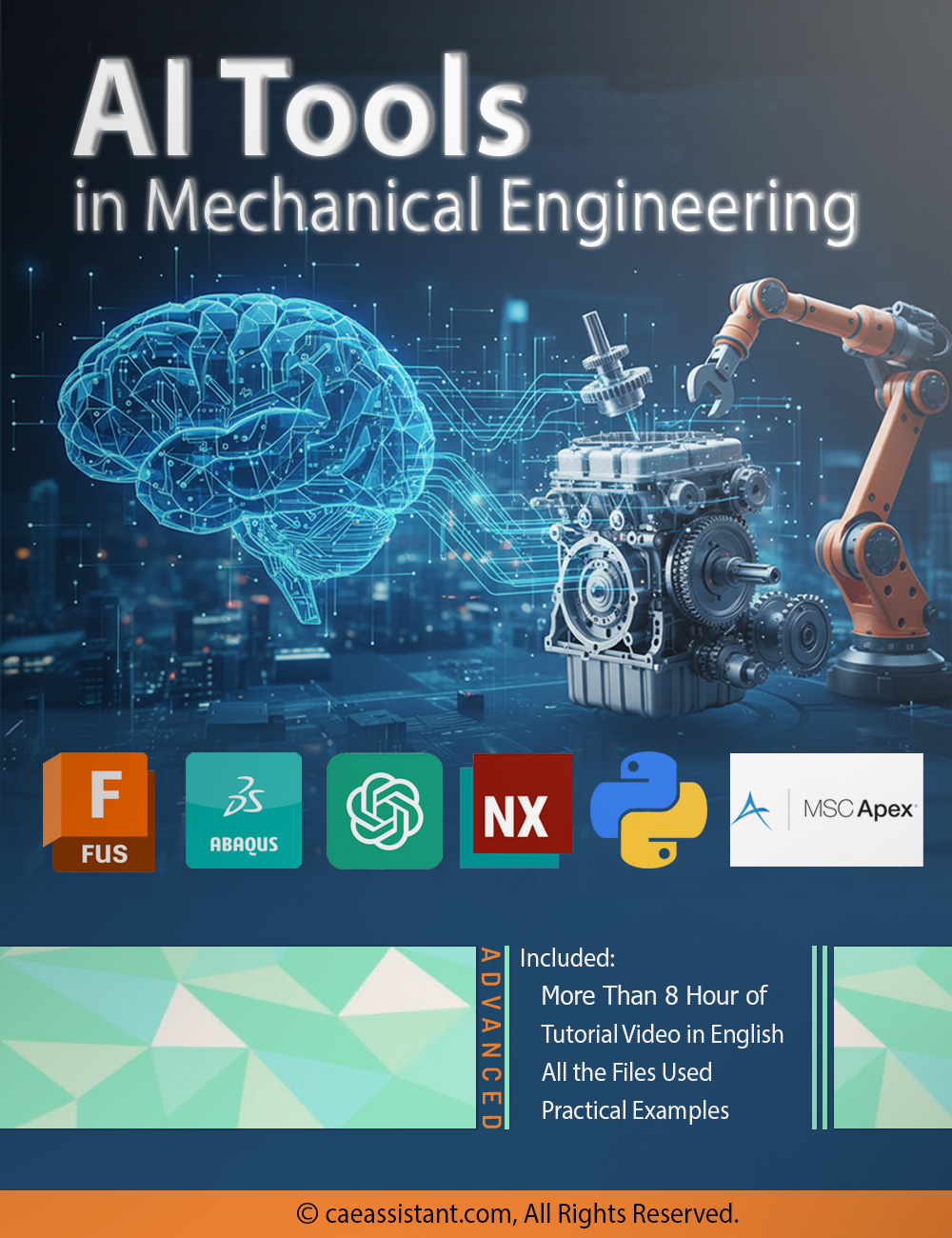
This guide explores each step of the engineering workflow—conceptual design, CAD modeling, simulation, prototyping, manufacturing, quality control, and lifecycle management—and explains how artificial intelligence in mechanical engineering creates smarter processes at every stage.
.
.
 Listen to our podcast on AI applications in Mechanical Engineering and get practical, real-world insights on:
-
4 Steps to improve your AI skills on your career path.
 Get the practical PDF about “How Ai is used in mechanical workflows? “
Step 1: Conceptual Design
The conceptual design phase sets the foundation of any project. Engineers define requirements, explore feasibility, and brainstorm potential solutions. Traditionally, this involves sketches, reviews, and discussions, which are often subjective and time-consuming.
How AI Helps
Artificial intelligence in mechanical engineering accelerates this stage by generating multiple design concepts based on defined parameters like weight, cost, and strength. Generative AI explores wide design spaces and suggests innovative shapes inspired by nature. Early AI simulations also eliminate weak ideas, reducing iteration cycles by up to 50%.
In addition, NLP tools analyze past project data, standards, and customer feedback. They identify requirement conflicts and predict future needs, ensuring alignment with market demands.
Relevant Tools
- Autodesk Generative Design: Integrated into Fusion 360, this tool uses AI to create optimized designs by inputting goals like minimizing material use while maximizing durability. Ideal for lightweight components in aerospace.

- Leo AI: A generative AI copilot that transforms sketches or text descriptions into 3D models in seconds, trained on millions of CAD files. Perfect for rapid prototyping during brainstorming.
- Neural Concept Shape: Applies deep learning to generate and evaluate conceptual designs, particularly for fluid dynamics or structural elements, refining ideas before detailed modeling.
- Requirements Analysis: IBM Watson Discovery, Azure Cognitive Services for Language, Custom NLP pipelines (Python, spaCy, NLTK).
- Other Tools: nTopology, Ansys Discovery, Siemens NX (Generative Design), PTC Creo Generative Design, IBM Watson Discovery, Azure Cognitive Services for Language, Custom NLP pipelines (Python, spaCy, NLTK).
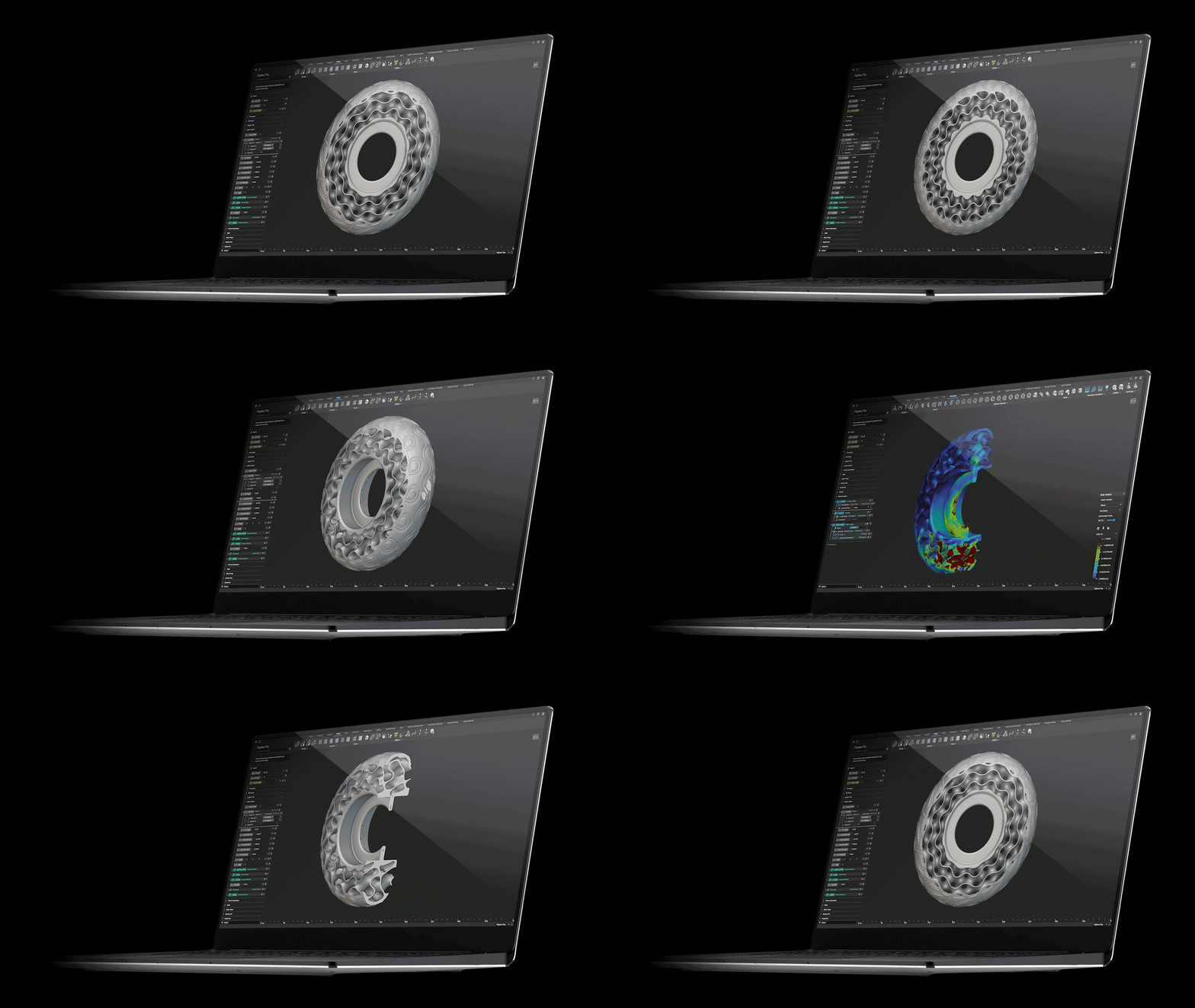
Step 2: Detailed CAD Modelling
Once ideas are narrowed down, engineers create detailed CAD models. This step defines dimensions, materials, and tolerances. Iterative refinements ensure accuracy, but the process can be repetitive and time-intensive.
How AI Helps
Here, AI in mechanical engineering reduces effort by automating tasks like dimensioning and compliance checks. Machine learning predicts how small changes affect the overall system. Generative design tools also create optimized variations that improve performance or reduce part counts.
This makes CAD work faster, more accurate, and more innovative.
Relevant Tools
- Siemens NX: Features AI for automated design modifications and real-time collaboration, ideal for complex assemblies in mechanical systems.
- PTC Creo: Uses AI to optimize components for performance and manufacturability, suggesting fillet radii or material substitutions during modeling.
- Altair Inspire: AI-powered topology optimization tool that refines designs for structural integrity, commonly used in automotive chassis development.
- Generative Design: Autodesk Fusion 360 (Generative Design Extension), nTopology, Ansys Discovery,
- Other Tools: Dassault Systèmes 3DEXPERIENCE Platform AI features, Autodesk Fusion 360 (AI suggestions), 3DCS Variation Analyst, CETOL 6σ (Siemens).+ ThingWorx AI,
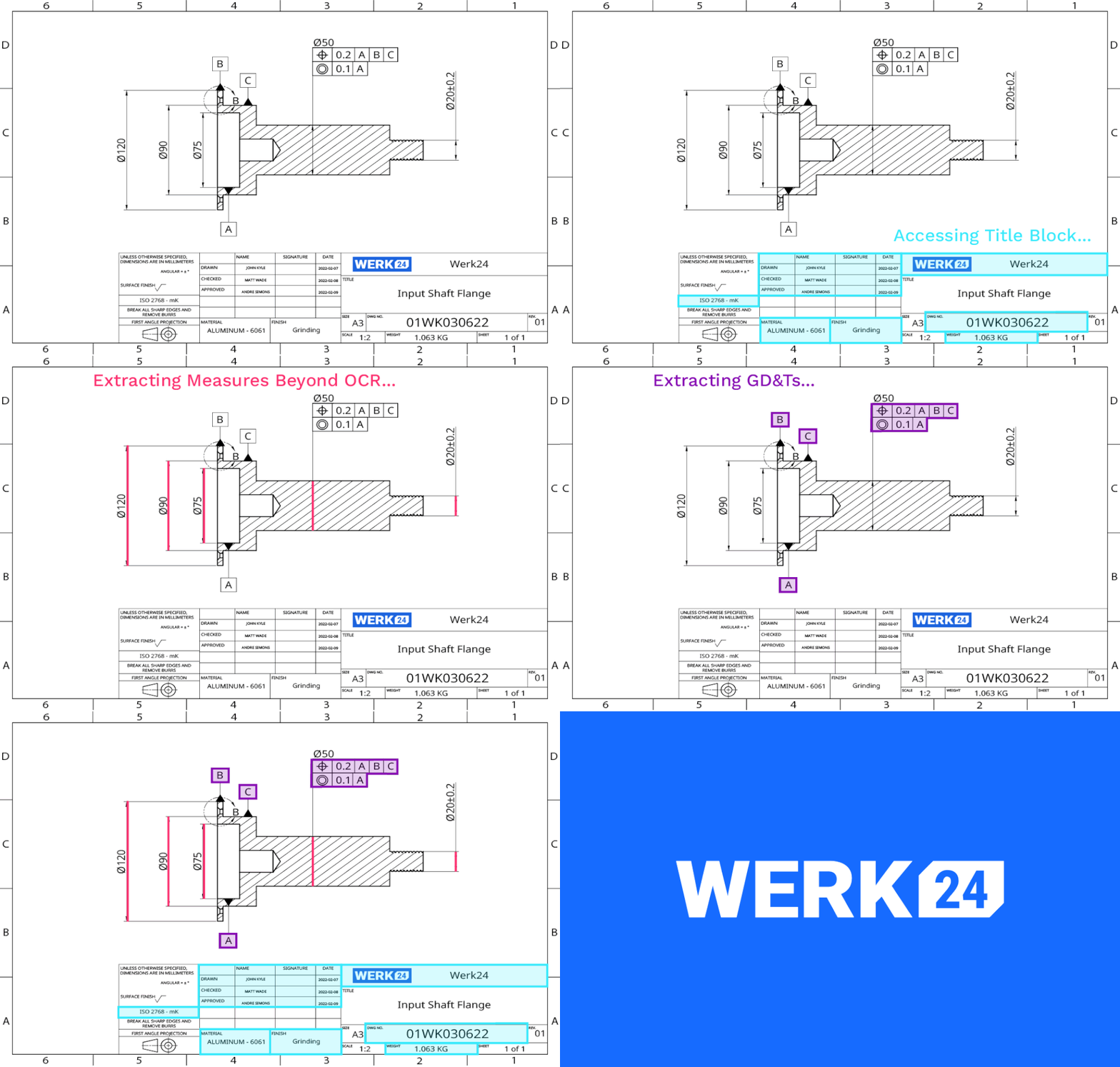
Sketch of a model [Ref]
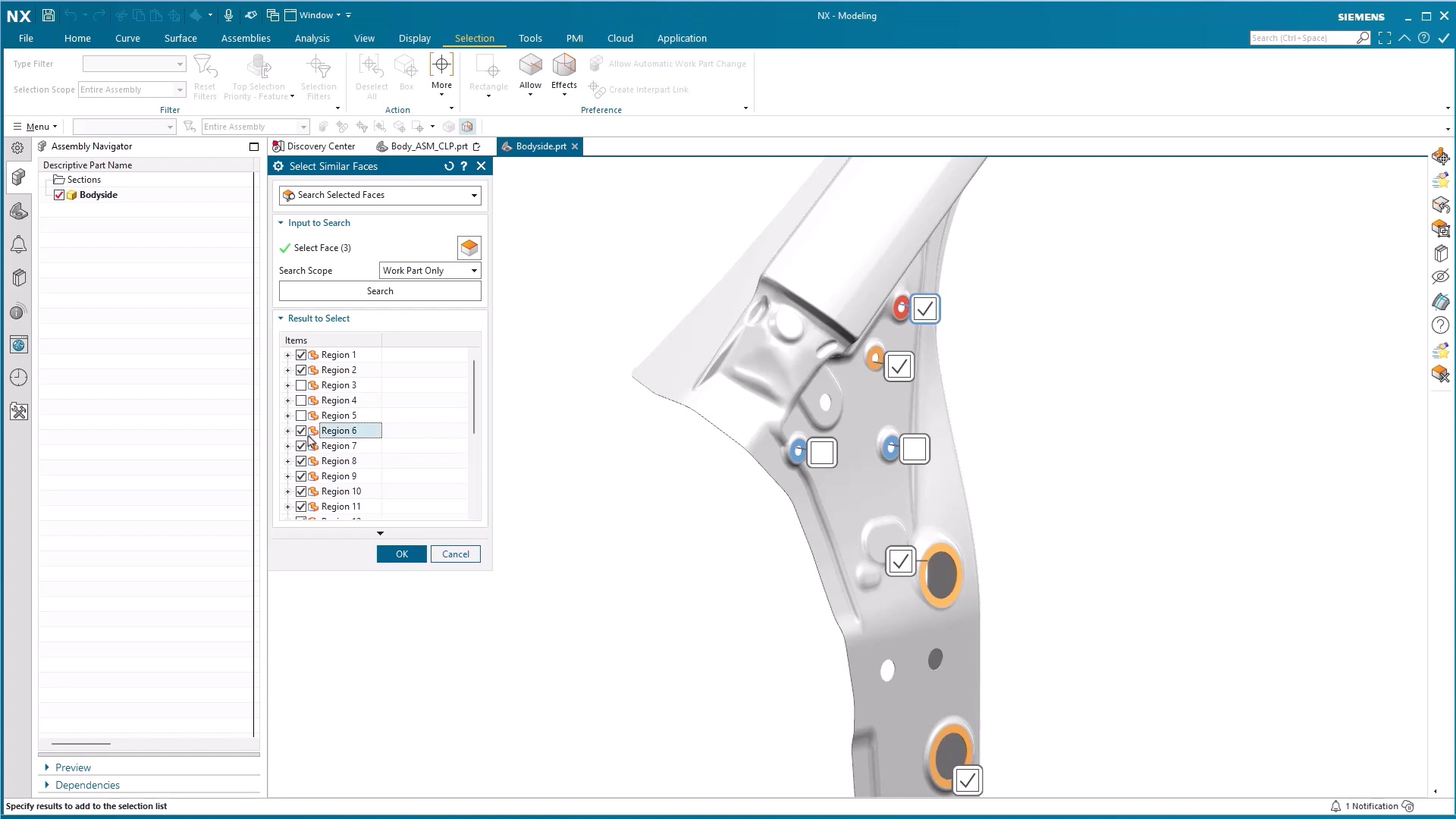
Modeling in NX [Ref]
Step 3: Simulation and CAE Analysis
Simulation allows engineers to test designs virtually before physical prototypes. Using FEA, CFD, or thermal analysis, they predict real-world performance under stress, heat, or airflow. However, traditional simulations are computationally expensive and time-consuming.
How AI Helps
Artificial intelligence in mechanical engineering speeds up simulations with surrogate models that approximate results in minutes. AI also analyzes past simulations to forecast failures and optimize performance parameters. For instance, it can predict stress distribution in bridges or airflow in vehicles, reducing the need for physical prototypes.
Relevant Tools
- Ansys AI: Integrates AI for faster multiphysics simulations, enabling rapid exploration of “what-if” scenarios.
- SimScale: Cloud-based platform with AI-enhanced CFD and FEA, allowing real-time analysis without high-end hardware.
- Neural Concept: Uses deep learning for 3D shape optimization in simulations, predicting aerodynamic performance for vehicles or aircraft.
- Automated Meshing: SimAI (Ansys), Pointwise Glyph Scripting + ML integrations.
- Other Tools: Siemens Simcenter Reduced Order Modeling (ROM), Altair HyperWorks (AI-driven design exploration), Monolith AI, SimAI (Ansys), Pointwise Glyph Scripting + ML integrations, Monolith AI.
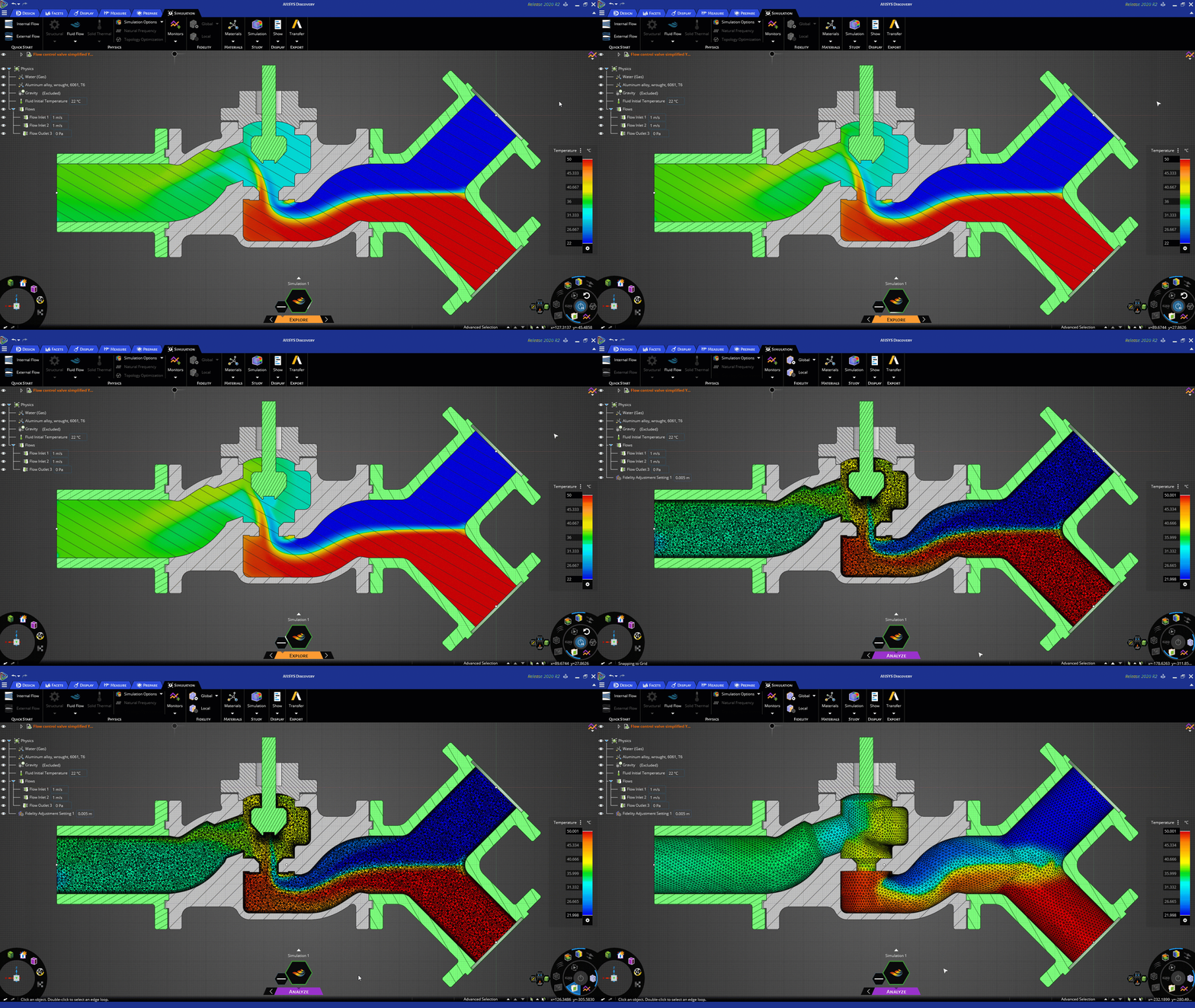
Fluid Flow Simulation [Ref]
As AI continues to reshape mechanical engineering workflows, Simulation engineering is becoming a key pillar for faster, smarter, and more reliable product development. To explore how AI-native simulation tools, advanced FEM methods, and intelligent automation are shaping the future of engineering analysis, you can read our in-depth article on the evolution of simulation engineering.
Step 4: Prototyping
Prototyping validates ideas using physical or virtual models. While essential, this step can be expensive and time-consuming.
How AI Helps
AI in mechanical engineering optimizes prototyping by predicting material behaviors and reducing trial-and-error. Generative design produces stronger, lighter parts. In additive manufacturing, AI ensures precision layer by layer. Virtual prototyping also helps detect design issues early, saving costs before physical production.
Relevant Tools
- Autodesk Fusion 360 with AI: Extends generative design to prototype optimization, integrating with 3D printers for seamless fabrication.
- Leo AI: Generates prototype-ready CAD models from concepts, accelerating the transition to physical testing.
- Additive Manufacturing: Ansys Additive Suite (AI-powered process simulation),
- Predictive Tolerancing: 3DCS Variation Analyst (integrates with major CAD), CETOL 6σ (Siemens).

Using AI for prototype modeling [Ref]
Step 5: Manufacturing
Manufacturing scales prototypes into mass production. Efficiency, resource optimization, and quality are key challenges.
How AI Helps
Artificial intelligence in mechanical engineering is transforming manufacturing through smart factories, robotics, and digital twins. These virtual replicas monitor and adjust production in real time, improving efficiency and reducing errors. Predictive analytics also forecast equipment needs, which minimizes downtime and lowers maintenance costs.
AI-driven CAM (Computer-Aided Manufacturing) optimizes CNC toolpaths to reduce machining time, tool wear, and energy use. This improves surface finish and ensures collision avoidance during machining. Machine learning also predicts optimal feeds, speeds, and cutting strategies.
In process selection and feasibility, AI in mechanical engineering analyzes part geometry, material, quantity, and cost targets. It recommends the best manufacturing methods while detecting potential design-for-manufacturing (DFM/A) issues early.
Predictive process planning forecasts production times, resource requirements, and potential bottlenecks by analyzing historical data and current orders. In additive manufacturing, AI further optimizes build orientation, support structure generation, and process parameters—such as laser power and scan speed. This minimizes defects, distortion, and build time.
The result is a manufacturing process that is faster, more cost-effective, and more sustainable.
Relevant Tools
- Siemens Digital Industries Software: AI for factory automation, including predictive scheduling and robotics integration.
- PTC Creo Manufacturing Extensions: AI-optimized toolpaths for CNC and additive manufacturing, ensuring high-quality output.
- Process Selection/DFM: aPriori, Geometric DFMPro, Siemens Opcenter DFM Analyzer.
- CAM Optimization: Siemens NX CAM AI capabilities, Autodesk PowerMill (Machine Learning strategies), CELOS by DMG MORI (AI for machine tools), CloudNC.
- Predictive Planning: Siemens Opcenter APS (Advanced Planning & Scheduling) with AI, Oracle SCM Cloud AI features.
- AM Optimization: Ansys Additive Suite (AI-powered process simulation), Materialise Magics (AI support generation), 3D Systems Additive Manufacturing AI tools, GE Additive Amp.
Step 6: Quality Control and Testing
Quality checks confirm that manufactured products meet specifications. Manual inspections are often inconsistent and slow.
How AI Helps
Artificial intelligence in mechanical engineering brings a new level of precision to quality control. AI-powered computer vision systems detect defects with superhuman accuracy by analyzing images or sensor data in real time. These systems automatically identify surface issues such as scratches, dents, and porosity, as well as dimensional deviations and assembly errors, all at speeds far beyond human capability.
Machine learning models learn from historical inspection data and use it to flag anomalies more reliably. This reduces false positives, improves classification, and significantly speeds up inspections. In modern assembly lines, AI in mechanical engineering integrates with IoT devices for continuous monitoring. As a result, overall quality improves by 15–25%, with fewer errors reaching customers.
Relevant Tools
- IBM Maximo Visual Inspection: AI for defect detection in mechanical parts using image recognition.
- Automated Visual Inspection: Cognex ViDi, Keyence CV-X/AI Series, Landing AI, Matrox Imaging Library + Custom CV models (TensorFlow, PyTorch).
- Process Control: Rockwell Automation FactoryTalk Analytics, Siemens Edge solutions, Custom ML deployments.
- AI SPC: Seeq, Trendminer, Dataiku, Domino Data Lab.
Step 7: Maintenance and Lifecycle Management
Even after deployment, equipment requires ongoing care. Traditional reactive maintenance leads to high costs and downtime.
How AI Helps
Artificial intelligence in mechanical engineering makes maintenance predictive. By analyzing sensor data, AI forecasts failures and schedules proactive interventions. Digital twins continuously monitor equipment, suggesting performance improvements across the lifecycle. This reduces downtime and boosts reliability.
Relevant Tools
- IBM Watson IoT: AI for predictive maintenance in mechanical systems, integrating with sensors for real-time alerts.
- Ansys Digital Twin: AI-driven virtual models for ongoing optimization and fault prediction.
- Predictive Maintenance: Siemens MindSphere, PTC ThingWorx, GE Predix, Uptake, Falkonry.
- Test Planning/Optimization: Siemens Simcenter HEEDS, Altair HyperStudy, Ansys optiSLang.
- Test Data Analysis: MathWorks MATLAB (Statistics & Machine Learning Toolbox), Python (Pandas, Scikit-learn, PyTorch/TensorFlow), TDM Systems (DIAdem).
- Predictive Life Modeling: Ansys Digital Twin Builder, GE Digital Twin, Siemens Predictive Analytics Services.
- Intelligent PLM: PTC Windchill + ThingWorx AI, Siemens Teamcenter AI Assistants, Dassault Systèmes 3DEXPERIENCE AI features.
Implementing AI: Practical Considerations
- Start Small & Focused: Target high-impact pain points, like reducing FEA time or automating inspections.
- Data is Paramount: Ensure high-quality, accessible data before selecting tools.
- Skills Development: Train engineers in AI literacy and consider hiring data scientists for cross-functional teams.
- Integration: Choose AI tools that integrate with existing CAD, CAE, CAM, PLM, and MES systems.
- Change Management: Position AI as an augmenting tool, fostering collaboration rather than replacing expertise.
Project Management and Workflow Integration: Smooth Sailing in Complex Seas
Who It’s For: Project leads managing a web of tools, data, and team members.
Why It Matters: AI-driven project management software orchestrates design, simulation, and manufacturing tasks. By reducing manual data handling and aligning different platforms, it keeps teams synchronized and productive.
Tools to Explore:
- Civils.ai: Automatically extracts and organizes project documentation for better clarity in large, complex initiatives.
- Synera: Connects CAD and analysis tools into unified workflows, standardizing repeated tasks and ensuring consistency.
Takeaway: When your tools talk to each other seamlessly, you spend less time on administration and more time engineering.
Industry 4.0 and the Bigger Picture: Lifecycle Integration
Who It’s For: Forward-thinking engineers who see beyond isolated tasks and envision a fully connected ecosystem.
Why It Matters: AI tools don’t just improve discrete tasks—they become part of a larger digital thread that weaves through design, manufacturing, and maintenance. Connect IoT data with your PLM system, and AI insights flow both ways, informing better decisions at every stage.
Tools to Explore:
- PTC Windchill: PLM integration ensures a continuous “digital thread” from concept to end-of-life.
- IBM Maximo: Predictive maintenance via AI and IoT data prevents failures and reduces downtime.
Takeaway: AI enhances not just what you do today, but how you evolve processes over the product’s entire lifecycle, fostering a culture of continuous improvement.
Future Outlook
AI in mechanical engineering is evolving toward integrated, autonomous systems. Expect deeper convergence with digital twins, increased use of reinforcement learning for autonomous design and control, and broader adoption of generative AI for design, documentation, and knowledge management.
Conclusion
AI in mechanical engineering is revolutionizing every phase of the workflow. From generative design to predictive maintenance, artificial intelligence in mechanical engineering makes processes faster, more accurate, and more innovative.
To stay competitive, engineers should start small with pilot projects, train their teams, and integrate AI tools into existing systems. Those who embrace AI today will shape the future of sustainable, high-performance engineering.
Explore our comprehensive Abaqus tutorial page, featuring free PDF guides and detailed videos for all skill levels. Discover both free and premium packages, along with essential information to master Abaqus efficiently. Start your journey with our Abaqus tutorial now!
Mechanical engineers can use AI to revolutionise every stage of the product lifecycle, moving from traditional manual processes to AI-augmented workflows that are faster and more accurate. Key applications include:
- Conceptual Design and CAD: Engineers use generative design to automatically create multiple innovative design concepts based on constraints like weight and strength, often inspired by nature. AI also automates repetitive CAD tasks such as dimensioning, compliance checks, and predicting how small design changes will affect the overall system.
- Simulation and CAE: AI-driven surrogate models and neural networks can replace computationally expensive numerical analyses. This allows engineers to predict FEA, CFD, and thermal analysis results in minutes or even seconds rather than hours, enabling “quasi-real-time” performance mapping.
- Coding and Automation: Tools like ChatGPT allow engineers to generate Abaqus and Python scripts in seconds to automate complex workflows and CAE tasks.
- Manufacturing and Quality Control: AI-driven CAM helps optimize CNC toolpaths and predictive process planning. In quality control, computer vision systems detect surface defects and assembly errors with superhuman accuracy.
- Maintenance: By analyzing sensor data through digital twins, engineers can implement predictive maintenance, forecasting equipment failures before they occur to reduce downtime.
To begin using these tools, engineers are encouraged to start with introductory courses (such as those by Andrew Ng or Stanford), engage in hands-on projects via platforms like Kaggle, and join AI communities specific to mechanical engineering to share insights and tools.
In essence, using AI is like having a high-speed co-pilot; while the engineer provides the creative direction and judgment, the AI handles the heavy data processing and optimization at a scale impossible for humans alone.
The consensus within the sources is that the future of mechanical engineering is not a battle of “human versus AI,” but rather a partnership of humans designing with AI. Instead of a total takeover, the field is shifting toward augmented intelligence, where the computational speed and accuracy of machines are combined with human creativity, empathy, and judgment.
Key reasons why AI is seen as an augmentation rather than a replacement include:
- Creative and Contextual Limits: While AI is exceptionally good at repetitive tasks and processing massive datasets, it lacks the common sense, emotional understanding, and adaptability inherent to human intelligence.
- Defining Constraints: Engineers are still required to set the foundation for projects by defining essential parameters such as weight, cost, strength, and sustainability goals. AI then explores the “design space” within those human-defined boundaries.
- Professional Judgment: Mechanical engineers must exploit AI solutions while focusing on their specific expertise, such as factory automation or material synthesis. They are responsible for understanding the limitations and potential biases of the data an AI is trained on to make informed final decisions.
- Workflow Transformation: AI is “automating the automation,” taking over tedious tasks like repetitive coding, dimensioning, and compliance checks. This allows engineers to move away from “tedious modeling” and focus on higher-level innovation.
- New Career Opportunities: Rather than simply eliminating jobs, AI is expected to fuel innovation and lead to the development of entirely new professional roles that did not exist previously.
To remain competitive, the sources suggest that AI is no longer optional; it is the defining skill set for the next generation of design and simulation specialists. Engineers are encouraged to view AI as a tool to be integrated into existing systems to foster collaboration rather than replacement.
In summary, AI is like a highly advanced power tool in a master craftsman’s workshop; it can cut, sand, and join materials with superhuman speed and precision, but it still requires the craftsman to envision the final piece and guide the tool to create something of true value.
There is no single “best” AI for mechanical engineering; instead, the most effective tools are determined by the specific stage of the product lifecycle and the engineering challenge being addressed. The sources highlight several specialized AI tools categorized by their function:
Conceptual Design and 3D Modelling
- Autodesk Generative Design (Fusion 360): This is highly regarded for creating optimised designs based on goals like minimizing material while maximizing durability, making it ideal for lightweight aerospace components.
- Leo AI: Functioning as a generative AI copilot, it allows engineers to transform sketches or text descriptions into 3D models in seconds, which is perfect for rapid prototyping during brainstorming.
- Neural Concept Shape: This tool uses deep learning to generate and evaluate conceptual designs, particularly for fluid dynamics or structural elements.
- Siemens NX and PTC Creo: These industry standards use AI to automate dimensioning, compliance checks, and suggest modifications for better performance and manufacturability.
Simulation and CAE Analysis
- Ansys AI and SimScale: These are best for accelerating computationally expensive FEA and CFD simulations. They allow for real-time analysis and the rapid exploration of “what-if” scenarios.
- Neural Concept: Beyond design, it is used to predict aerodynamic performance for vehicles and aircraft by replacing numerical approximations with neural network predictions.
- Monolith AI: Listed as a relevant tool for AI-driven design exploration and simulation.
Coding and Workflow Automation
- ChatGPT: Mechanical engineers use this to write Abaqus and Python scripts in seconds, automating repetitive tasks and complex CAE workflows.
- Synera: This tool is effective for connecting CAD and analysis tools into unified, standardised workflows, reducing manual data handling.
Manufacturing and Quality Control
- Siemens Digital Industries Software: Offers AI for factory automation, predictive scheduling, and robotics integration.
- IBM Maximo Visual Inspection: A leading tool for quality control, using computer vision to detect surface defects like scratches or dents with superhuman accuracy.
- aPriori and Geometric DFMPro: These are used for Design for Manufacturing (DFM) analysis to recommend the best manufacturing methods based on geometry and cost.
Maintenance and Lifecycle Management
- Ansys Digital Twin: Best for creating virtual models that continuously monitor equipment for fault prediction and ongoing optimization.
- IBM Watson IoT: Used for predictive maintenance, integrating with sensors to provide real-time alerts and forecast equipment failures before they occur.
To determine which of these is “best” for your needs, the sources suggest starting small by targeting high-impact pain points, such as reducing simulation time or automating inspections. You can also join communities like Mechanical Intelligence to discover which tools other professionals in the domain are finding most effective.
In essence, choosing the best AI is like selecting the right tool from a master mechanic’s chest: you wouldn’t use a torque wrench to measure a gap; you choose the specific software designed for the unique “geometry” of the problem you are trying to solve.






 English
  Korean
  Chinese
2 Responses
AI is clearly moving from theory into real mechanical engineering workflows, especially in CAD and simulation. The real question is no longer if AI will be used—but how much engineers will rely on it in daily design and analysis. Where do you think AI will have the biggest impact first: design, simulation, or automation?
For someone just starting to explore this area, what would you say is the most important difference between AI and machine learning in engineering applications? And where should a mechanical engineer begin learning them in practice?