Machine Learning for Metal Fatigue Crack Prediction Using Lamb Wave Signals

Original price was: € 220.0.Current price is: € 176.0.

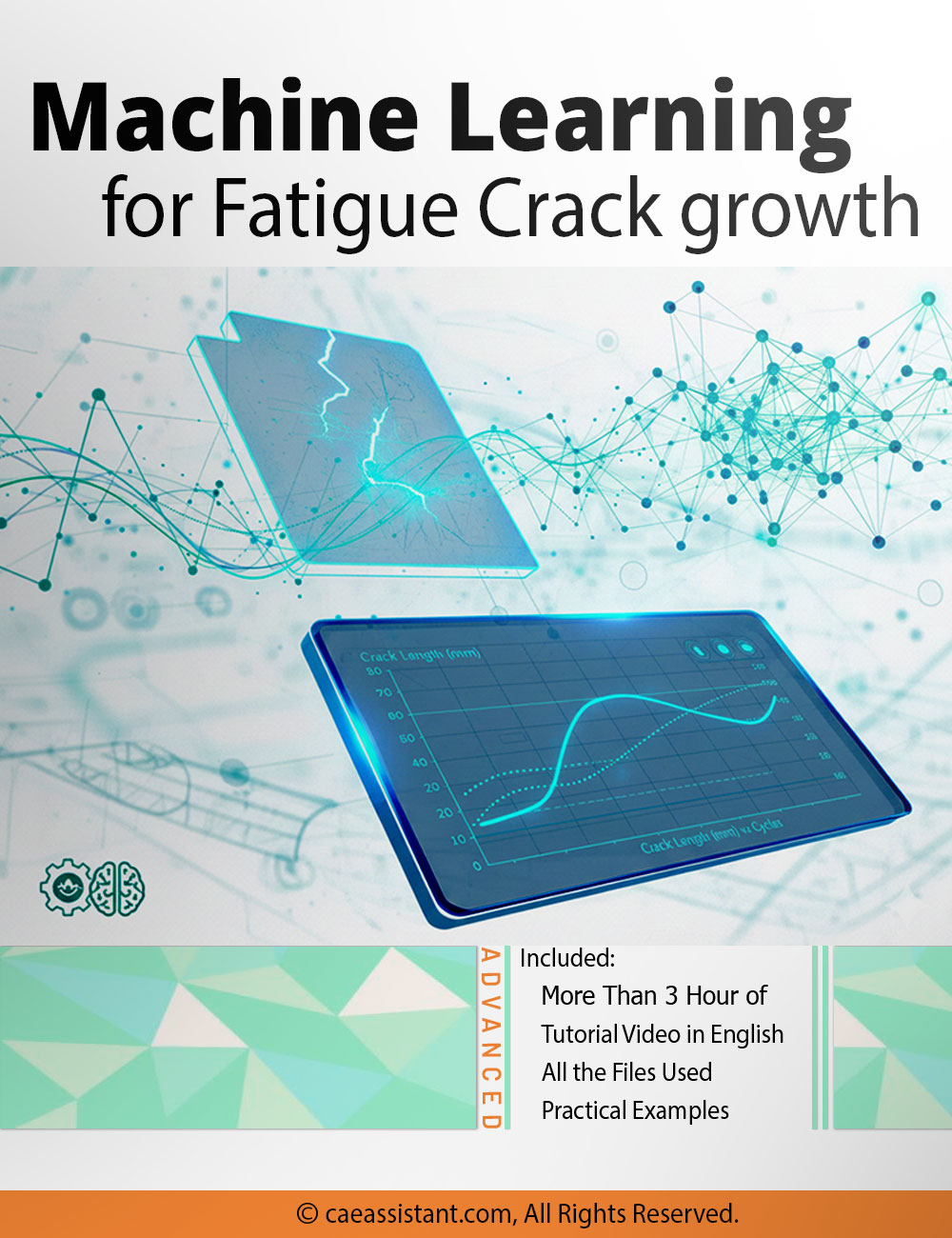
This package introduces participants to the use of machine learning crack detection techniques for predicting metal fatigue crack growth in aluminum lap joints using Lamb wave signal data. Participants will work with the PHM 2019 Aluminum Lap Joint Fatigue Dataset, perform signal-based feature extraction, and build ensemble learning models to estimate crack progression. Through theoretical explanation and hands-on Python implementation, learners will gain practical experience in applying crack detection using machine learning and other data-driven methods for structural health monitoring (SHM) and predictive maintenance of metallic structures.

Expert

Package Content

.py

,

video file

Tutorial video duration

180 Minutes

language

English

Level

Package Type

Software version

Applicable to all versions

Subtitle

English

Add-on

The option's price will be set post-order, requiring negotiation with support for confirmation.

The option's price will be set post-order, requiring negotiation with support for confirmation.
Product price:  176.0
Total options:
Order total:
43 People watching this product now!

Frequently Bought Together

Machine Learning for Metal Fatigue Crack Prediction Using Lamb Wave Signals + AI Tools for Mechanical Engineering: Practical Applications in Simulation and Design + Machine Learning for Composite Materials with Abaqus
Price for all three: Original price was: € 956.0.Current price is: € 717.0. Save  239.0
Description

Overview of Metal Fatigue Crack Experiments

This package is based on a comprehensive experimental dataset collected from fatigue testing of riveted aluminum lap-joint specimens instrumented with piezoelectric (PZT) sensors. Each specimen consists of two 1.6 mm-thick aircraft-grade 2024-T3 aluminum sheets joined by rivets. They were subjected to cyclic loading until metal fatigue crack initiation and growth occurred.

To track the damage, PZT actuators and sensors were arranged in a pitch–catch configuration. This setup generated and captured Lamb wave signals during each loading stage. The repeated measurements helped reduce uncertainty. The dataset includes eight specimens (T1–T8). T1–T6 are used for training, while T7–T8 serve as validation samples. Both constant-amplitude and variable-amplitude loading conditions were included.

Applying Machine Learning Crack Detection Techniques

This package teaches participants how to use machine learning crack detection methods to analyze Lamb wave signals and predict fatigue crack growth. By using the PHM 2019 Aluminum Lap Joint Fatigue Dataset, the package covers feature extraction, preprocessing, ensemble model training, and evaluation in Python. As a result, users gain hands-on experience in data-driven structural health monitoring (SHM) and predictive maintenance of metallic structures.

Because the package focuses on crack detection using machine learning, it demonstrates how algorithms interpret Lamb wave responses to identify crack initiation and progression. These techniques enhance early detection and improve predictive accuracy in practical SHM applications.

Lamb Wave Signals for Metal Fatigue Crack Monitoring

Fatigue tests on aluminum lap-joint specimens were monitored using Lamb wave signals recorded at multiple fatigue cycles. These signals correlate strongly with crack propagation behavior. Ground-truth crack lengths were collected through optical measurements.

The dataset is divided into training and validation subsets to support model development. This structure helps users build reliable predictive models for fatigue life estimation. Therefore, the package enables a smooth connection between physics-based understanding and data-driven algorithms for metal fatigue crack detection and prediction.

  • Overview of fatigue crack initiation and propagation in aluminum lap joints
  • Lamb wave sensing principles and experimental configuration
  • Relevance to structural health monitoring and damage detection
  • Introduction to the PHM 2019 Aluminum Lap Joint Fatigue Dataset
  • Organization of training (T1–T6) and validation (T7–T8) data
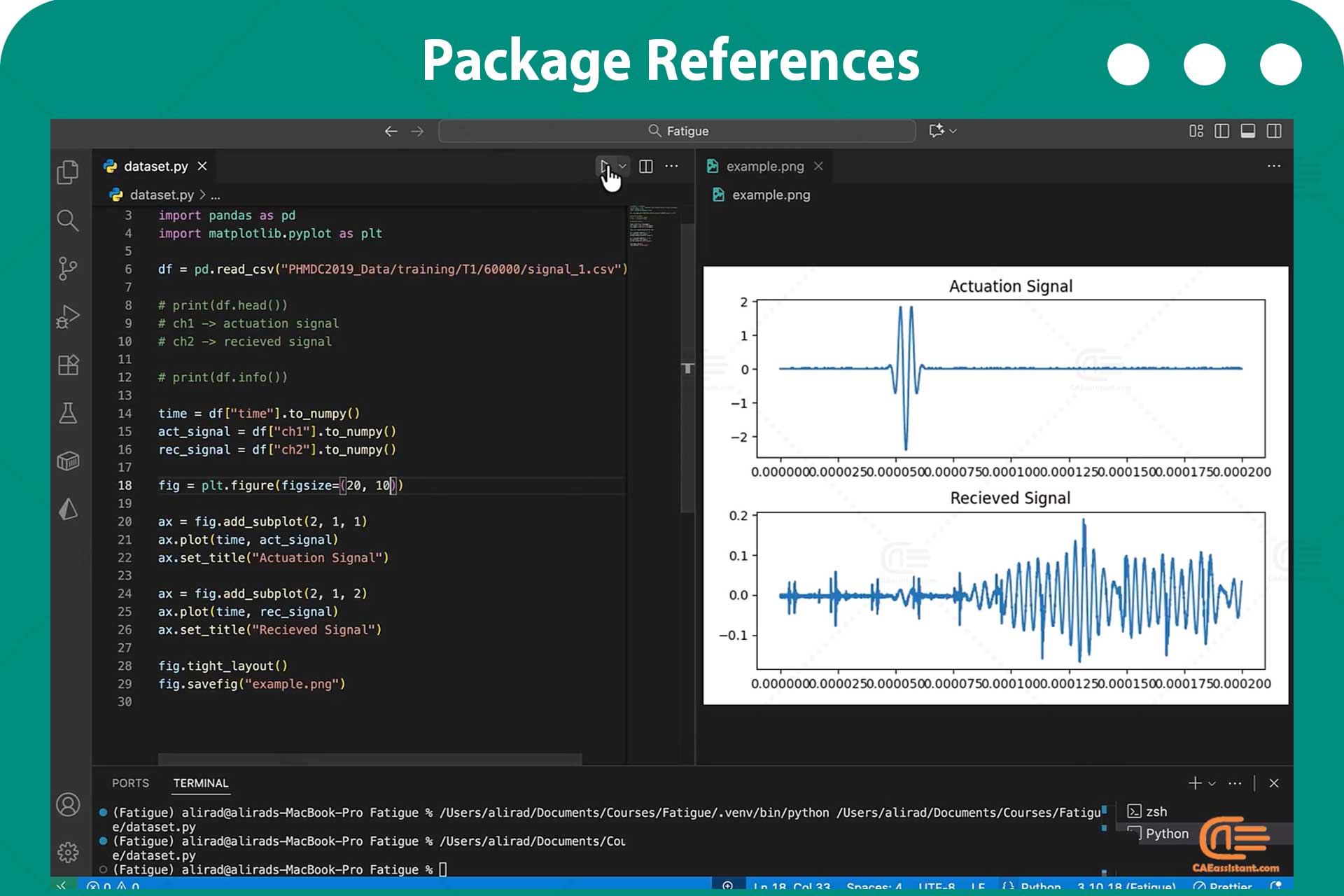
  • Understanding how Lamb wave signals relate to measured crack lengths
  • Key signal-based features: correlation coefficient, amplitude, and phase shift
  • Feature engineering principles for time-series sensor data
  • Reference to He et al. (2013) and relevance to fatigue monitoring
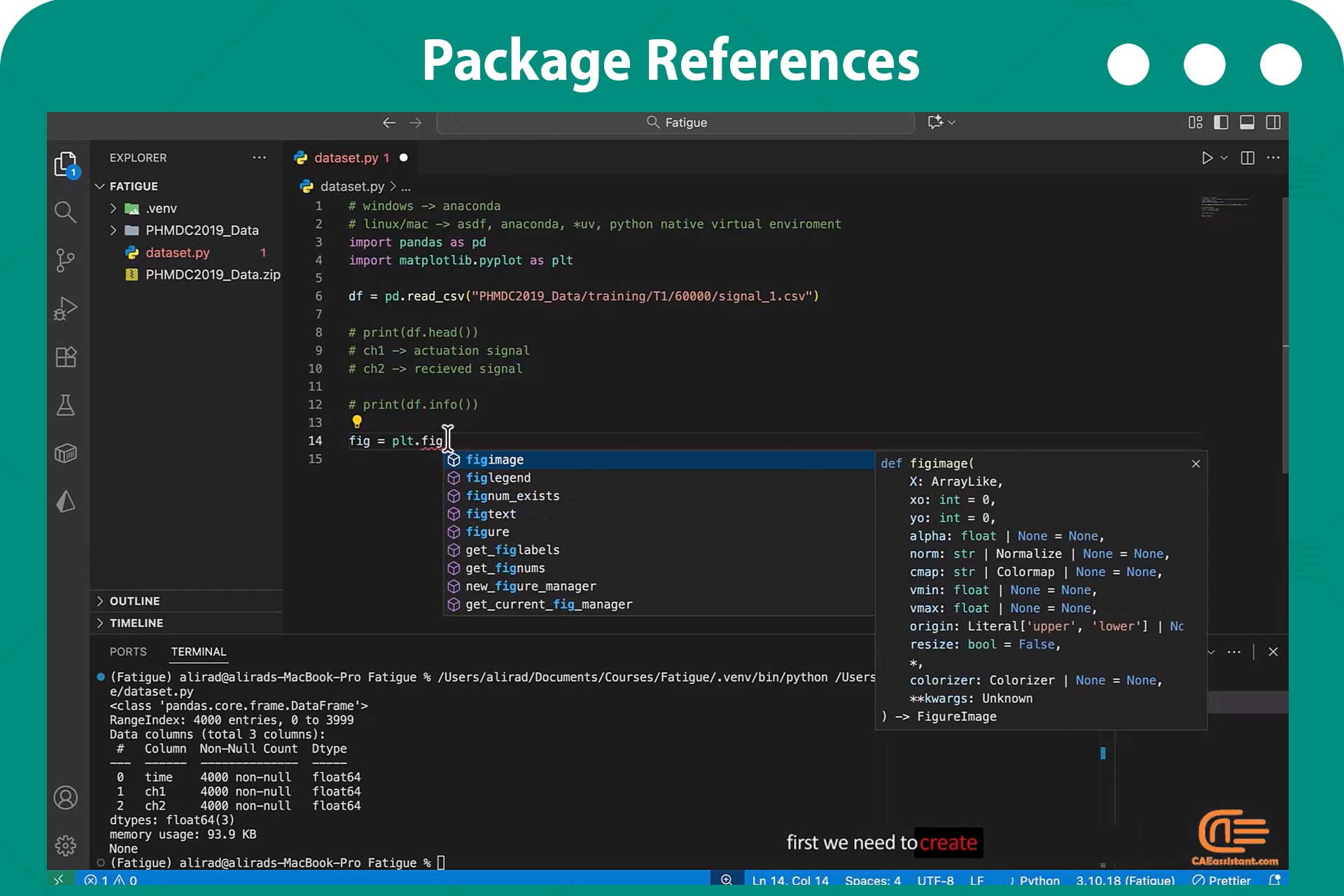
  • Loading and processing raw CSV files with pandas and NumPy
  • Managing baseline vs. damaged signals
  • Implementing feature extraction pipelines using SciPy
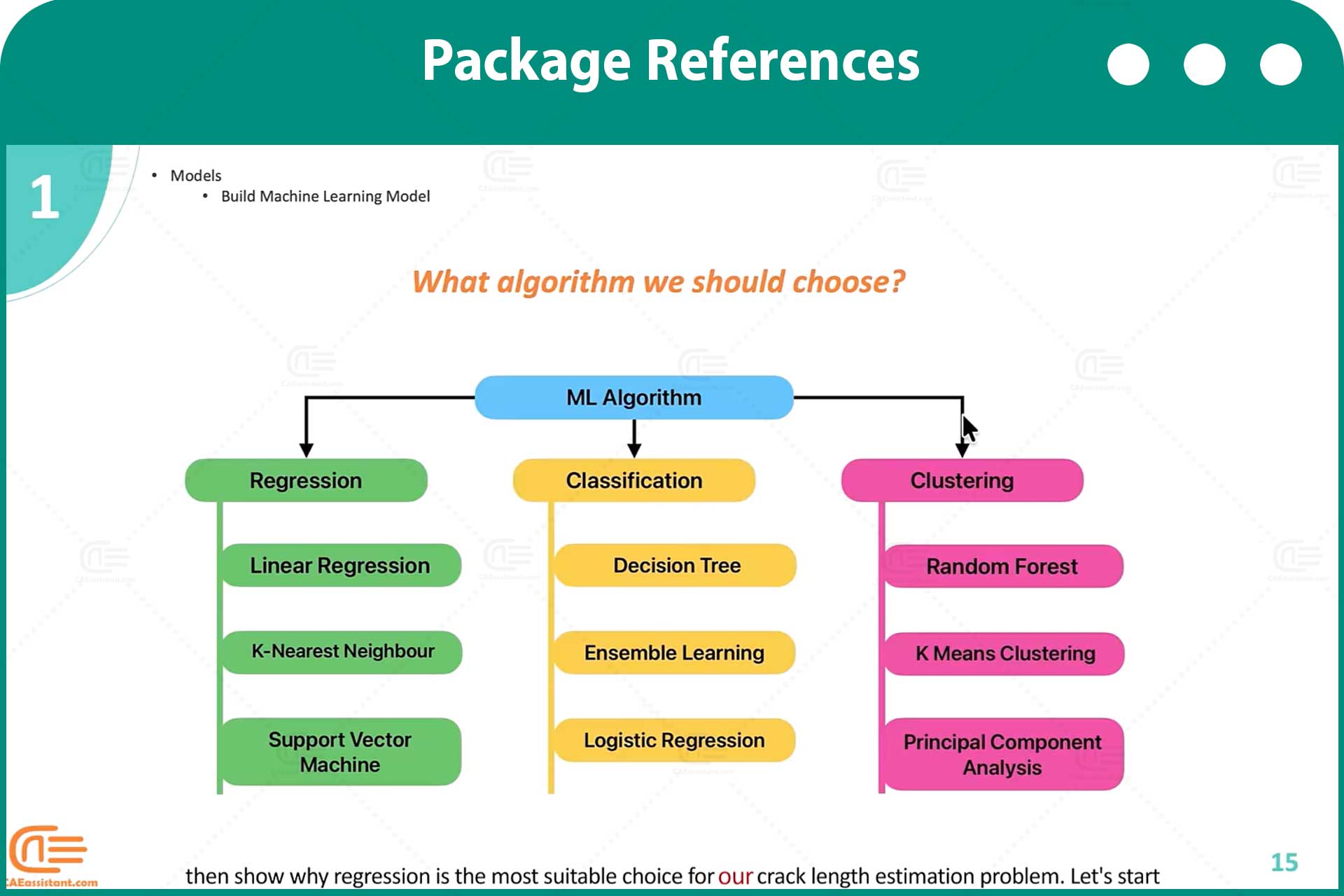
  • Overview of ensemble regression techniques
  • Training Random Forest, Gradient Boosting, and Voting Regressor models using scikit-learn
  • Hyperparameter tuning and visualization of predicted crack growth trends
  • Computing performance metrics: R², MAE, and RMSE
  • Comparison of ensemble methods vs. individual regressors
  • Plotting and interpreting predicted vs. actual crack lengths
  • Summary of insights and lessons learned
  • Applications of ML in SHM and predictive maintenance
  • Future directions: deep learning and hybrid physics–ML models
Shipping and Delivery

All the package includes Quality assurance of training packages. According to this guarantee, you will be given another package if you are not satisfied with the training, or your money is returned. Get more information in terms and conditions of the CAE Assistant.
All packages include lifelong support, 24/7 support, and updates will always be sent to you when the package is updated with a one-time purchase. Get more information in terms and conditions of the CAE Assistant.

Notice: If you have any question or problem you can contact us.
Ways to contact us: WhatsApp/Online Support/Support@CAEassistant.com/ contact form.
Projects: Need help with your project? You can get free consultation from us here.

  • Online payment: with MasterCard, VisaCard and etc.
  • Offline payment: In this payment method, you should pay via PayPal and send your payment receipt as an attached file in the offline payment form.
  • via download link After purchase, a download link will be sent to you a zip file included training videos, documents and software files.
  • Send us your machine ID

To access tutorial video run the .exe file on your personal pc and send the generated code to shop@caeassistat.com and wait for your personal code, which is usable only for that pc, up to 24 hours from CAE Assistant support.

Here you can see the purchase process of packages: Track Order

Features

Abaqus tutorial video
Lecture notes
Abaqus workshop files
Contains all required files
Certification
Works for all Abaqus versions
Safe payment
money-back guarantee
Free 24/7 online mentoring
Access for life
updated content
Time-Saving Short But Full
Premium Corporate and Academic Clients
Prepared by High-Level Researchers
Fortran Abaqus subroutines
All payment method
Teaching Plan

How to use ABAQUS Documentation (1)

None

None

0 reviews
0
0
0
0
0

There are no reviews yet.

Be the first to review “Machine Learning for Metal Fatigue Crack Prediction Using Lamb Wave Signals”