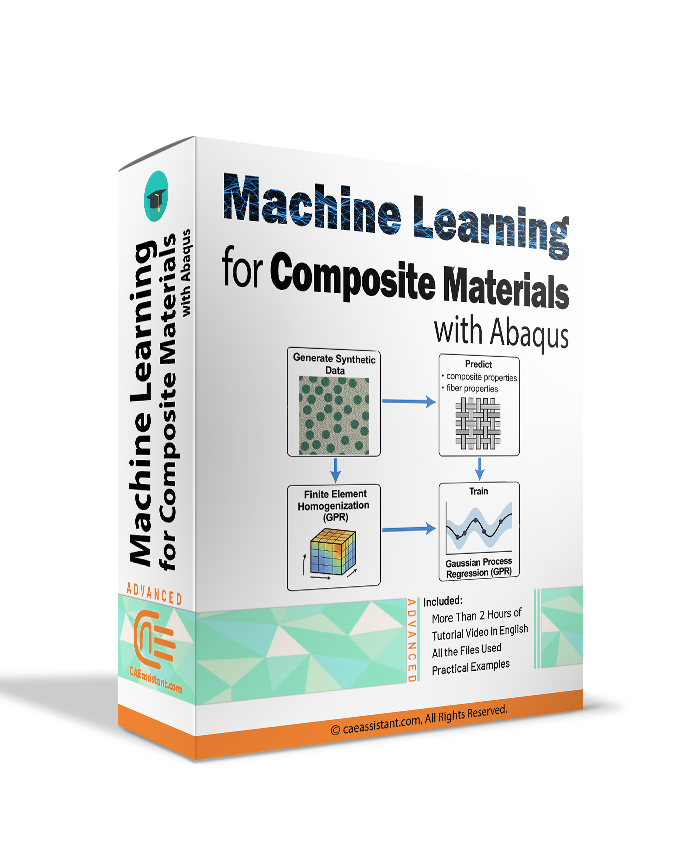
Machine Learning for Composite Materials with Abaqus
€ 420.0
| Last Update |
July 28, 2025 |
|---|---|
| Expert |
Tutorial Package Demo
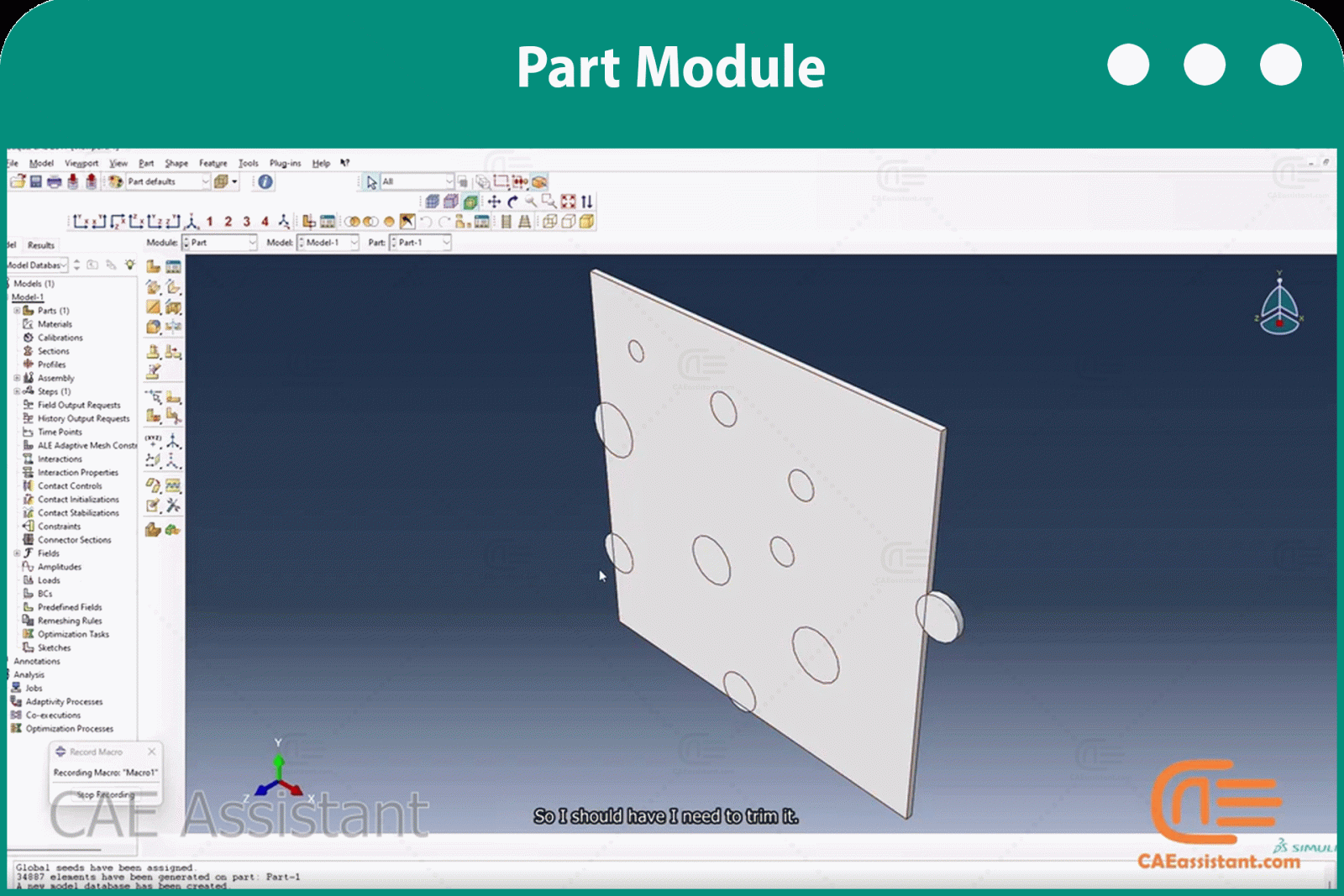
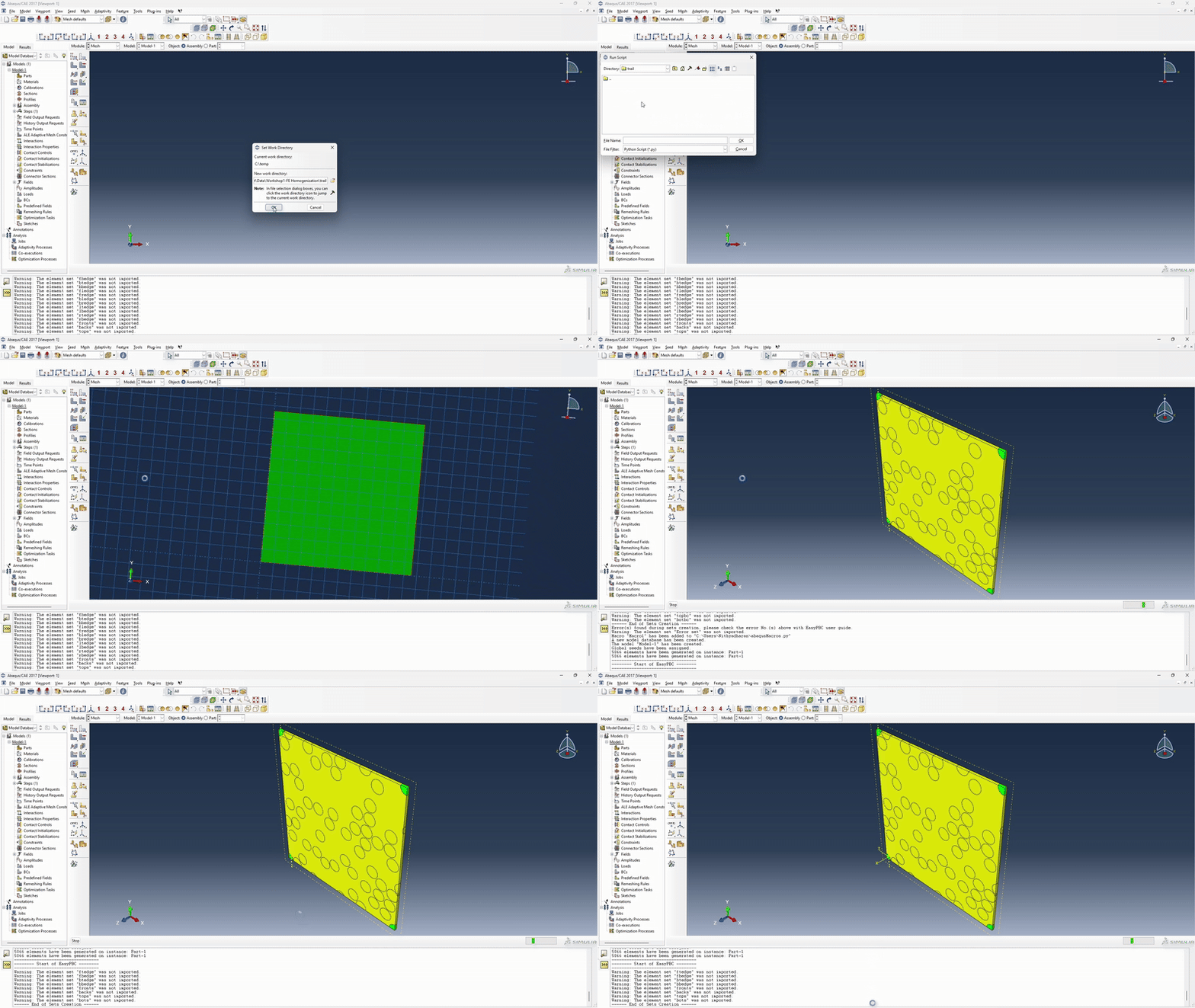
In this video, you’ll get a glimpse of our machine learning application in Abaqus, showcasing key features and course outcomes. This videos allow you to ensure the quality of our training before you make a purchase.
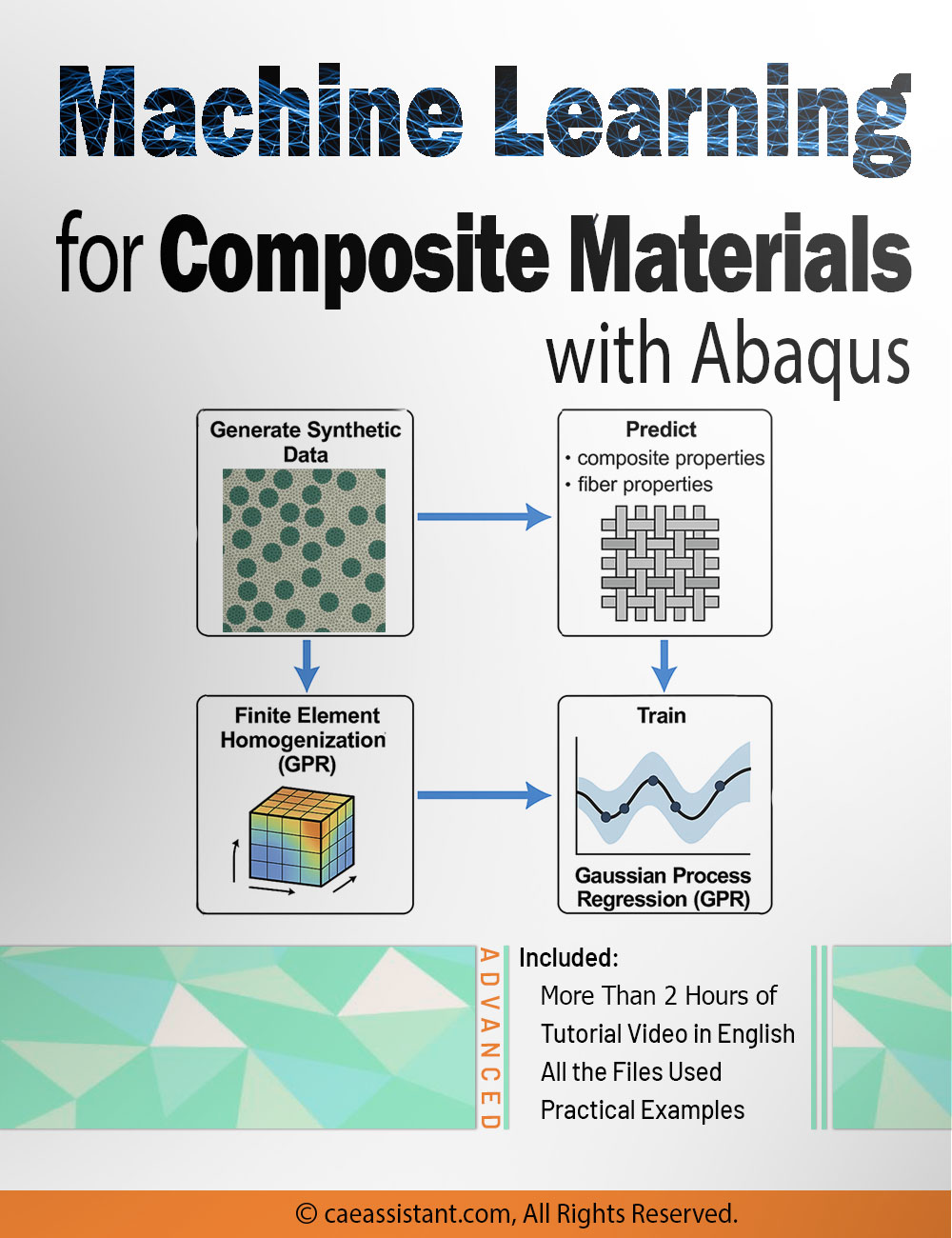
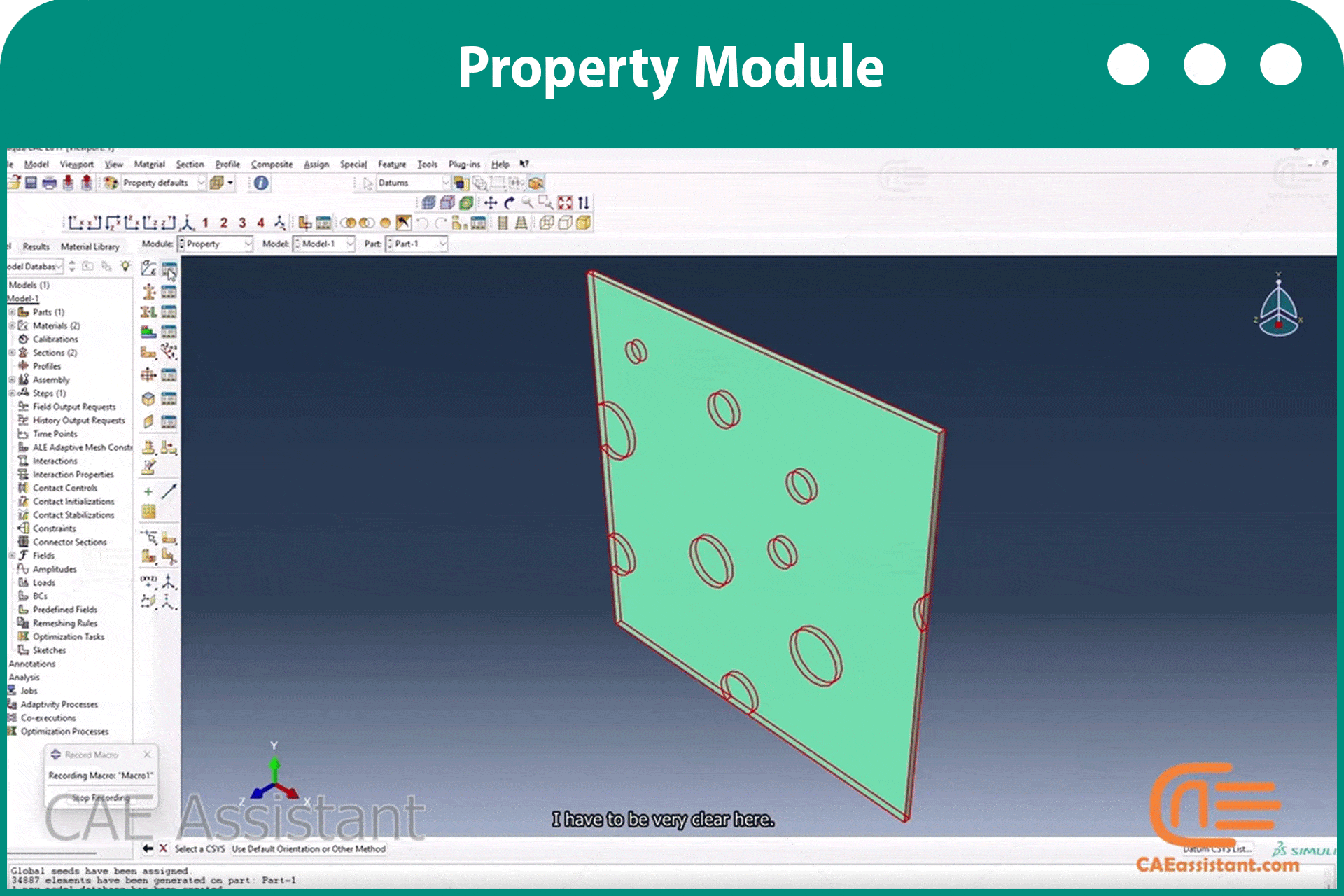
This course introduces Gaussian process regression and finite element homogenization to predict fiber properties with practical workshops. It include Abaqus macro recording, .py code development for different models, using MATLAB to generate synthetic dataset, and validation against literature, aiming to advance material analysis capabilities.
Package Description
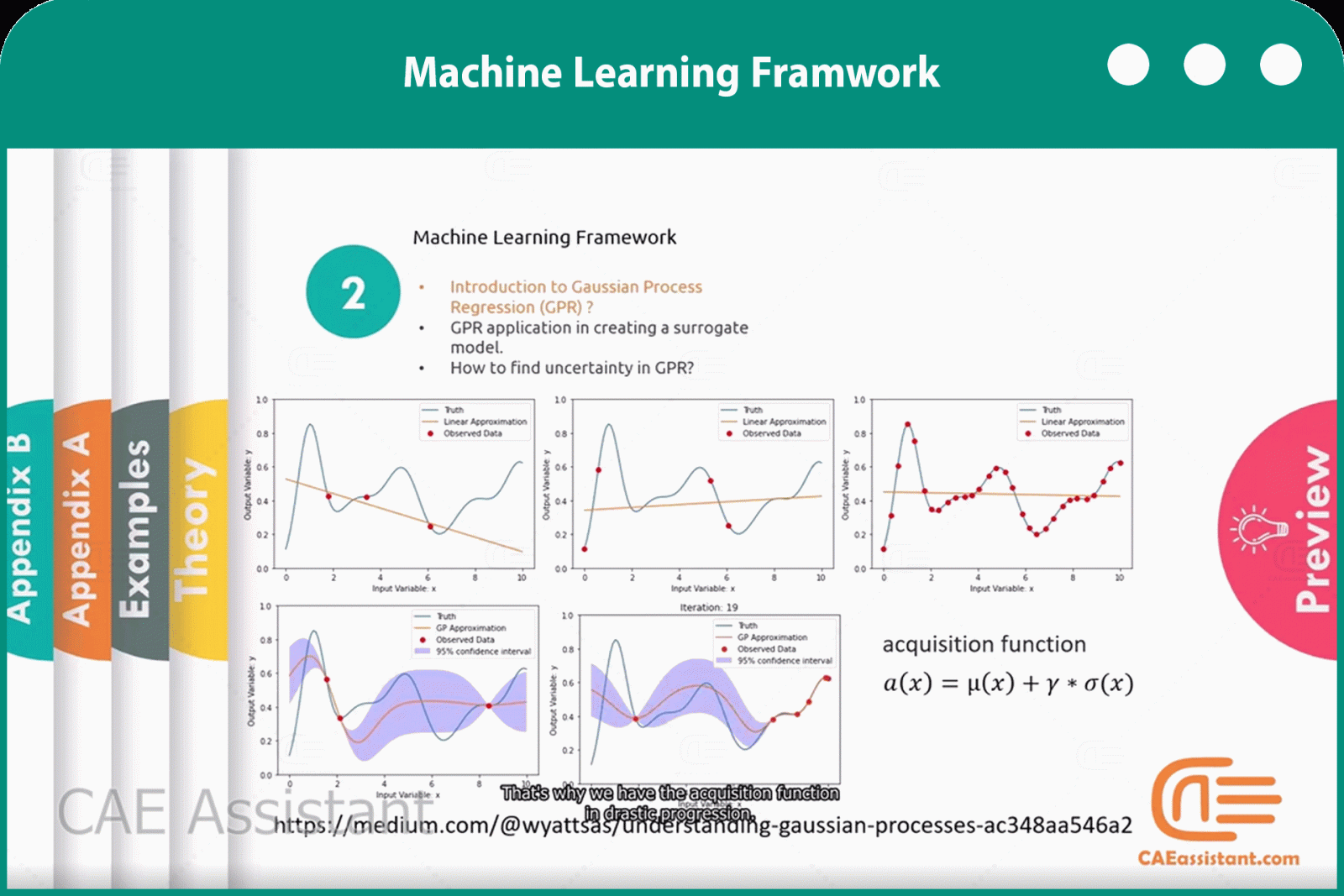
This tutorial package delves into an advanced inverse modeling approach for predicting carbon fiber properties in composite materials using a machine learning (ML) technique. Focused on machine learning for composite materials applications, it covers the use of Gaussian Process Regression (GPR) to build a surrogate model for accurate predictions of fiber properties based on data from unidirectional (UD) lamina.
To generate the necessary data for training the GPR model, Finite Element Method (FEM) simulations are conducted using Abaqus, creating synthetic datasets, accounting for variations in fiber, matrix properties, and volume fractions. This framework’s efficiency and accuracy are validated using real-world data, highlighting its potential as a computational alternative to traditional experimental methods. The package includes detailed explanations, case studies, and practical exercises, equipping users with hands-on experience in applying this ML-based approach to composite material analysis.
By combining these advanced ML techniques with FEM simulations, researchers can develop accurate predictive models, which serve as an efficient alternative to traditional experimental methods. This approach not only reduces the time and cost associated with physical testing but also enhances the precision of the predictions, advancing the role of machine learning for composite materials design and analysis.
Key Learning Concepts
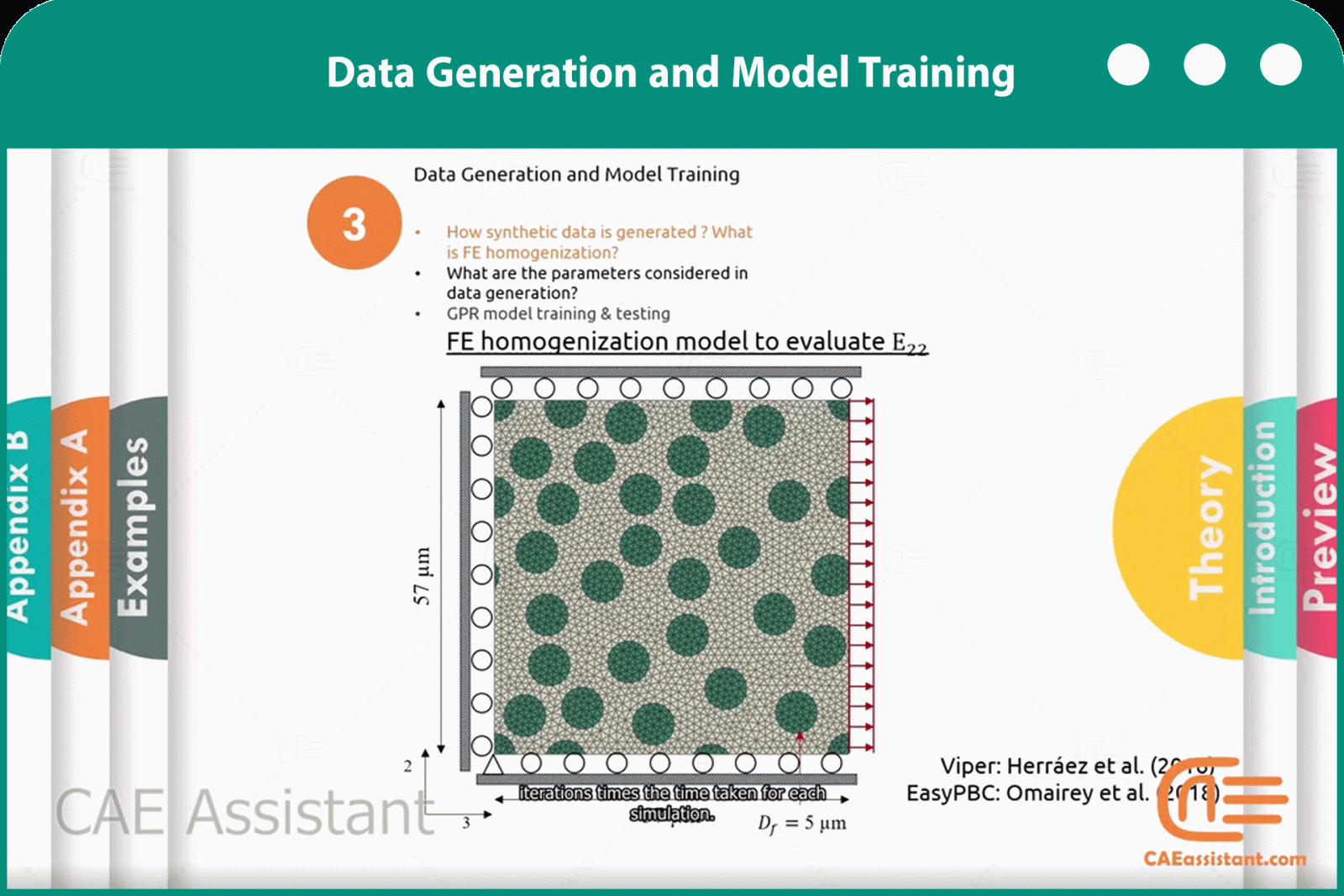
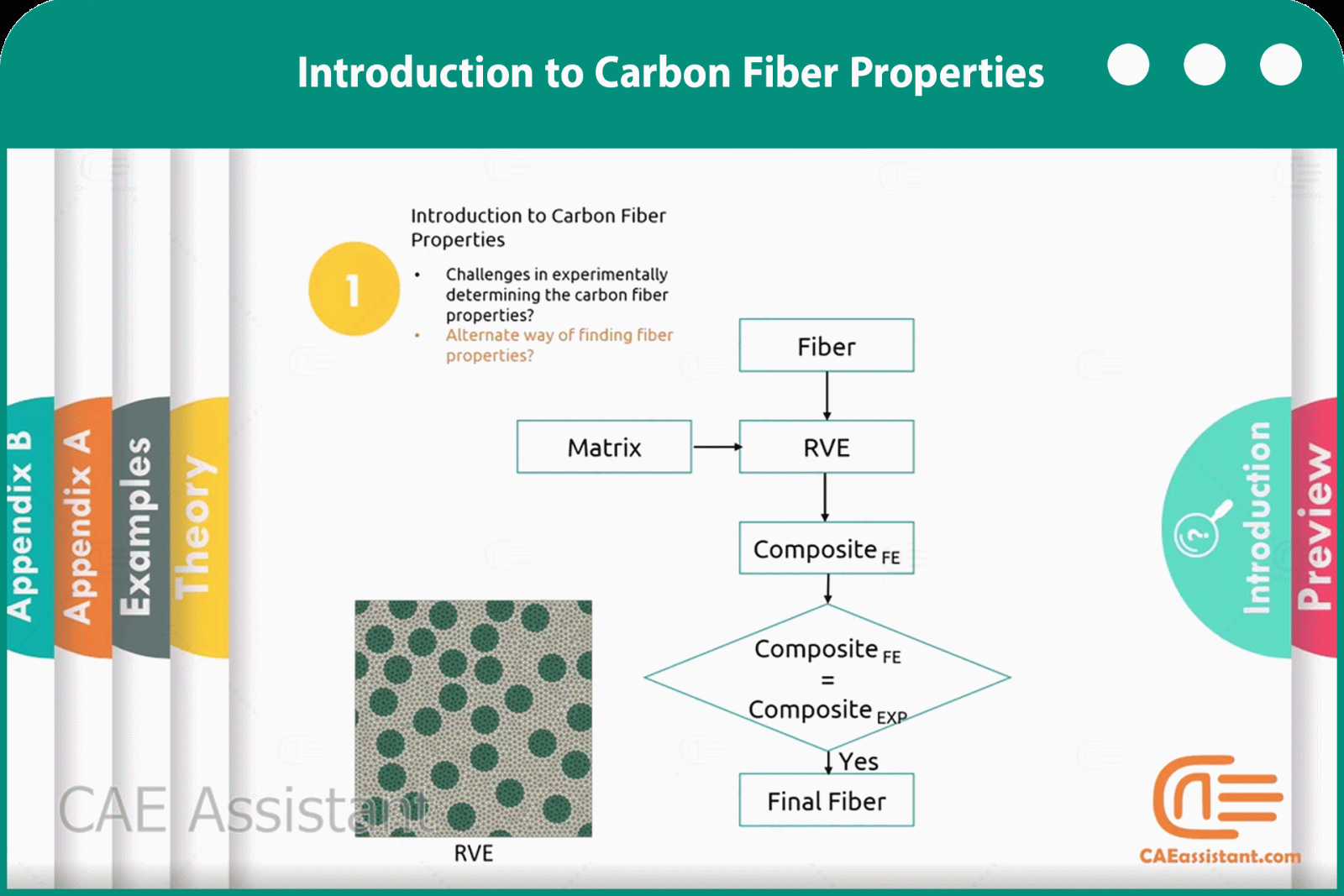
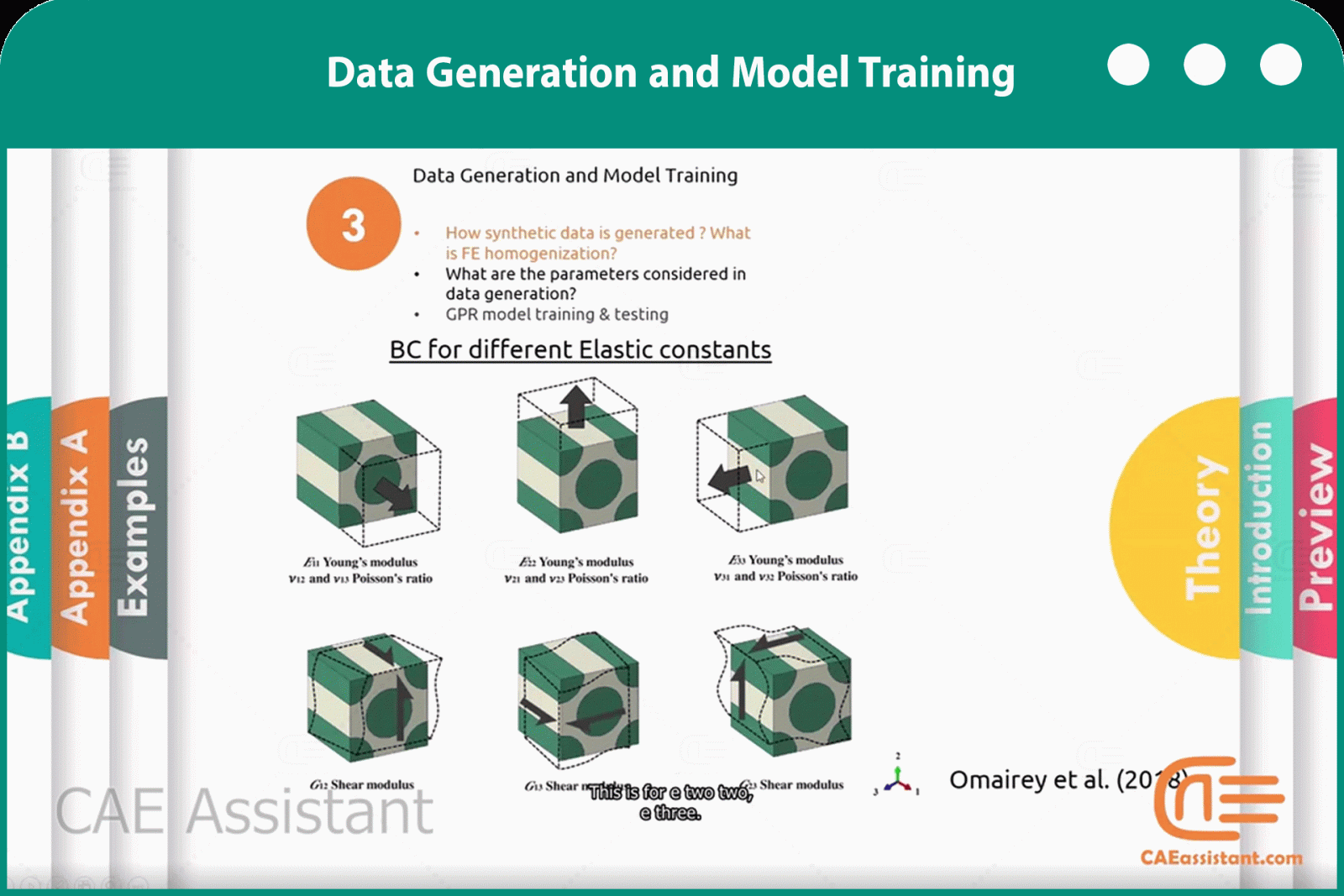
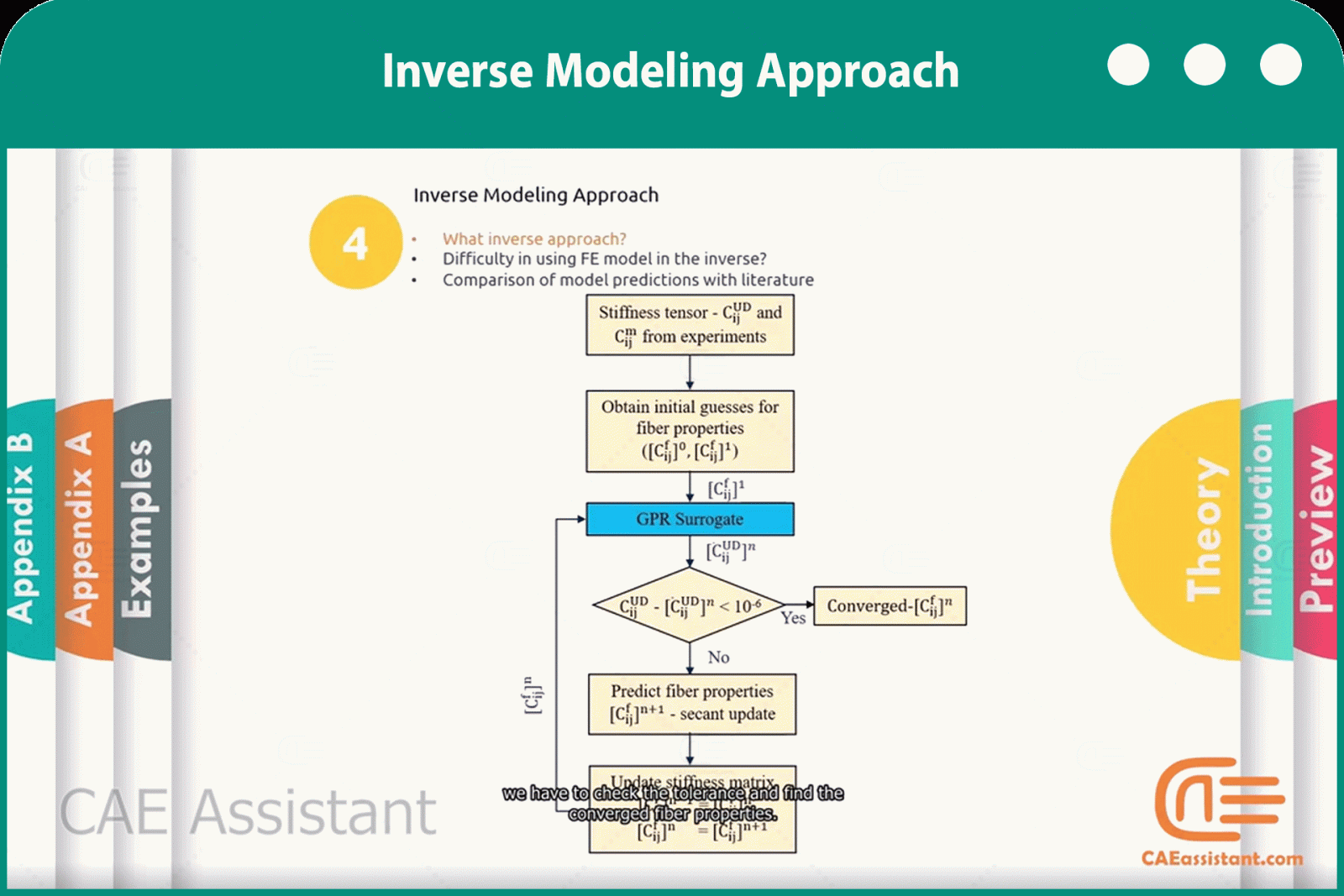
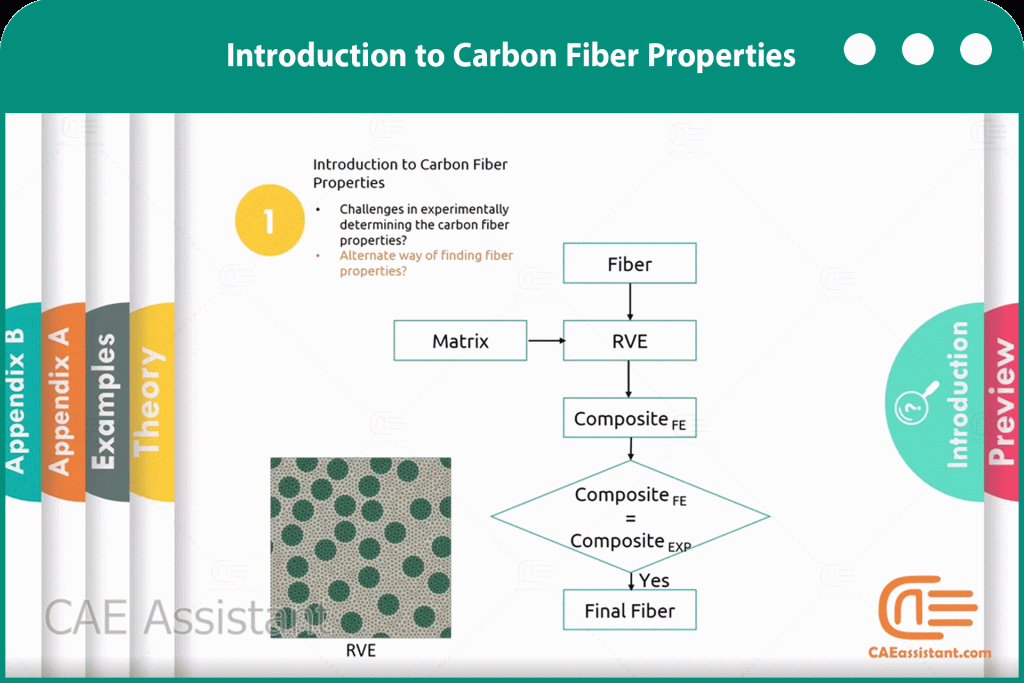
The Challenge: Traditionally, experimentally determining the elastic properties of composite materials, especially challenging ones like transverse and shear modulus, can be both difficult and time-consuming. While Finite Element (FE) homogenization is widely used to evaluate lamina properties by modeling representative volume elements (RVEs) and employing periodic boundary conditions, each simulation can take considerable time. Identifying fiber properties using an inverse approach, which involves iteratively updating fiber properties until FE-homogenized laminate properties match experimental data, can be cumbersome due to the multiple iterations and long simulation times.
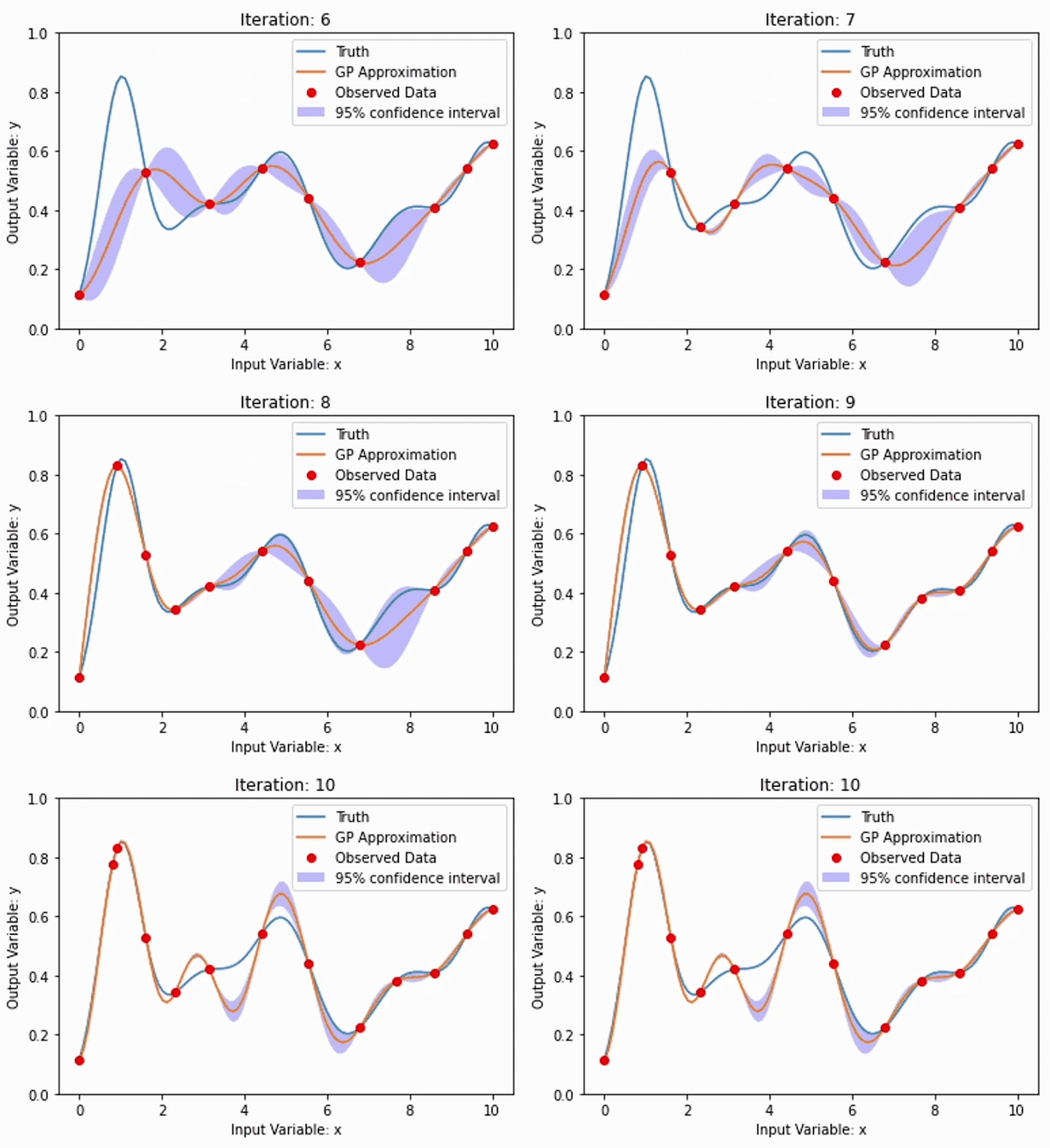
The Solution: Machine Learning with Gaussian Process Regression (GPR) This tutorial introduces you to a cutting-edge approach that leverages Gaussian Process Regression (GPR) to predict these properties effectively and accurately, drastically reducing the time required and allowing for the quantification of uncertainties in your results. Instead of hundreds of minutes for simulations, GPR can deliver fiber properties in mere seconds.
How It Works: Our approach involves developing both a forward model and an inverse algorithm:
1. Generating Synthetic Data:
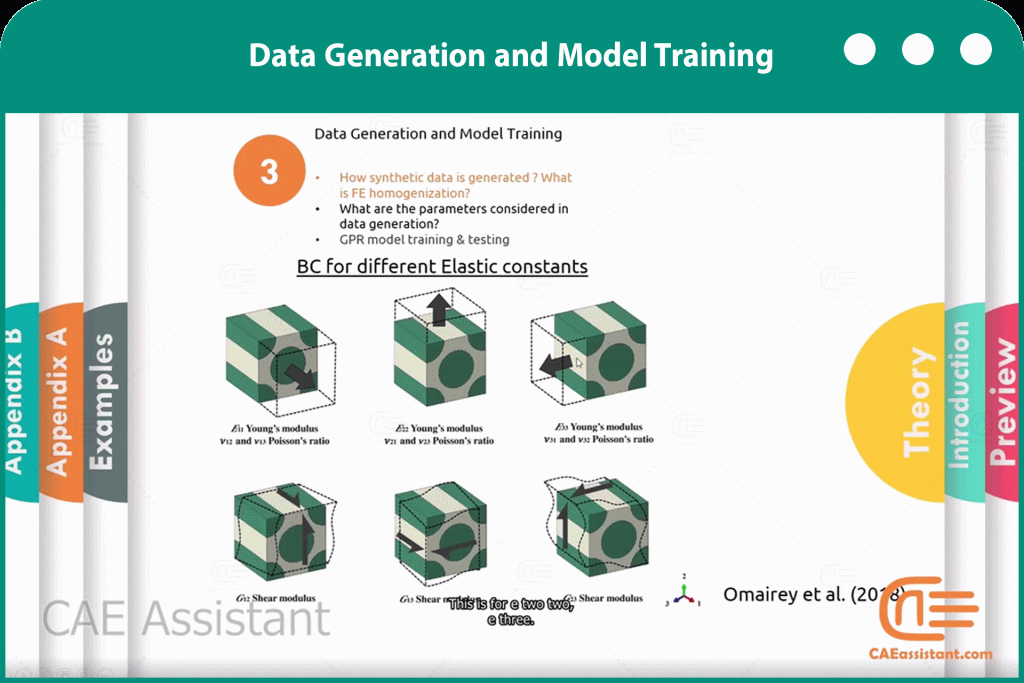
- We utilize Abaqus for Finite Element homogenization to generate a vast dataset of synthetic data. This involves creating Representative Volume Elements (RVEs) that statistically represent the composite, embedding fibers within a matrix.
- Periodic Boundary Conditions (PBCs) are applied to these RVEs to evaluate composite properties. Learn more about PBCs and get the plugins in: Abaqus PBCs: Simplify PBC Modeling in 3 Clicks
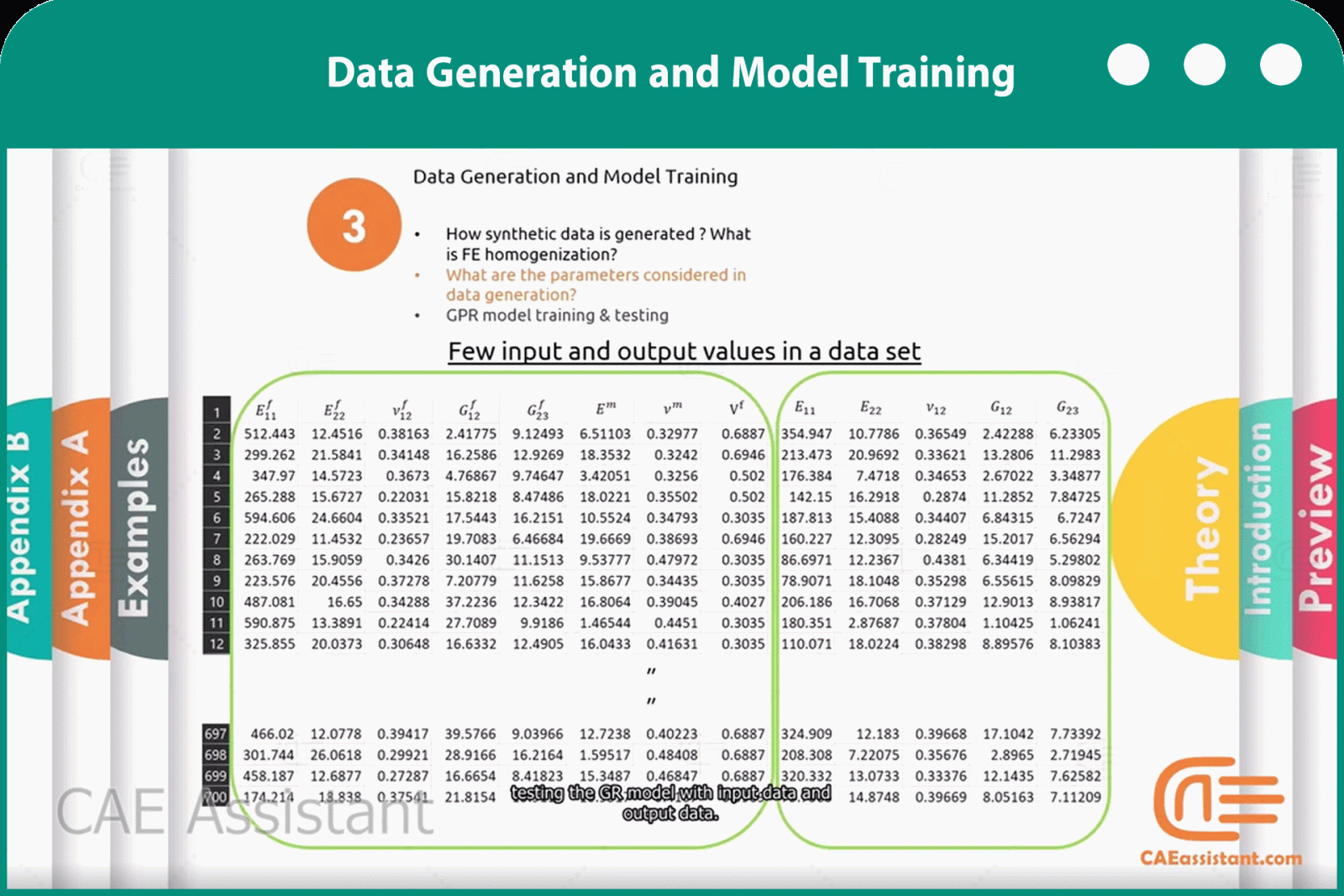
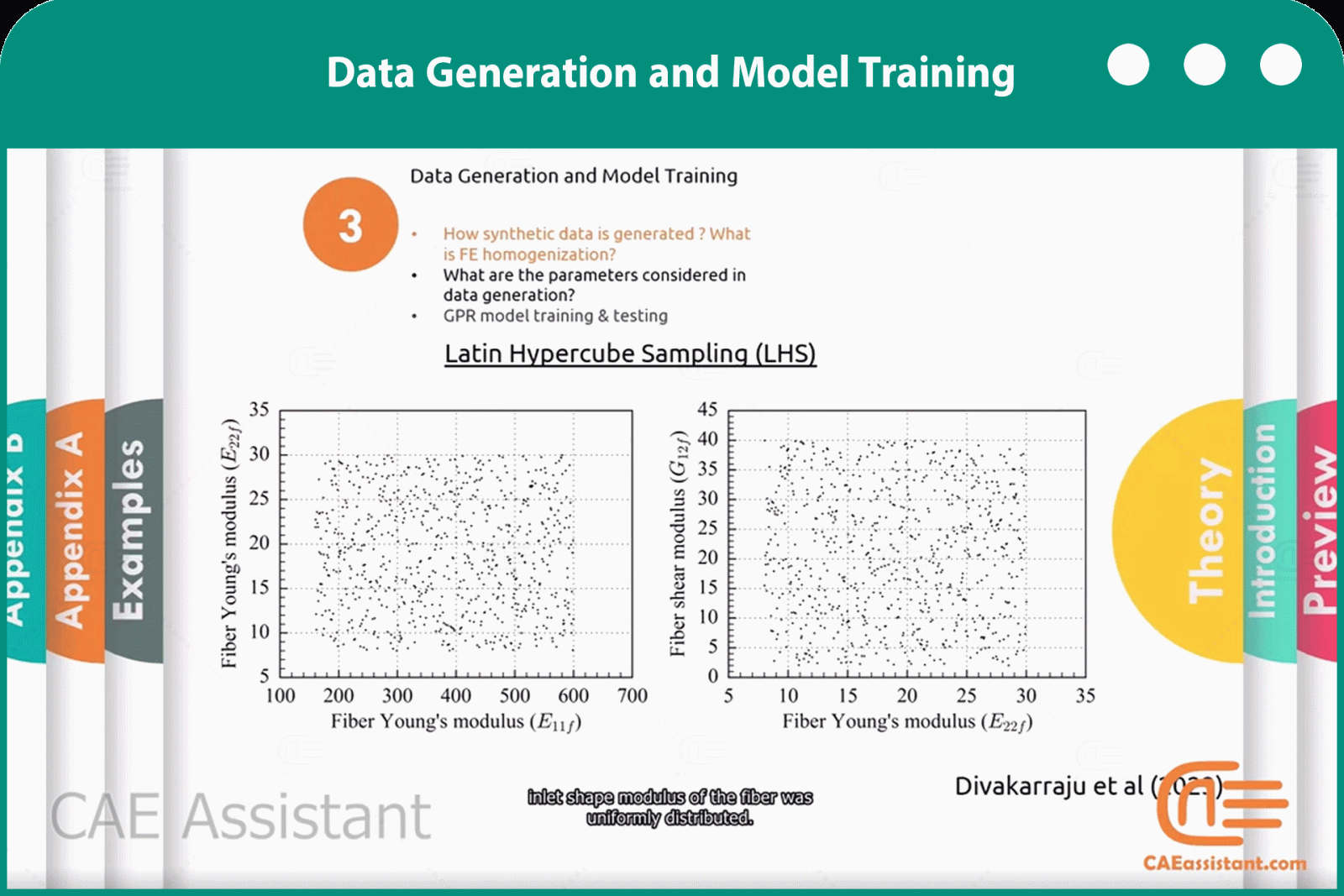
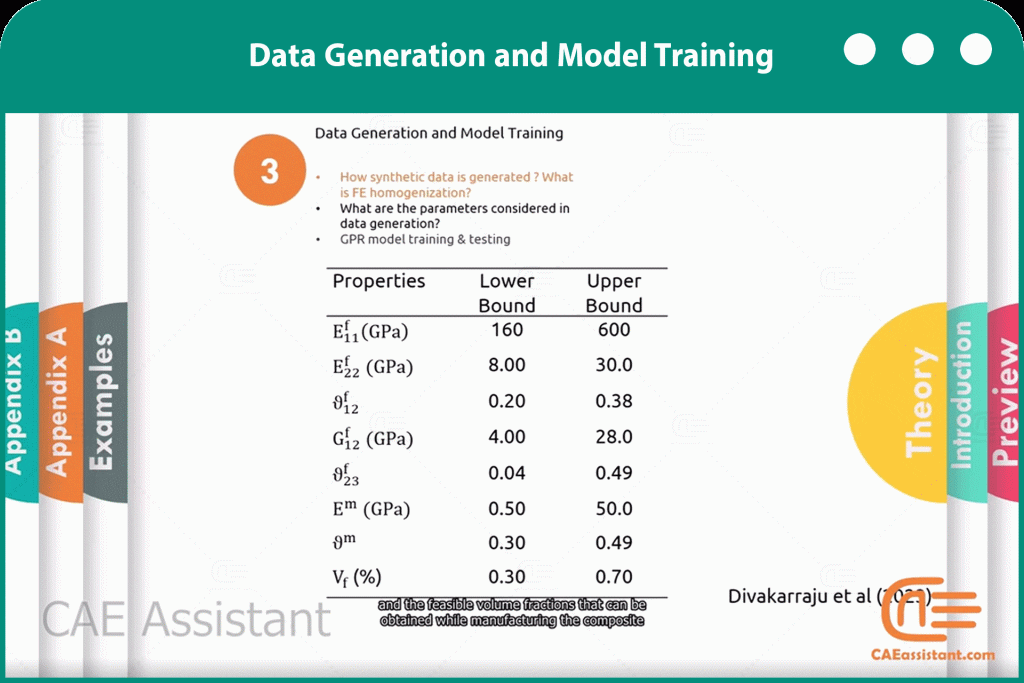
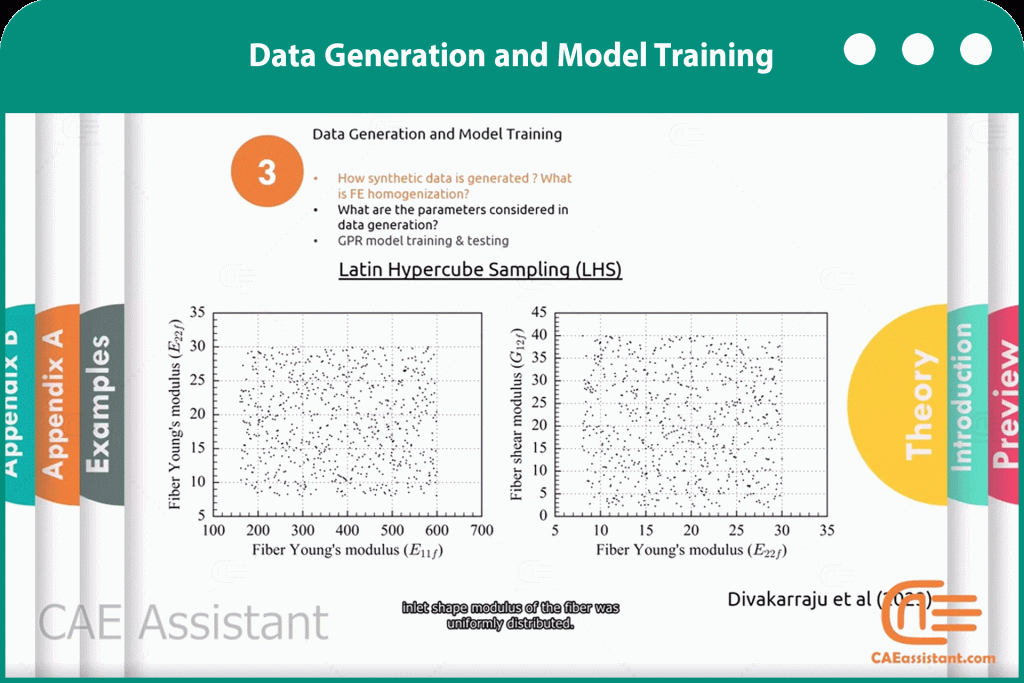
- Input parameters, including five fiber elastic properties, two matrix properties, and volume fraction, are uniformly distributed using the Latin Hypercube Sampling (LHS) technique to create diverse datasets (e.g., 700 datasets).
- The output includes five composite elastic properties (e.g., E11, E22, Nu12, G12, G23).
2. Developing the Forward GPR Model:
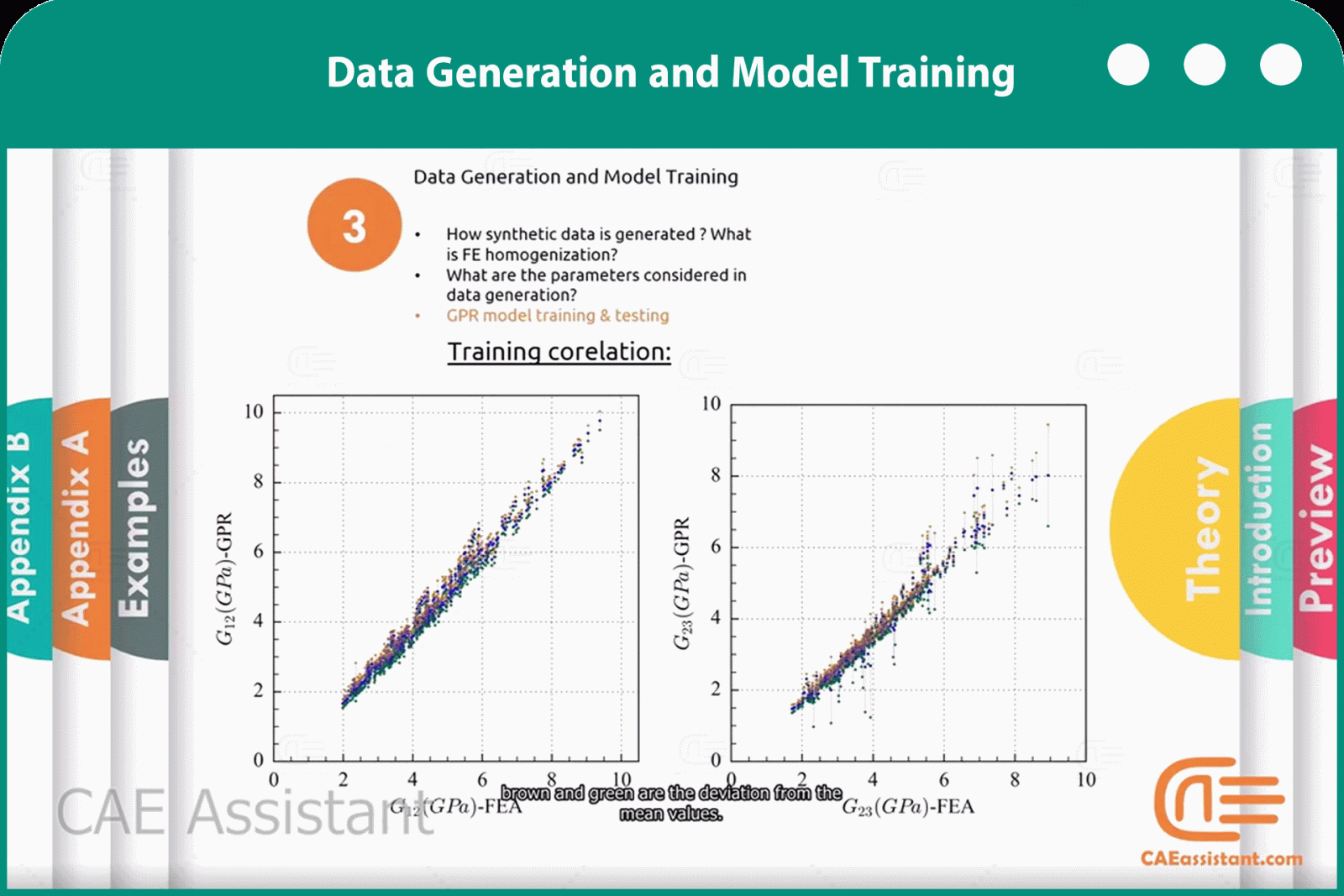
- Using the generated synthetic data, we train multiple GPR models (one for each output property). For example, eight input parameters are mapped to a single output, like E11.
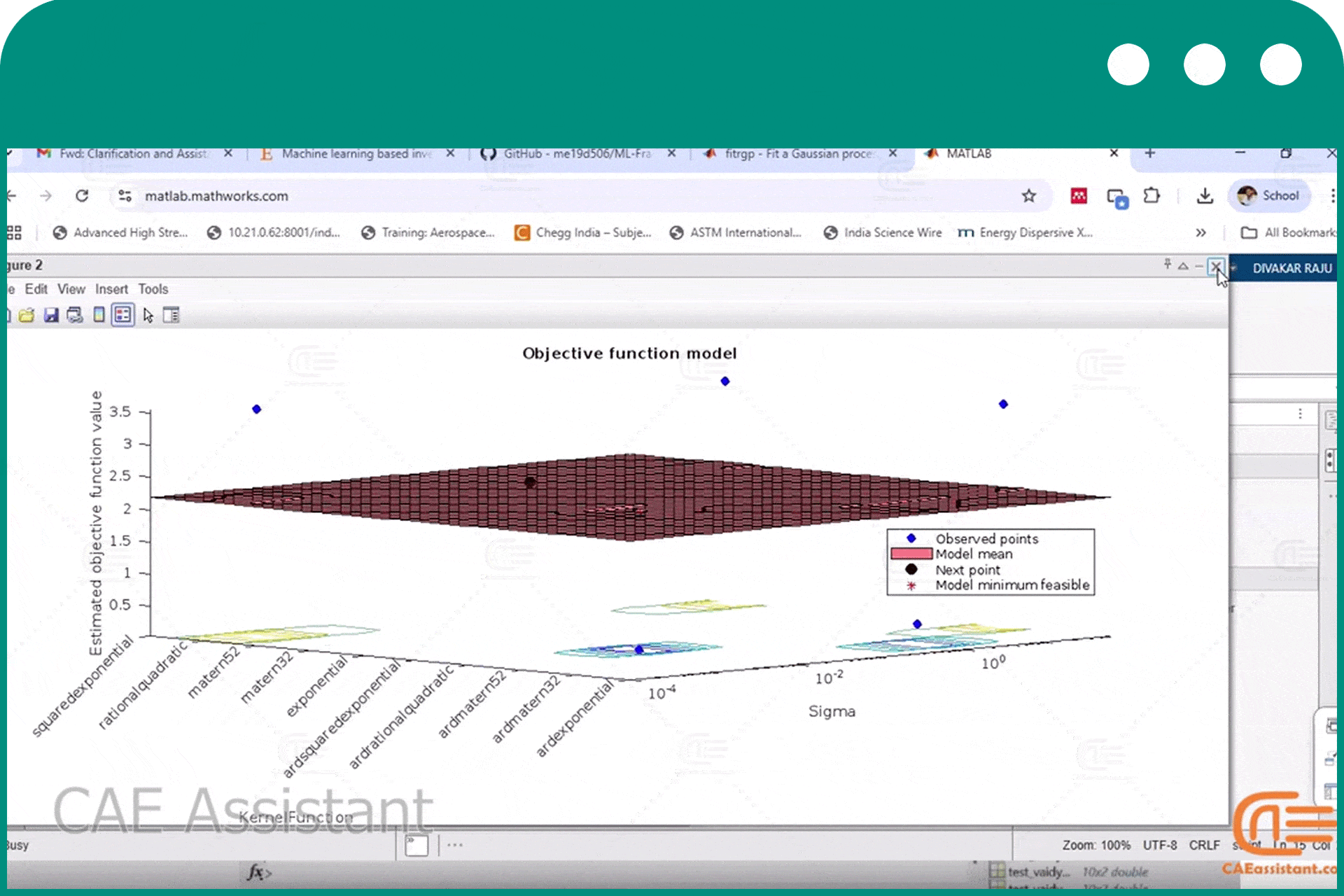
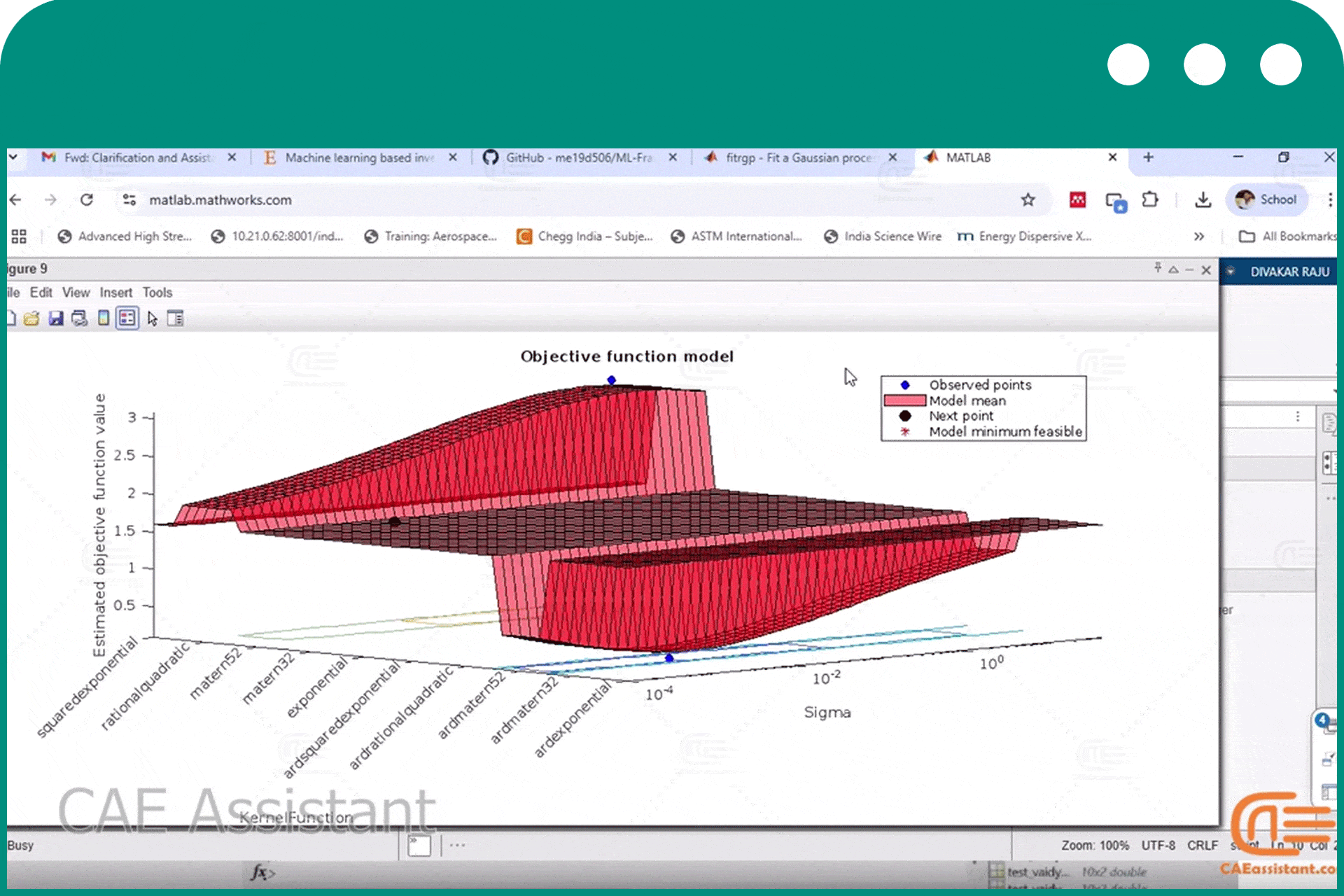
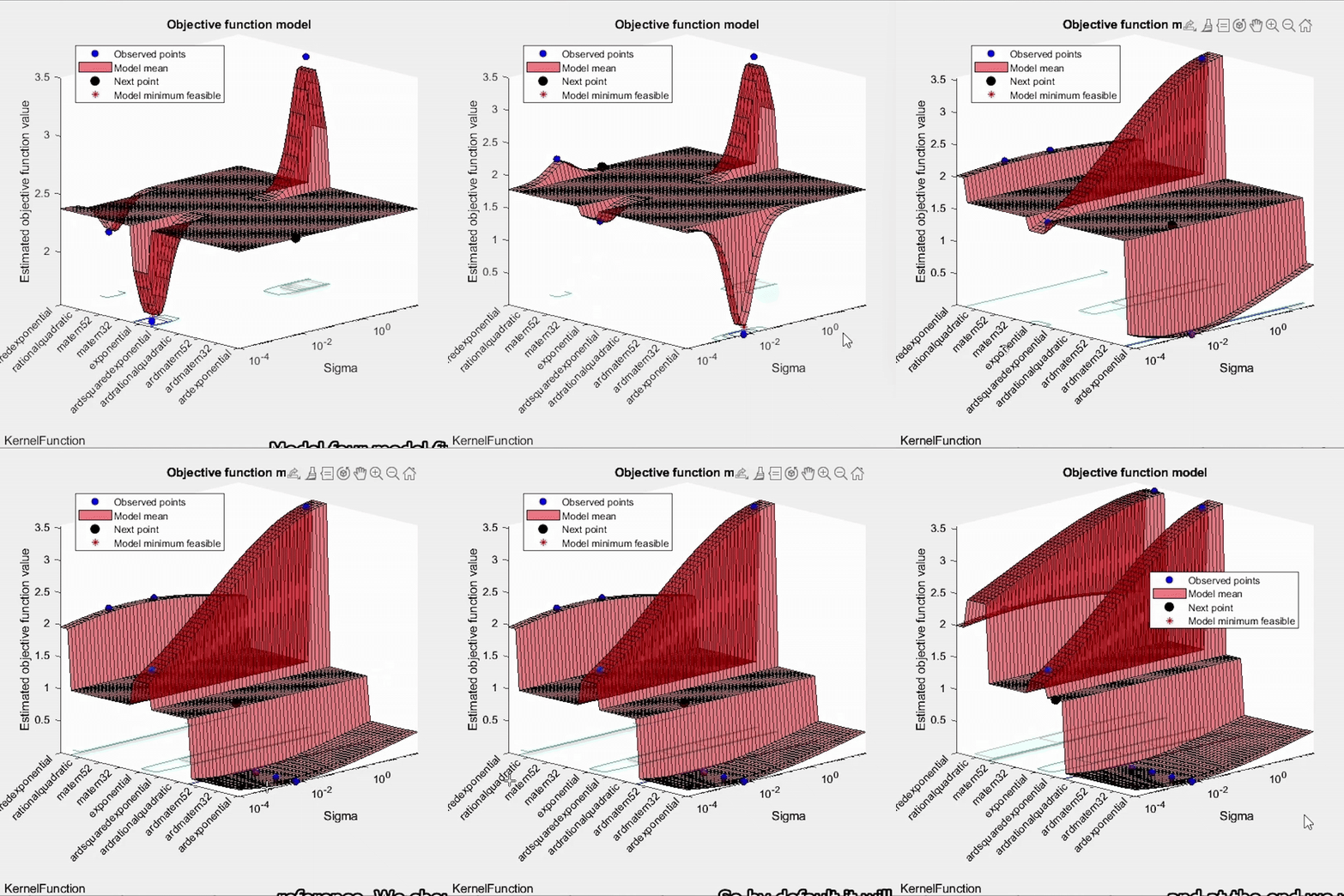
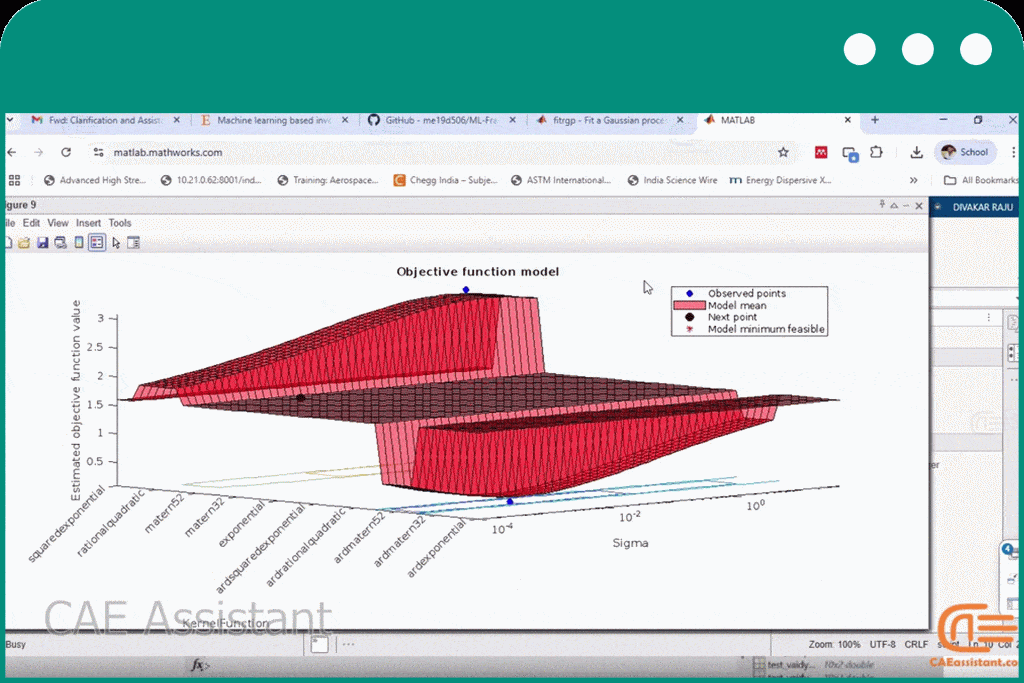
- The tutorial explains how to select optimal anisotropic kernel functions in MATLAB for robust model development.
- The trained GPR models are highly accurate, showing excellent correlation with finite element predictions, even when noise is introduced.
3. Implementing the Inverse Algorithm:
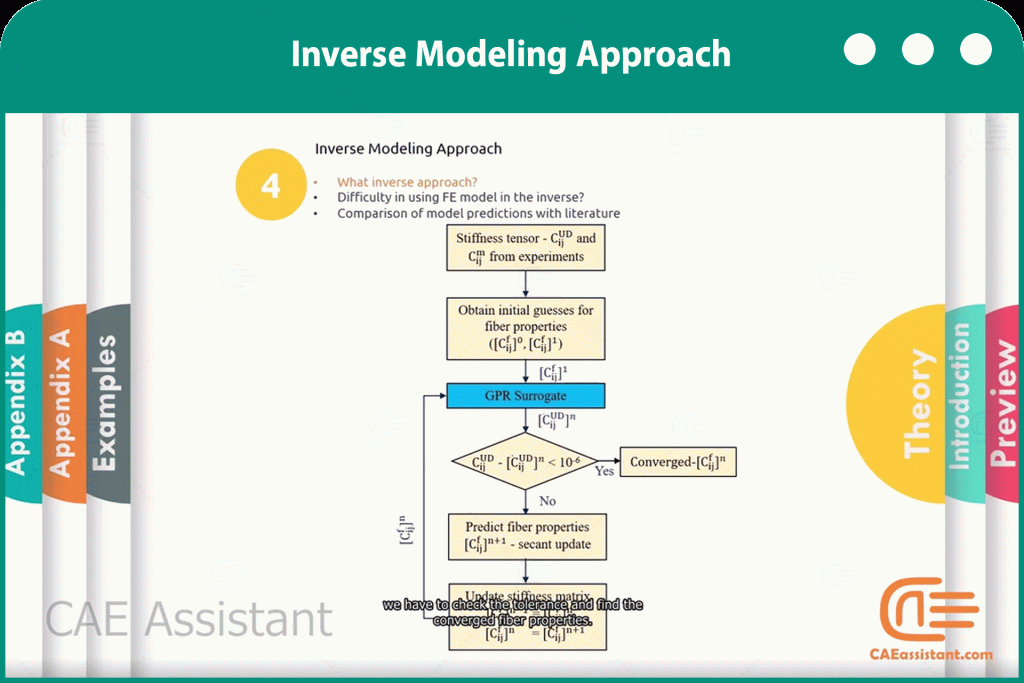
- The inverse algorithm uses a secant-based approach to predict unknown fiber properties from measurable composite and matrix properties.
- By using the pre-trained GPR models, the iterative process of updating fiber properties to match experimental composite data is significantly accelerated (from hours to seconds).
- This framework allows you to find unmeasurable fiber properties (e.g., E2, Nu23, G12 of the fiber).
Syllabus
| Syllabus Overview | 1:49 |
| Introduction to Carbon Fiber Properties | 5:05 |
| Machine Learning Framework (Gaussian Process Regression-GPR) | 3:22 |
| Synthetic Data Generation and Model Training | 14:55 |
| GPR Model Validation and Robustness | 1:06 |
| Application of ML-based inverse Model | 2:38 |
| Future Direction – Using the Developed Machine Learning Model in Multiscale Framework | 2:50 |
| How to Generate the Synthetic Dataset of Composite Properties Using MATLAB | 5:54 |
| Data Preparation and Gaussian Process Regression (GPR) Model Training Fundamentals | 1:50 |
| Gaussian Process Regression (GPR) Model Development | 7:28 |
| Model Validation, Performance Evaluation, and Saving | 7:39 |
| Results and discussion | 6:19 |
| Prediction with New/Unknown Data | 4:19 |
| Error Troubleshooting | 9:00 |
| Inverse Code Error Troubleshooting | 1:30 |
| Solution to Avoid Local Minimum Problem | 1:38 |
| How to execute Python Code to automatically run all Abaqus scripts sequentially | 4:11 |
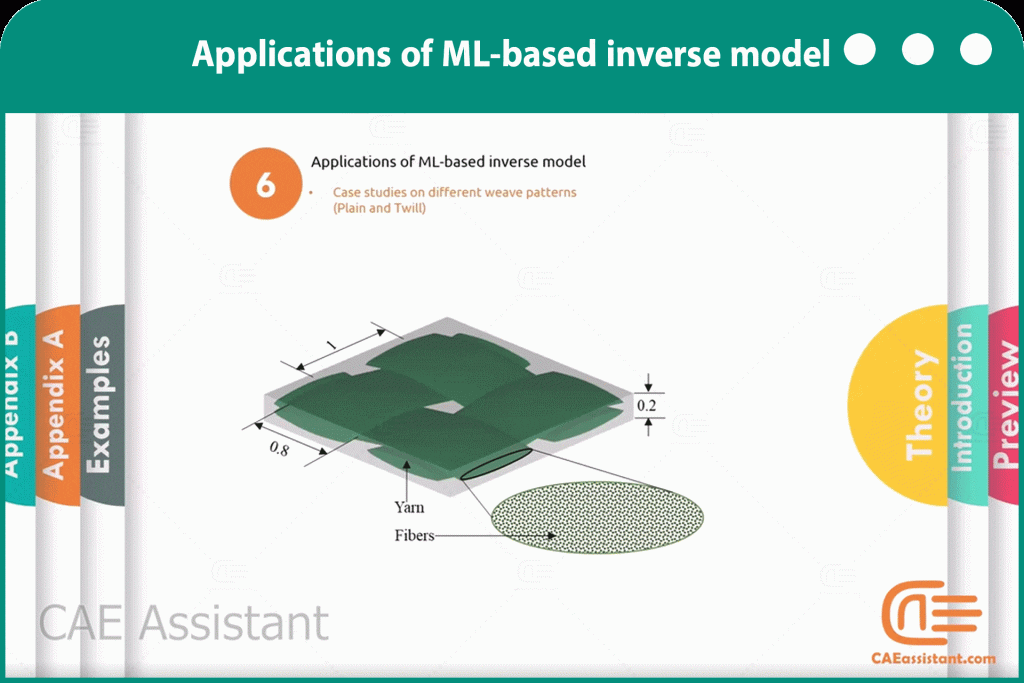
| How to implement similar approach for woven composites | 3:00 |
Videos are not necessarily the full version of that topic and may be a few minutes long, for further review.
Quality Insurance
Refunds, per terms and conditions, cover:
defects in input file (.inp) execution.
defects in subroutine file (.for) execution.
guarantees validation and accurate simulation results.
ensures product matches page descriptions.
Attendance Certificate
Optional Certificate Available for an additional fee:
Issued upon successful completion.
Verifiable anytime on our website.
Proof of training participation.
Validates understanding of topic simulation.
Tutor
Divakar Raju P V is an accomplished Mechanical Engineering Ph.D. graduate from IIT Tirupati, specializing in composite materials. He has pioneered in the microscale characterization of flax fiber and developed advanced numerical and machine learning models for composite materials’ analysis. With extensive research, teaching, and supervisory experience, he possesses skills in composite manufacturing, testing, finite element analysis, machine learning and technical writing. He published significant research papers in reputed peer reviewed journals and presented at prestigious international conferences.
Research Interests:
This comprehensive package equips you with the tools and knowledge to:
- Understand the framework for developing machine learning models to predict composite fiber properties.
- Gain a brief introduction to Gaussian Process Regression (GPR) and how to quantify uncertainty.
- Master techniques for generating synthetic data using Abaqus, including setting up RVEs, applying periodic boundary conditions, and using tools like Viper and EZPPC.
- Learn how to use Latin Hypercube Sampling to effectively distribute input parameters.
- Perform training and testing of GPR models using input and output data.
- Implement an inverse algorithm to predict fiber properties when they cannot be directly measured.
- Validate the developed GPR model against reported literature values.
- Explore how to apply the developed machine learning model to predict properties of other composite types, such as plain woven composites.
- Access workshop files and corrected code for hands-on practice.
This course is suitable for individuals who have a basic understanding of Abaqus and are looking to learn it at a more advanced level. It is designed for engineers, researchers, and students eager to stay at the forefront of innovation. It will empower you to enhance your designs, save valuable time, and push the boundaries of material analysis. The approach is scalable for other analysis.
This product is the result of a doctoral thesis—years of dedicated research distilled into an advanced, cutting-edge resource. It covers unique topics that have no comparable alternatives. Additionally, its specialized nature means it is not intended for general, entry-level use, where lower prices might be more common.
Now, consider this: if your own years of expertise and research were turned into a product, at what price would you be willing to sell it?
In fact, with this payment, you are saving yourself hours of time spent searching for credible articles and simulating coding, watching hours of pointless videos on YouTube, and trial and error in software to achieve similar results. The value of those hours is certainly far greater than this amount.
You may find competitors offering similar products at lower prices. However, many of our customers come to us after trying those options, realizing they received incomplete, low-quality content, unverified, inaccurate or sometimes wrong that didn’t truly help them.
What sets our tutorials apart is the depth of knowledge, step-by-step simulations, and carefully structured theoretical explanations. Every detail is meticulously crafted using the highest-quality materials to ensure a superior learning experience.
Ultimately, those who truly understand the value of this product recognize that its price is not just reasonable—it’s a worthwhile investment.
All of our training is in English. Many of them feature human narration in very clear and fluent English, and some also have a tutor explaining in English. However, all training includes accurate and error-free subtitles.
We fully and unconditionally guarantee the accuracy and functionality of our content, ensuring it matches the descriptions provided on our website. This guarantee covers any discrepancies between the training and the presented syllabus, as well as any issues with the files, code, and videos you receive. For more information you can check the Terms and Conditions.
All of our training is also provided in an .inp format, which allows you to open them on all software versions.
By purchasing this package, you will get access to the following:
- A 4-hour training video including, theory and simulation, with human generated error free caption, Step-by-step simulation and block by block code explanation, which is coded and can only be played on the exclusive CAE Assistant player.
- The validation section, which compares and confirms the methodology and simulation method with scientific articles (papers).
- All simulation files, including INP files and USDFLD and DFLUX subroutines used in different models, and ODB files (optional).
- All Python codes and a video explaining these codes block by block.
Yes, you can receive this training in a language other than English, which includes an additional fee. If you are interested, please contact our online chat or support email for more information.
Yes, depending on the modifications you require, we can implement the changes you need. To learn more about the terms and conditions for such custom orders, please contact our support email or our online chat.
Related Packages
You may need a dedicated tutorial for your specific requirements. We offer a wide range of simulation tutorials covering various real-world problems. To explore our products and identify the most suitable package for your needs, please refer to the diagram below.
Please note that in Additive Manufacturing simulations, different methodologies may exist, but many of them share similar simulation procedures.
To make sure the selected package meets your expectations, feel free to speak with our experts via the website’s online chat. Our engineers will help you find the most appropriate package for your needs.
Purchase Multiple Packages at Less than Half Price
If you are a faculty member or a company requiring multiple training packages for your staff, or If you’re an individual seeking to enhance your skills across various domains, we offer a tailored bundle plan. This plan provides access to a specific number of packages for a duration of 1 or 2 years. By paying the bundle plan fees, you’ll also receive discounts on a range of our additional services. This is a comprehensive and cost-effective solution to enhance the knowledge and skills of your team or students.
Please note: This bundle plan includes a variety of our popular training packages. If you would like to confirm the specific packages included in this plan (all packages under 400€), please check THIS PAGE or feel free to contact our support team via online chat.
All the package includes Quality assurance of training packages. According to this guarantee, you will be given another package if you are not satisfied with the training, or your money is returned. Get more information in terms and conditions of the CAE Assistant.
All packages include lifelong support, 24/7 support, and updates will always be sent to you when the package is updated with a one-time purchase. Get more information in terms and conditions of the CAE Assistant.
Notice: If you have any question or problem you can contact us.
Ways to contact us: WhatsApp/Online Support/Support@CAEassistant.com/ contact form.
Projects: Need help with your project? You can get free consultation from us here.
- Online payment: with MasterCard, VisaCard and etc.
- Offline payment: In this payment method, you should pay via PayPal and send your payment receipt as an attached file in the offline payment form.
- via download link After purchase, a download link will be sent to you a zip file included training videos, documents and software files.
- Send us your machine ID
To access tutorial video run the .exe file on your personal pc and send the generated code to shop@caeassistat.com and wait for your personal code, which is usable only for that pc, up to 24 hours from CAE Assistant support.
Here you can see the purchase process of packages: Track Order
You must be logged in to post a review.


Reviews
Clear filtersThere are no reviews yet.