

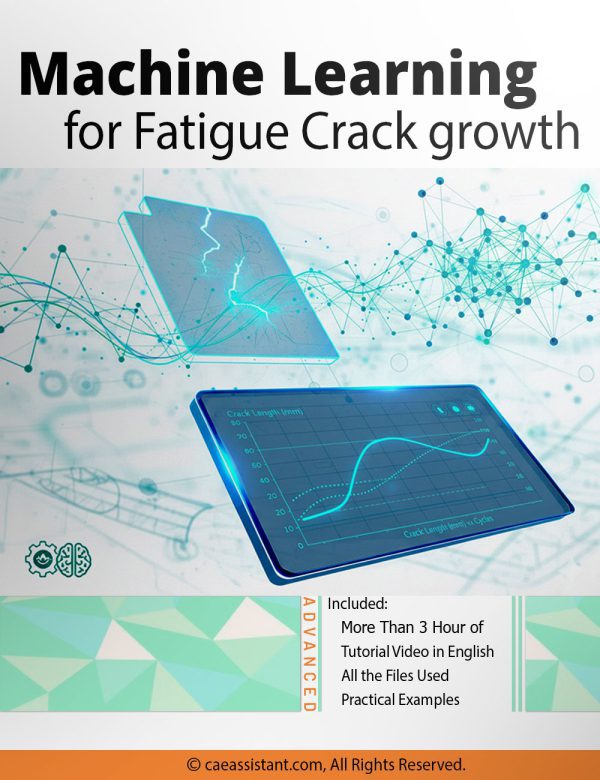

Machine Learning for Metal Fatigue Crack Prediction Using Lamb Wave Signals
This package introduces participants to the use of machine learning crack detection techniques for predicting metal fatigue crack growth in aluminum lap joints using Lamb wave signal data. Participants will work with the PHM 2019 Aluminum Lap Joint Fatigue Dataset, perform signal-based feature extraction, and build ensemble learning models to estimate crack progression. Through theoretical explanation and hands-on Python implementation, learners will gain practical experience in applying crack detection using machine learning and other data-driven methods for structural health monitoring (SHM) and predictive maintenance of metallic structures.
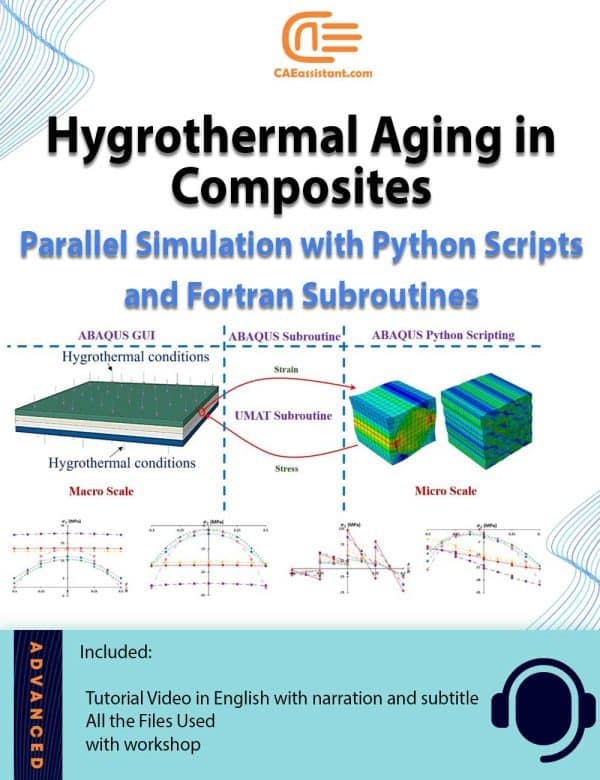

Multiscale Analysis of Hygrothermal Aging in Laminated Composites
This package includes parallel and multi-scale aging analysis of fiber-reinforced composite laminates exposed to thermal and humidity loads. In this project, parallel analysis methods are used to simulate and analyze the composite at both micro and macro scales. The laminate simulations are carried out in the graphical interface of Abaqus at the macro scale, while the micro scale analysis is conducted through Python scripting in the non-graphical Abaqus environment. The parallel analysis between the two environments is facilitated using Abaqus UMAT subroutines. The stress tensor and elasticity properties obtained at the micro-scale are passed to the UMAT subroutine, which then defines and updates the Jacobian matrix and stress tensor for all macro-scale integration points.


Abaqus Fatigue Simulation + Complete Theory


Abaqus Simulation of the Curing Process in Composites: A Specific Focus on the Pultrusion Method
Pultrusion is a crucial task for producing constant-profile composites by pulling fibers through a resin bath and heated die. Simulations play a vital role in optimizing parameters like pulling speed and die temperature to enhance product quality and efficiency. They predict material property changes and aid in process control, reducing reliance on extensive experimental trials. However, simulations face challenges such as accurately modeling complex material behaviors and requiring significant computational resources. These challenges underscore the need for precise simulation methods to improve Pultrusion processes. This study employs ABAQUS with user subroutines for detailed mechanical behavior simulations, including curing kinetics and resin properties. Key findings include insights into material property changes, and optimization strategies for enhancing manufacturing efficiency and product quality. This research provides practical knowledge for implementing findings in real-world applications, advancing composite material production.
Notice that, pultrusion is a composite curing method, which may share some overlapping features with our Intermediate and Advanced curing packages. However, what sets pultrusion apart is that the composite passes over a heated die during the process. In this project, the die has also been modeled, with environmental heat applied to it using convection and a film subroutine. The heat is subsequently transferred to the sample through contact with the die. Afterward the die is removed. All these procedure is modeled in this project, with Abaqus CAE step-by-step. In contrast, in our Intermediate and Advanced packages for the oven curing of prepregs, no die has been modeled. The heat is applied without convection and, for simplicity, the heat is treated as a first-type boundary condition, which introduces some errors.
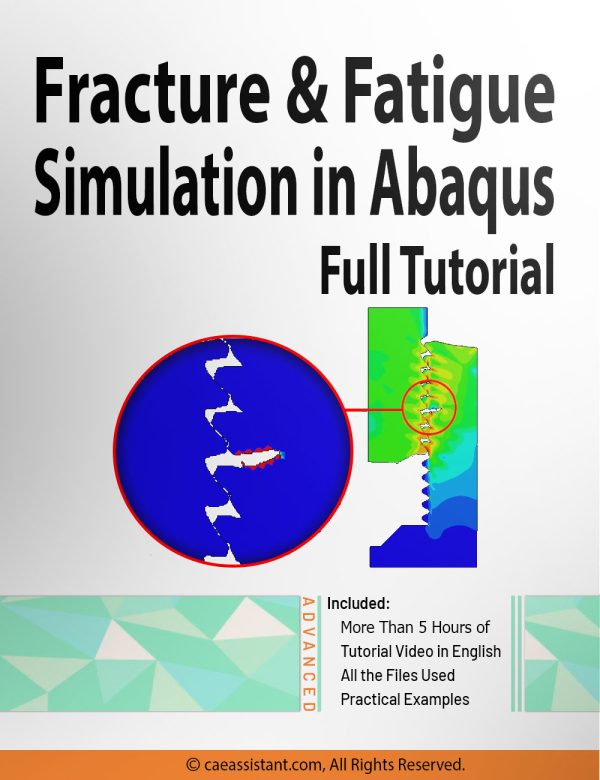
Fracture & Fatigue Simulation in Abaqus Full Tutorial | Theory + Practice
This all-in-one tutorial package is a comprehensive learning solution that combines two advanced Abaqus simulation topics—Fracture Mechanics and Low-Cycle Fatigue (LCF). Designed for engineers, researchers, and students, the package blends theoretical foundations with hands-on workshops to teach both crack initiation and propagation mechanisms under cyclic loading. It uniquely integrates techniques like VCCT, XFEM, Paris Law, and Direct Cyclic Analysis in one coherent course.
By combining the strengths of two separate best-selling packages—Fracture Mechanics in Abaqus and Fatigue Simulation in Abaqus—this new release offers a broader and deeper perspective. You’ll not only understand the physics of crack growth and delamination but also learn to simulate them step-by-step using Abaqus, keyword editing, and subroutines.

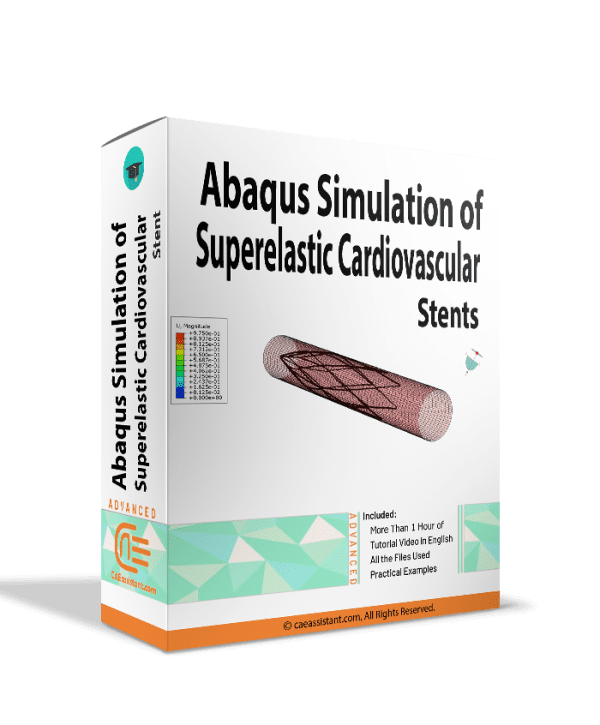
Abaqus Simulation of Superelastic Cardiovascular Stents
- The expansion of a balloon inside a stent
- The bending of a stent within a vessel
- The withdrawal of a stent from the vessel


Composite Fatigue Simulation with Subroutine in ABAQUS (unidirectional) for 3D Element
Fatigue in composites refers to the weakening of a material caused by repeatedly applied loads or stress cycles over time. When a composite material is subjected to cyclic loading, small cracks or microdamage can form within the material, which may grow and lead to failure after a certain number of loading cycles. This is a significant consideration in the design and analysis of composite structures, especially in applications subjected to repeated stress, such as in aerospace, automotive, or civil engineering.
In one of our other packages, we have used the UMAT subroutine in Abaqus to simulate fatigue in composites in two-dimensional space. The current project is more comprehensive, as it addresses composite fatigue in both 2D and 3D spaces. So you can use it for the simulation of both shells and solids. In this project, you will first become familiar with simulating composite fatigue in 2D space using the Abaqus UMAT subroutine. Then, we will provide a complete UMAT code along with Abaqus files for extending the simulation to 3D space, enabling the 3D simulation of composite fatigue in Abaqus.

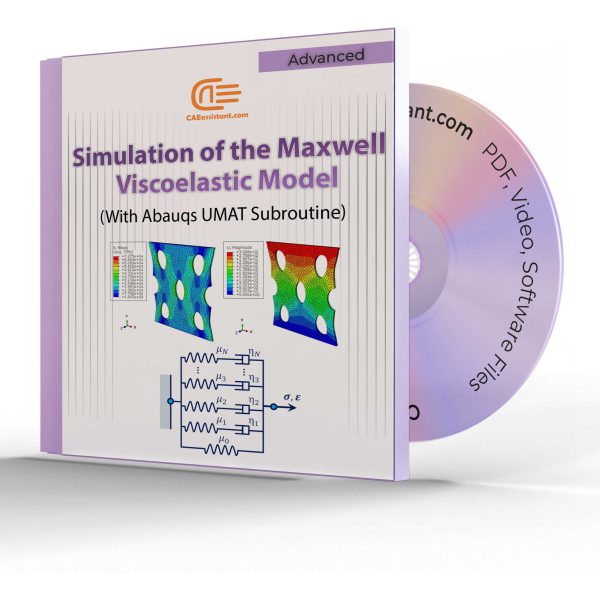
Simulation of the Generalized Maxwell Viscoelastic Model using UMAT Subroutine
This research presents a precise three-dimensional mechanical response of viscoelastic materials, such as polymers and elastomers, using the generalized rheological Maxwell viscoelastic model (considering the five Maxwell elements). That is to say, we implement the Maxwell model of viscoelasticity using the UMAT subroutine for the Abaqus standard solver. To clarify, using the concepts in this tutorial, you can implement the model for any N-Maxwell elements, using the viscoelastic Maxwell model.
The Maxwell viscoelastic model is appropriate for qualitative and conceptual analysis, but the single Maxwell element is not sufficient to describe the behavior of elastomers and polymers. For a more precise definition of these materials, the generalized Maxwell viscoelastic model is used. In the generalized Maxwell viscoelastic model, N piece of Maxwell elements and a single spring (the Hooke-element) are assembled in parallel. This tutorial, by customizing the UMAT subroutine to simulate flexible samples behavior, contributes to the advancement of viscoelastic materials design and analysis.


Fretting Fatigue Failure Simulation with Scripting in Abaqus
This Package offers a comprehensive tutorial on using Abaqus for Fretting Fatigue Failure Simulation. To do so, it combines theoretical knowledge with practical application in Finite Element Method (FEM) simulations. The package guides users through both detailed lessons and interactive workshops. In fact, it focuses on developing 2D Fretting-Fatigue models in Abaqus with three core areas: model creation with exclusively designed meshing methodologies, the development of custom Field Outputs for detailed analysis, and automated parameter selection and post-processing through Python scripting.
Throughout the tutorial, participants master critical aspects of Fretting Fatigue Failure simulation. It includes basics from mesh refinement techniques and step control optimization to complete workflow automation. The program distinctively integrates command prompt operations for extracting Field Outputs and modifying simulation parameters. For example, we can refer to the Coefficient of Friction (CoF). Users gain practical experience in creating robust models while understanding the fundamental principles of the Fretting Fatigue Failure phenomenon.
Upon completion, participants will acquire the skills to independently develop and analyze Fretting Fatigue failure simulations. Moreover, they can automate post-processing tasks, and implement custom analysis parameters for precise fatigue prediction in mechanical systems.


Laser Assisted Machining (LAM): Modeling and Simulation in Abaqus/CAE
In this tutorial, a comprehensive discussion on modeling and simulation of laser assisted machining is presented. It includes building FEM-based models of machining, laser heating, and laser-assisted machining models in Abaqus/CAE. The finite element method (FEM) simulation is based on the coupled thermo-mechanical behavior. The package walks learners through building models that simulate the impact of laser heating on the workpiece. Detailed lessons cover constructing basic machining and laser heating models, setting boundary conditions like cutting speed and laser power, and writing subroutines such as DFLUX and VDFLUX to simulate laser heat sources. Additionally, learners will perform analyses to study temperature distribution, and stress-strain behavior. Through parametric analysis and comprehensive result evaluation, learners will gain a deep understanding of temperature distribution, stress behavior, and how laser heating can improve the machining process.
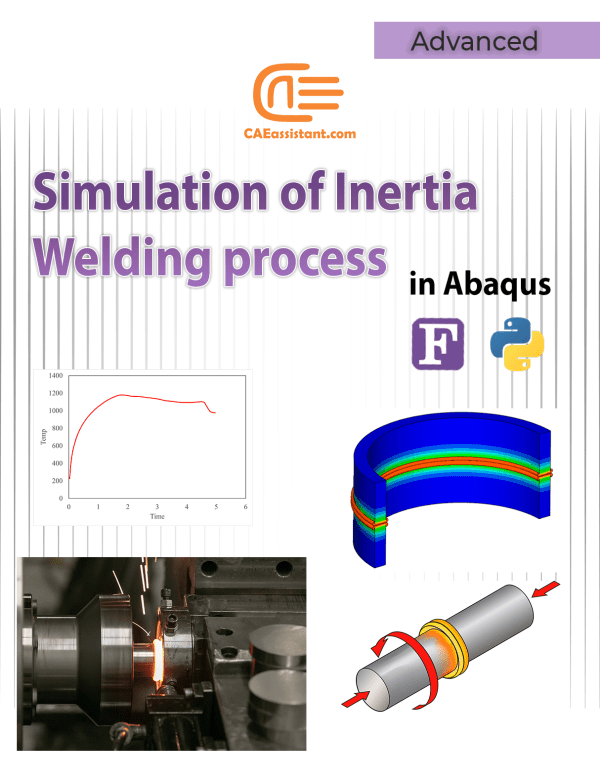

Simulation of Inertia Welding process in Abaqus | Fortran Subroutines and Python Scripts
This tutorial provides a comprehensive guide to simulating inertia friction welding process using Abaqus, a powerful Finite Element Analysis (FEA) tool. Inertia welding process, commonly used in aerospace, automotive, and manufacturing industries, is a solid-state process that joins metal parts using kinetic energy. The simulation focuses on modeling frictional heating, temperature distribution, and material behavior through integrated Fortran subroutines and Python scripts. These scripts automate tasks such as remeshing and model generation, enhancing efficiency. Key steps include defining axisymmetric models, applying material properties, and simulating thermal and mechanical interactions during the inertia welding process. This guide equips researchers and engineers with a robust methodology for inertia welding simulation, to optimize welding parameters and analyze weld quality.


Using Viscoelastic and Path-Dependent Models for Analyzing the Curing Process in Fiber-Reinforced Composites With Abaqus subroutines


Brittle Damage in Abaqus | Brittle Cracking Abaqus
Brittle materials, such as ceramics, glass, and concrete, break or fracture easily under stress without extensive deformation. Unlike ductile materials, brittle materials snap suddenly, lacking the flexibility to rearrange their atomic structure under strain. These materials have low tensile strength but strong compressive resistance, making them vulnerable to brittle cracking Abaqus simulations when stretched or pulled.
Understanding brittle material damage is crucial in safety-critical fields like civil engineering, aerospace, and manufacturing, where unexpected fractures can lead to catastrophic failures. Simulations help engineers predict when and how brittle materials may break, guiding safer design choices. Brittle cracking Abaqus can be modeled using various methods, including the Johnson-Holmquist (JH) model, XFEM, and energy-based approaches, each suited to different types of loading conditions.
For dynamic, high-strain applications like impacts, the JH model is effective, particularly in Abaqus/Explicit with specific damage parameters. For general crack modeling, XFEM is versatile, allowing cracks to form naturally without predefined paths. The energy-based method is useful for slow-loading scenarios, defining an energy threshold for fracture initiation. Each method requires careful input of material properties, mesh refinement, and load conditions to reveal potential failure points and improve material performance in real applications.

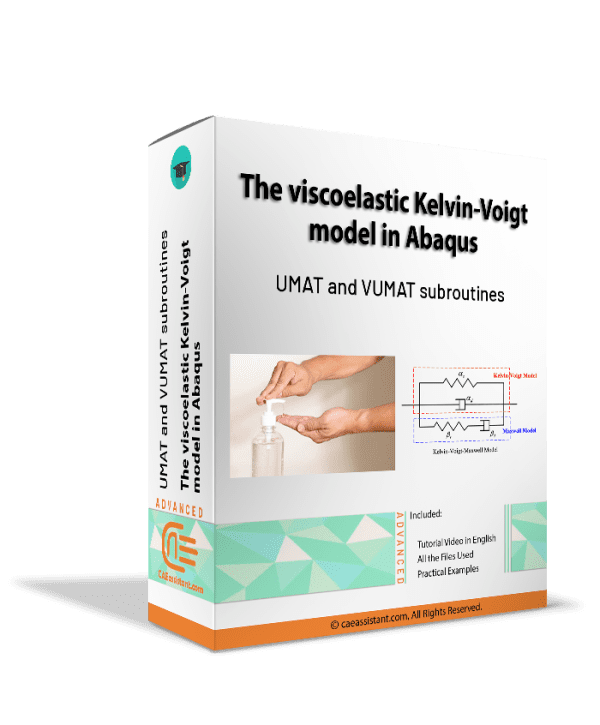
Abaqus Kelvin Voigt Model (Viscoelastic) Simulation Using UMAT and VUMAT Subroutines
This research presents a precise three-dimensional mechanical response of viscoelastic materials using Abaqus kelvin voigt viscoelastic model. We performed this kelvin voigt model Abaqus simulation using both UMAT and VUMAT subroutines for standard and explicit solvers.
The behavior of viscoelastic materials is a state between the behavior of a liquid and a solid. In other words, they behave both like liquids and solids. That is to say, there are many natural and synthetic materials that are classified as viscoelastic materials; From the biological structures of the body such as skin, cartilage and tissue to concrete, foams, rubbers, and synthetic polymers. Due to these unique properties, viscoelastic materials have many applications.
In this regard, the primary goals of this study include the development and implementation of an accurate three-dimensional Abaqus kelvin voigt viscoelastic model, and the integration of viscoelastic properties into the analysis, which can improve the prediction of viscoelastic materials response under different boundary and loading conditions.
This tutorial, by customizing the UMAT and VUMAT subroutines to simulate flexible samples behavior, contributes to the advancement of viscoelastic materials design and analysis.


Implementation of Soil Constitutive Models in Abaqus | With a Special Focus on CJS Models
Constitutive model implemented in calculation code, play an important role in the material behaviors prediction. In the field of geotechnical engineering there are numerous soil constitutive models. By installing these models in a finite element code such as Abaqus, their development, efficiency and advancement can be increased. Also, more and more complex engineering problems can be solved by this method. But to do this, you need a proper understanding of the mathematical and programming basics of these models. This tutorial focuses on implementing advanced constitutive models in Abaqus, particularly for simulating soil behavior. Focusing on the CJS model, this tutorial tries to teach how to work and how to program these models in Abaqus code. It includes detailed explanations of VUMAT and UMAT subroutines and practical examples of implementing the CJS model.
Note: In this project, we have discussed the UMAT and VUMAT subroutines, their specifications, and features. You will become familiar with the implementation of both UMAT and VUMAT subroutines. However, the specific focus of this project, for which we have provided the necessary files and run the analysis, is on using the VUMAT model. If you need to use Abaqus for this project with the standard solver, you will need to write the UMAT subroutine yourself.
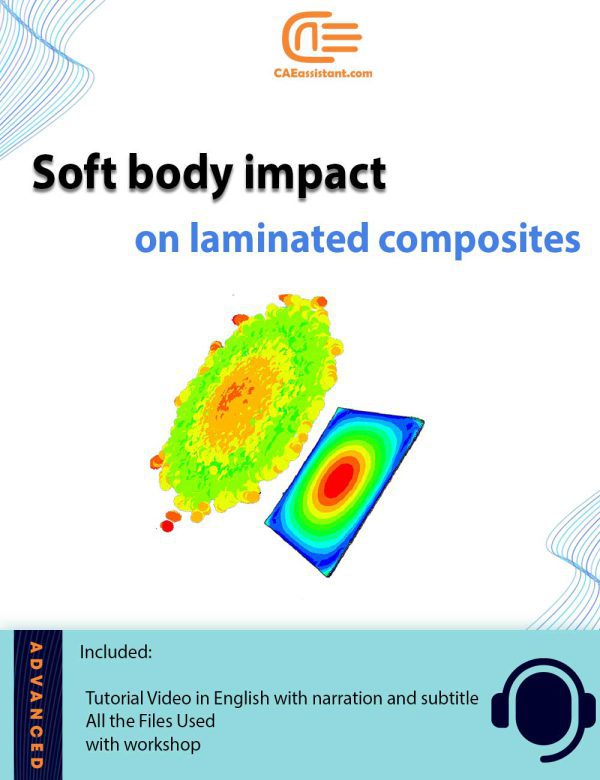

A Comprehensive Tutorial for Soft Body Impact Composites Simulation
This comprehensive tutorial package focuses on simulating soft body impact composites on laminated composite materials using the Finite Element Method (FEM) in Abaqus. The course covers key topics such as soft body modeling, metal material modeling, composite material modeling, composite to composite interface modeling, metal to composite interface modeling, interaction between soft bodies and FML, interaction between layers, and Python scripting for parametric studies. Users will explore different material models and learn about impact failure mechanisms, including matrix failure, fiber failure, shear failure, and delamination. The course is structured into lessons that cover theoretical aspects, followed by hands-on workshops to model soft body impacts, apply material properties, and analyze post-processing results such as forces, displacements, and energy dissipation. It also includes an advanced section on Python scripting, enabling users to automate parametric studies for complex simulations. This package is ideal for engineers, researchers, and students looking to deepen their understanding of soft body impact phenomena and composite material behavior.
The videos become accessible three days after purchaseItems marked as “Coming soon” in the syllabus are not currently part of the package and will be added later as an update.
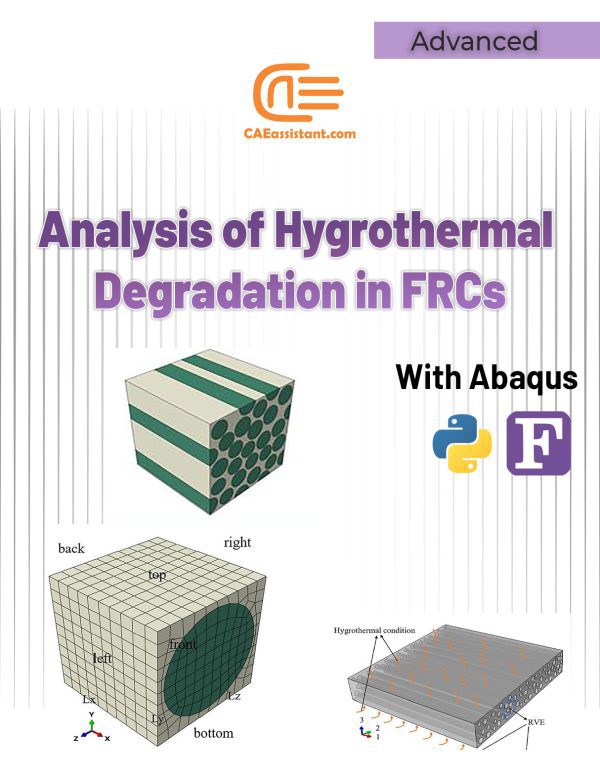
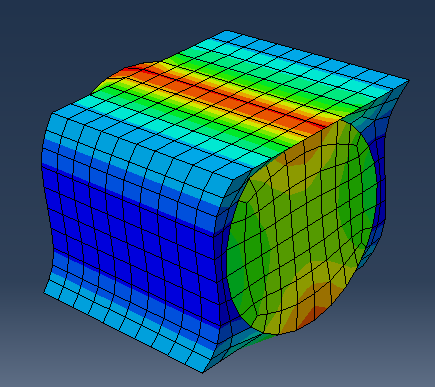
Hygrothermal effects on composite materials | Degradation in Fiber Reinforced Composites Abaqus Simulation: Python & Subroutines
In this tutorial, we explore the hygrothermal degradation composites using ABAQUS, a powerful tool for parallel finite element analysis. Industries like aerospace, marine, and automotive heavily rely on these composites due to their high strength-to-weight ratio and versatility. However, long-term exposure to moisture and temperature can degrade their mechanical properties, making an analysis of hygrothermal effects on composite materials essential for ensuring durability.
ABAQUS allows precise modeling of these environmental conditions through Python scripts and Fortran subroutines. This combination enables efficient simulations across multiple processors, offering insights into key elastic properties, such as Young’s modulus and shear modulus, under varying conditions. By leveraging the ABAQUS Python Scripting Micro Modeling (APSMM) algorithm and custom subroutines, engineers can predict the long-term performance of fiber-reinforced composites, optimizing design and enhancing material performance in critical sectors like aerospace and marine.
In the present Abaqus tutorial for parallel finite element analysis, we have presented the software skills that a person needs when he wants to perform a parallel finite element analysis such as a micro-macro scale analysis. The Abaqus tutorial for parallel finite element analysis covers all you need to write a python scripting code for noGUI environment and also Fortran code for the subroutine environment of Abaqus to execute a parallel finite element analysis via Abaqus software. You can download the syllabus of this package here.
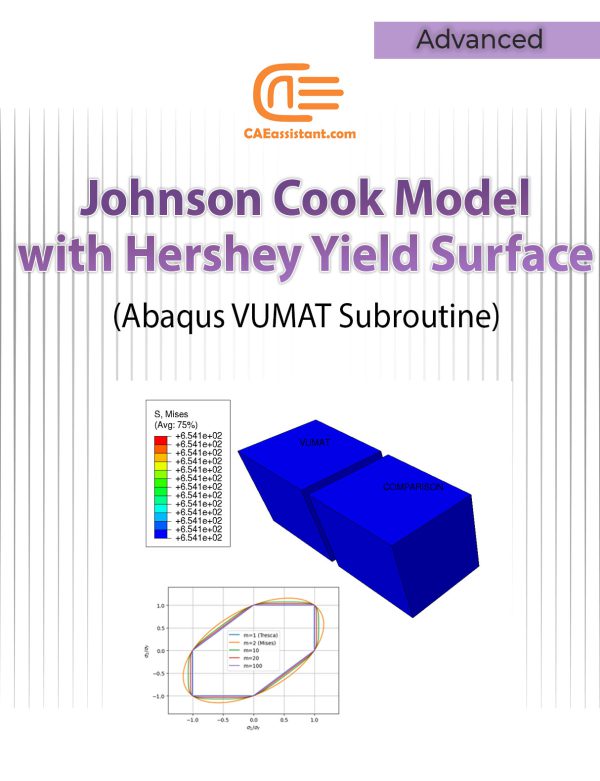
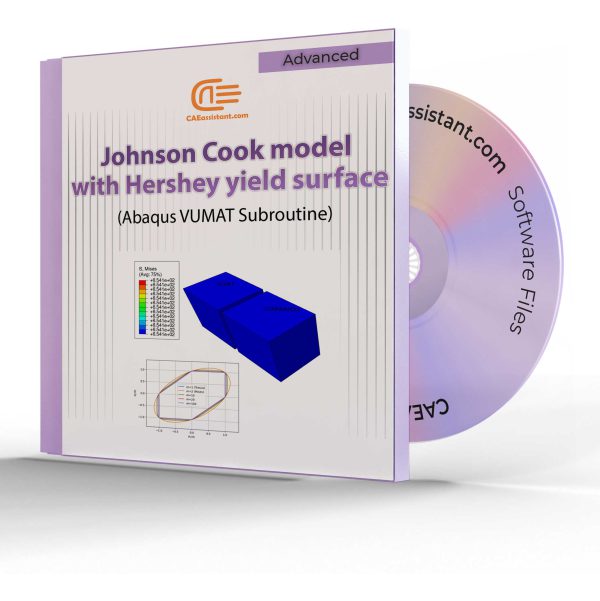
Modified Johnson Cook viscoplastic model with the Hershey yield surface | VUMAT Subroutine for 3D continuum elements
This project offers a set of Abaqus models for 3D continuum elements, integrating a VUMAT subroutine that implements the Modified Johnson Cook (MJC) viscoplastic model and the Hershey yield surface. The MJC model simulates material behavior under varying strain rates and temperatures, while the Hershey yield surface predicts complex yielding behavior. Together, they provide highly accurate simulations of materials under extreme conditions such as impacts and high temperatures. Ideal for industries like automotive, aerospace, and defense, this package supports critical applications like crash testing, metal forming, and ballistic analysis. The model has been implemented for 3D continuum elements.
Note: The inp and Fortran files are only applicable in Linux.

Glass Fracture Analysis with Abaqus | Post-Fracture
This tutorial explores a finite element method (FEM) simulation using Abaqus to analyze the post-fracture behavior of structural glass members retrofitted with anti-shatter safety films. In particular, it focuses on simulating and calibrating the vibration response of cracked glass elements under repeated impacts and temperature gradients, contributing to a comprehensive analysis of critical phenomena that take place in the post-fracture stage. This tutorial follows the methodology outlined in the research article “Effects of post-fracture repeated impacts and short-term temperature gradients on monolithic glass elements bonded by safety films”.
Key aspects include modeling glass fracture, assigning material properties, and defining boundary conditions to assess the vibration frequency and load-bearing capacity of cracked monolithic glass members. Additional topics cover basic concepts of dynamic identification techniques, definition of performance indicators for glass retrofit efficiency, and frequency sensitivity analysis of monolothic retrofitted glass elements under various operational and ambient conditions. The simulation results help quantify the expected contribution and residual strength of safety films in post-fracture scenarios, providing a robust framework for structural engineers to extend this investigation to other glass configurations.
This tutorial is ideal for users who want to understand FEM modeling in Abaqus and perform detailed simulations involving complex material interactions, with a focus on practical applications in glass retrofit technology.







 English
  Korean
  Chinese